link1s.site

Google extends Linux kernel support to 4 years

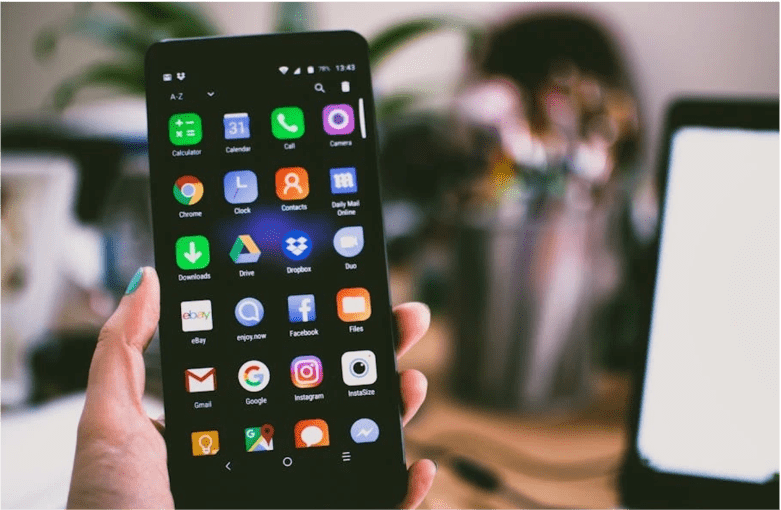
According to AndroidAuthority, the Linux kernel used by Android devices is mostly derived from Google's Android Universal Kernel (ACK) branch, which is created from the Android mainline kernel branch when new LTS versions are released upstream. For example, when kernel version 6.6 is announced as the latest LTS release, an ACK branch for Android15-6.6 appears shortly after, with the "android15" in the name referring to the Android version of the kernel (in this case, Android 15).

Google maintains its own set of LTS kernel branches for three main reasons. First, Google can integrate upstream features that have not yet been released into the ACK branch by backporting or picking, so as to meet the specific needs of Android. Second, Google can include some features that are being developed upstream in the ACK branch ahead of time, making it available for Android devices as early as possible. Finally, Google can add some vendor or original equipment manufacturer (OEM) features for other Android partners to use.

Once created, Google continues to update the ACK branch to include not only bug fixes for Android specific code, but also to integrate the LTS merge content of the upstream kernel branch. For example, the Linux kernel vulnerability disclosed in the July 2024 Android security bulletin will be fixed through these updates.

However, it is not easy to distinguish a bug fix from other bug fixes, as a patch that fixes a bug may also accidentally plug a security vulnerability that the submitter did not know about or chose not to disclose. Google does its best to recognize this, but it inevitably misses the mark, resulting in bug fixes for the upstream Linux kernel being released months before Android devices. As a result, Google has been urging Android vendors to regularly update the LTS kernel to avoid being caught off guard by unexpectedly disclosed security vulnerabilities.

Clearly, the LTS version of the Linux kernel is critical to the security of Android devices, helping Google and vendors deal with known and unknown security vulnerabilities. The longer the support period, the more timely security updates Google and vendors can provide to devices.
US' ban on high-tech investment cannot stifle China's high-tech development
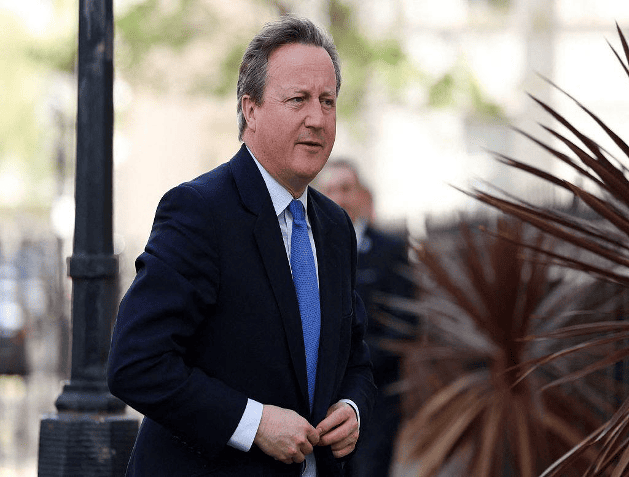
US President Joe Biden signed an executive order on Wednesday restricting investments in China, intended to further stymie China's advances in three cutting-edge technology areas: semiconductors and microelectronics, quantum information technologies and certain artificial intelligence systems. The "decoupling" of high tech from China began under Donald Trump, and the Biden administration has continued that ambition. However, the new order doesn't target US investments already invested in China, but the new ones. The Biden administration has repeatedly claimed that the US restrictions will be narrowly targeted and will not "have a fundamental impact on affecting the investment climate for China." Biden's new executive order is still subject to consultation with the US business community and the public and is not expected to take effect until next year. The order has been brewed for a long time and has generated a lot of publicity. But almost no one believes that this executive order will deal a new practical blow to Chinese high technology, because almost everyone knows that China needs American technology more than American money. The order has gained much attention because it is seen as part of a broader trend of the US drifting away from China. The promulgation and brewing process of the executive order reflects the strong desire of American political elites to suppress China's high-tech development, as well as a fierce game between those supporting the executive order and the concerns of the technology and economic sectors about a potential backfire on the US. It is a kind of compromise. Washington obviously hopes that major allies will follow Biden's executive order. The UK's Sunak government has made cautious statements, stating that it is consulting business and the financial sector before deciding whether to follow suit. In fact, China also has the ability to influence the extent to which Biden's executive order is implemented, as well as the extent to which the US will go in terms of "decoupling" from China. We are definitely not just passive recipients of US policies. American political elites are eager to "decouple" from China as quickly and deeply as possible, but they fear two things: First, this will immediately damage the performance of relevant high-tech companies in the US, undermine their influence and further innovation. The current Biden administration, in particular, does not want to incur strong resentment from Silicon Valley and Wall Street toward the escalating "decoupling," which will ultimately lead to the loss of support for the Democratic Party. Second, they are afraid of pushing China toward more resolute independent innovation to achieve breakthroughs in key technologies such as chips. If the US "decoupling" policy gives birth to major technological achievements in China, it means that Washington will completely lose the gamble: They originally wants to stifle China's high-tech development, but ends up strangling their own companies. What China needs to do next is to fully unleash our innovation vitality, continuously reduce our dependence on high-tech products from the US, and prove that as long as we are determined to achieve independent innovation, we have the ability to accomplish things. We need to prove that being pressured by the US will only make us stronger. As long as there are several solid proofs of this trend, the US policy community will fall into unprecedented chaos, and their panic will be much more severe than when they saw the rapid expansion of the Chinese economy before Trump started the trade war. Regardless of the future of China-US relations, the current battle will be the key battle that determines the future competition between China and the US. China can only win and cannot afford to lose. High-tech products such as chips are not isolated. The innovation power of China's entire manufacturing industry and the creative vitality of the whole society are the foundation for shaping these key achievements. When pressured by the US, our society needs to generate confidence and resilience from all directions, and we need to accelerate and seize every opportunity, rather than shrink and simply defend. Otherwise, the US will gain the upper hand in momentum, and we will truly be in a passive and defensive position. We must see that the US is on the offensive, but its offensive is becoming weaker and weaker, and it is always hesitant with each step. What is presented to China are difficulties and risks, but also the dawn of victory.
EV maker Lucid to recall over 5,200 Air luxury sedans for software error, US regulator says
July 9 (Reuters) - Lucid Group (LCID.O), opens new tab will recall about 5,251 of its 2022-2023 Air luxury sedans due to a software error that could cause a loss of power, according to a notice from the U.S. National Highway Traffic Safety Administration published on Tuesday. The regulator added the EV maker will also recall about 7,506 of its 2022-2024 Air luxury sedans due to an issue with a coolant heater that could fail to defrost the windshield. Lucid had released an over-the-air software update in June as a fix for the software error and a separate update to identify a high voltage coolant heater failure and provide a warning to the drivers of the affected vehicles. The company had reported second-quarter deliveries above market expectations on Monday, as price cuts helped boost demand for its luxury electric sedans.
"Corrupt Politicians GPT" "Fiscal Bill GPT", Kenyan protesters use AI to "protest"
In the past few weeks of anti-government activities in Kenya, AI tools have been creatively used by protesters to serve protests. According to the US "Flag" News Agency on July 5, protests in Kenya triggered by the 2024 fiscal bill are still continuing. In the past few weeks, Kenyan protesters, mainly young people, have creatively developed a series of AI tools to assist anti-government activities. The Kenyan government expressed concern about the risks associated with the use of AI tools in protests. Kelvin Onkundi, a software engineer in Kenya, developed the "Fiscal Bill GPT", which operates similarly to ChatGPT and can receive questions about the fiscal bill and generate responses. Martin Siele, a reporter from the "Flag" News Agency, analyzed: "The 'Fiscal Bill GPT' can convert professional terms in many legislative fields into easy-to-understand information for protesters, helping Kenyans understand the potential impact of the fiscal bill." Another software engineer, Marion Kavengi, developed the "SHIF GPT" to provide Kenyans with information about the upcoming Social Health Insurance Fund (SHIF). In addition to AI tools designed to help people understand controversial policies, protesters have also developed "Corrupt Politicians GPT" to assist protest demonstrations. After entering the name of a politician on the platform, the platform will generate a list of corruption scandals about the politician in chronological order. Developer BenwithSon wrote on the social platform X on June 28: "'Corrupt Politicians GPT' allows people to search for any scandal related to any politician. I have seen some leaders stand at the forefront of the political arena, but they are corrupt behind the scenes." Kenyan Chief Minister and Foreign Minister Mudavadi issued a communiqué to ambassadors of various countries in Nairobi on July 2 local time on protests and relevant government measures, expressing concerns about the use of AI and false information in protests. Mudavadi said: "AI technology is used by people with ulterior motives, which will fill the global information system with false narratives." The Kenya Times reported on June 30 that AI technology enables people to force the government to increase transparency and strengthen accountability, and its role in Kenyan political activities is becoming increasingly prominent. Martin Siller believes that AI is reshaping African political behavior in many ways. AI is a new tool for both governments and opposition parties in Africa, but Kenya is one of the African countries with the most developers, and its young protesters are particularly good at using AI technology to fight the government. The 2024 fiscal bill voted and passed by the Kenyan National Assembly on June 25 clearly stated that additional taxes will be levied to repay the interest on high sovereign debt, triggering large-scale demonstrations. After President Ruto announced the withdrawal of the tax increase bill on the evening of the 26th, demonstrations in many parts of Kenya continued. According to Reuters on July 3, Kenyan anti-government protesters are re-adjusting their activities to prevent the protests from turning into violent incidents.
Doctors visited the White House 8 times? White House: Biden did not receive treatment for Parkinson's disease
White House spokeswoman Karina Jean-Pierre denied a report in the U.S. media on the 8th that President Joseph Biden did not receive treatment for Parkinson's disease. Biden had the first televised debate of the 2024 presidential election with Republican opponent Donald Trump on June 27, and his poor performance on the spot triggered discussions about his physical condition. The New York Times reported that a doctor specializing in the treatment of Parkinson's disease had "visited" the White House eight times from August last year to March this year. Facing the media's questions about Biden's health, Jean-Pierre asked and answered himself at a regular White House press conference on the 8th: "Has the president received treatment for Parkinson's disease? No. Is he currently receiving treatment for Parkinson's disease? No, he is not. Is he taking medication for Parkinson's disease? No." Jean-Pierre said Biden had seen a neurologist three times, all related to his annual physical examination. She also took out the report issued by the doctor after Biden's most recent physical examination in February this year. The report said, "An extremely detailed neurological examination was once again reassuring" because no symptoms consistent with stroke, multiple sclerosis or Parkinson's disease were found. The doctor who went to the White House mentioned by the New York Times is Kevin Kanal, a neurology and movement disorder expert at the Walter Reed National Military Medical Center in Maryland and an authority on Parkinson's disease. Jean-Pierre suggested that the doctor might have come to treat military personnel on duty at the White House.
Koenigsegg Fused Three Hypercars Into One To Make The Chimera
Koenigsegg Agera RS Chimera combines technologies from Agera RS, CC850, and Jesko. An Agera RS platform features the engine from the Jesko and the simulated manual gearbox from the CC850. Development took three years, thanks to software and hardware integration challenges. A "chimera," for the uninitiated, is described as a mythical creature whose anatomy comes from multiple animals, creating a hybrid of two or more creatures' best bits. It's also the name of the latest one-off creation from Koenigsegg, and it's certainly apt; the Koenigsegg Agera RS Chimera is an amalgam of technologies from the decade-old, record-breaking Agera RS, the fascinatingly innovative CC850, and the awe-inspiring Jesko - which just recently set four new acceleration records. There's also a hint of Regera in here, which had some impressive records of its own. As reported by Mr. JWW, the strictly one-off special edition was commissioned by FIA President Mohammed Ben Sulayem, and both he and one of Koenigsegg's engineers arrived at the same name. Let's take a closer look and see exactly why this is a hybrid, even though it's not electrified. Three Cars In One The Chimera was originally a regular Agera RS and one of several Koenigsegg megacars owned by Ben Sulayem, but he asked Christian and the team to initiate a special project on his behalf. Around the same time, the extraordinary Koenigsegg CC850 was revealed at Monterey Car Week 2022, introducing the innovative Engage Shift System (ESS). This was based on the already astonishingly fast nine-speed Light Speed Transmission, with new actuators and sensors added to enable the simulation of a manual transmission without a physical link between the shifter and the gearbox. Like the rest of the world, the FIA boss was enamored by this novel technology, and as a wealthy 'Egg collector, he asked for it to be put into his special Agera-based project. Christian pondered this and ultimately decided to fulfill the request, in the process turning Ben Sulayem's special edition into something of a development mule for the ESS. But unlike the CC850, the Chimera got the larger turbos of the Jesko, enabling around 1,280 horsepower on regular gas and up to 1,600 hp on E85. That means this is an Agera RS with a CC850 transmission and a Jesko engine. On paper, that sounds simple, but the reality was anything but... Three Shifting Experiences Took Three Years To Combine According to a video from YouTuber and Koenigsegg distributor Mr. JWW, this development process took three years and required the relocation of the battery, new mounts for the powertrain, new harnesses, new software and controllers, and even a new infotainment system. To ensure all the electronics worked seamlessly was a challenge, but then Ben Sulayem asked for another layer of intricacy, requesting that paddle shifters be added, like in the Jesko Absolut and Jesko Attack. In the CC850, you could only switch between the simulated manual mode and fully automatic shifts, but now, the Chimera's development has unlocked manually operable paddles, which have now been added as the only option you can add to a CC850. There was also significant relocation and redesigning of suspension components, with parts from the Jesko and the Regera forming the subframe and elements of the suspension, respectively. A new scoop for the new transmission's cooler was also added, but it looks like it was always planned. Christian von Koenigsegg says this is a true one-off, saying that it would be cheaper and easier to start something all-new from scratch than to mix new and old technologies again, and that it's simply "too much work" to tackle a retrofit project. The Chimera is not completed just yet, as there are still subtle elements to refine, such as the bite point of the clutch pedal, but these minor issues will surely be resolved soon. It's an amazing feat, combining three hypercars in one, and we can't even fathom how Koenigsegg will top this in the future, but we don't doubt that Christian and his team will continue to do just that.