link1s.site

Hollywood's strongest supporting actor has been launched, AI is not far from subverting "Dreamworks"?

As a major city in the United States and even the global film industry, Hollywood has gathered a large number of veteran film and television production companies, including Universal Pictures, Warner Bros., Paramount Pictures, Disney Pictures, MGM Pictures, etc. In addition, new streaming forces such as Netflix have also entered in recent years. When the new generation of technology represented by generative AI sweeps the world, the movie "dream factory" is also experiencing a transformative moment.

In early May last year, the US film and television industry launched a series of strikes that lasted for five months. Two labor disputes, led by the Writers Guild and the Screen Actors Guild, have caused the worst industry disruption since the 2020 pandemic, forcing many film projects and TV shows to halt or delay production. The strike has been costly, with Kevin Klowden, chief global strategist at the Milken Institute think tank, estimating it has cost the U.S. economy more than $5 billion, affecting not only film and television production companies, but also surrounding service industries such as catering, trucking and dry cleaning.

One of the main conflicts between labor and management is that many actors and screenwriters have expressed concerns about "unemployment" due to the "invasion" of artificial intelligence.

Luo Chenya has been working in the film and television industry for more than 10 years, including scriptwriter, documentary photographer and assistant director. She told the first financial reporter that after ChatGPT became popular, she also tried to use chatbots to assist script creation. "I can talk to the AI about my ideas and ideas, and it will help analyze and refine my ideas, and even make some suggestions that I think are quite effective." But on the execution level, the idea of writing it down into a very specific scene, character action, it doesn't really help me."

Luo Chenya said that AI still needs more training and evolution in script writing, but the ability to present images is amazing. "AI can directly generate images, which can indeed save labor to a great extent, and may even replace photographers in the future." In post-production, AI can beautify images and modify flaws."

A place to be fought over

Earlier this year, OpenAI released the Vincennes video model Sora on its website, which can create videos up to a minute long, generating complex scenes with multiple characters, specific types of movement, and precise theme and background details. In addition to being able to generate video from text, the model can also generate video from still images, precisely animating the image content.

"Vincennes Video can quickly produce high-quality video content, greatly improving production efficiency, and generative AI helps to improve the analysis of user preferences and personalized recommendations, and enhance the attractiveness of content." These technologies will disrupt traditional video production and content distribution models, and media companies need to adapt and change their operating models." Wang Haoyu, CEO of Mairui Asset Management, said in an interview with the first financial reporter.

For this reason, Hollywood giants have long made big bets and stepped up their layout.

Ukrainian Presidential Office: Russia's attacks on multiple locations in Ukraine have killed 36 people
The Ukrainian presidential office said on July 8 local time that Russia's large-scale attacks on many parts of Ukraine have killed 36 people and injured 140 others. According to the Ukrainian State Emergency Service, a total of 619 rescue workers and 132 equipment participated in the rescue work across Ukraine that day. Ukrainian President Zelensky said on social media on the 8th that Russia launched more than 40 missiles of various types at Ukraine that day. Residential buildings and infrastructure in many cities in Ukraine were damaged in varying degrees of attacks, and a children's hospital was destroyed. Rescue departments are currently conducting emergency rescue on the scene. The Russian Ministry of Defense issued a statement on the 8th local time saying that Ukrainian officials' claim that Russia used missiles to attack Ukrainian civilian facilities was untrue. The damage suffered by Kiev was caused by the fall of missiles launched by the city's air defense system.
How China can transform from passive to active amid US chip curbs
On Monday, executives from the three major chip giants in the US - Intel, Qualcomm, and Nvidia - met with US officials, including Antony Blinken, to voice their opposition to the Biden administration's plan of imposing further restrictions on chip sales to Chinese companies and investments in China. The Semiconductor Industry Association also released a similar statement, opposing the exclusion of US semiconductor companies from the Chinese market. First of all, we mustn't believe that the appeals of these companies and industry associations will collectively change the determination of US political elites to stifle China's progress. These US elites are very fearful of China's rapid development, and they see "chip chokehold" as a new discovery and a successful tactic formed under US leadership and with the cooperation of allies. Currently, the chip industry is the most complex technology in human history, with only a few companies being at the forefront. They are mainly from the Netherlands, Taiwan island, South Korea, and Japan, most of which are in the Western Pacific. These countries and regions are heavily influenced by the US. Although these companies have their own expertise, they still use some American technologies in their products. Therefore, Washington quickly persuaded them to form an alliance to collectively prevent the Chinese mainland from obtaining chips and manufacturing technology. Washington is proud of this and wants to continuously tighten the noose on China. The New York Times directly titled an article "'An Act of War': Inside America's Silicon Blockade Against China, " in which an American AI expert, Gregory Allen, publicly claimed that this is an act of war against China. He further stated that there are two dates that will echo in history from 2022: The first is February 24, when the Russia-Ukraine conflict broke out, and the second is October 7, when the US imposed a sweeping set of export controls on selling microchips to China. China must abandon its illusions and launch a challenging and effective counterattack. We already have the capability to produce 28nm chips, and we can use "small chip" technology to assemble small semiconductors into a more powerful "brain," exploring 14nm or even 7nm. Additionally, China is the world's largest commercial market for commodity semiconductors. Last year, semiconductor procurement in China amounted to $180 billion, surpassing one-third of the global total. In the past, China had been faced with the choice between independent innovation and external purchases. Due to the high returns from external purchases, it is easy for it to become the overwhelming choice over independent research and development. However, now the US is gradually blocking the option of external purchases, and China has no strategic choice but to independently innovate, which in turn puts tremendous pressure on American companies. Scientists generally expect that, although China may take some detours, such as recently apprehending several company leaders who fraudulently obtained subsidies from national semiconductor policies, China has the ability to gradually overcome the chip difficulties. And we will form our own breakthroughs and industrial chain, which is expected to put quite a lot of pressure on US companies. If domestic firms acquire half of China's $180 billion per year in chip acquisitions, this would provide a significant boost for the industry as a whole and help it advance steadily. The New York Times refers to the battle on chips as a bet by Washington. "If the controls are successful, they could handicap China for a generation; if they fail, they may backfire spectacularly, hastening the very future the United States is trying desperately to avoid," it argued. Whether it is a war or a game, when the future is uncertain, what US companies hope for most of all is that they can sell simplified versions of high-end chips to China, so that the option of external purchases by China continues to exist and remains attractive. This can not only maintain the interests of the US companies, enabling them to obtain sufficient funds to develop more advanced technologies, but also disrupt China's plans for independent innovation. This idea is entirely based on their own commercial interests and also has a certain political and national strategic appeal. Hence, there is no shortage of supporters within the US government. US Secretary of the Treasury Janet Yellen seems to be one of them, as she has repeatedly stated that the US' restrictions on China will not "fundamentally" hurt China, but will only be "narrowly targeted." The US will balance its strict suppression on China from the perspective of maintaining its technological hegemony, while also leaving some room for China, in order to undermine China's determination to counterattack in terms of independent innovation. China needs to use this mentality of the US to its advantage. On the one hand, China should continue to purchase US chips to maintain its economic fundamentals, and on the other hand, it should firmly support the development of domestic semiconductor companies from both financial and market perspectives. If China were to continue relying on exploiting the gaps in US chip policies in the long term, akin to a dependency on opium, it would only serve to weaken China further as it becomes increasingly addicted. China's market is extremely vast, and its innovation capabilities are generally improving and expanding. Although the chip industry is highly advanced, if there is one country that can win this counterattack, it is China. As long as we resolutely continue on the path of independent innovation, this road will definitely become wider. Various breakthroughs and turning points that are unimaginable today may soon occur.
Hedge fund Elliott challenges court verdict it lost against LME on nickel
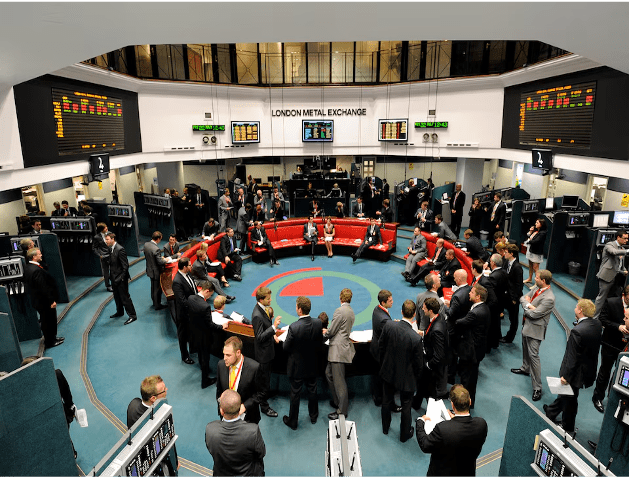
LONDON, July 9 (Reuters) - U.S.-based hedge fund Elliott Associates on Tuesday urged a London court to overturn a verdict supporting the London Metal Exchange's (LME) cancellation of nickel trades partly because the exchange failed to disclose documents. The LME annulled $12 billion in nickel trades in March 2022 when prices shot to records above $100,000 a metric ton in a few hours of chaotic trade. Elliott and market maker Jane Street Global Trading brought a case demanding a combined $472 million in compensation, alleging at a trial in June last year that the 146-year-old exchange had acted unlawfully. London's High Court ruled last November that the LME had the right to cancel the trades because of exceptional circumstances, and was not obligated to consult market players prior to its decision. Lawyers for Elliott told London's Court of Appeal that the LME belatedly released documents in May detailing its "Kill Switch" and "Trade Halt" internal procedures. It also newly disclosed an internal report that Elliott said detailed potential conflicts of interest at the exchange. "It was troubling that one gets disclosure out of the blue in the Court of Appeal for the first time," Elliott lawyer Monica Carss-Frisk told the court. Jane Street Global did not appeal the ruling. "If we had had them (documents) in the proceedings before the divisional court, we may well have sought permission to cross examine." LME lawyers said the new documents were not relevant. "The disclosed documents do not affect the reasoning of the divisional court or the merits of the arguments on appeal," the exchange said in documents prepared for the appeal hearing. "Elliott's appeal is largely a repetition of the arguments which were advanced, and rightly rejected." The LME said it had both the power and a duty to unwind the trades because a record $20 billion in margin calls could have led to at least seven clearing members defaulting, systemic risk and a potential "death spiral". Elliott said the ruling diluted protection provided by the Human Rights Act and also wrongly concluded the LME had the power to cancel the trades.
Sparkling box office for Spring Festival films indicates tremendous potential for movie consumption in Chinese society
According to Chinese movie ticketing platform Taopiaopiao, the box office for the 2024 Spring Festival holidays surpassed last year's 6.766 billion yuan and entered the top two in the history of Chinese Spring Festival holidays box office. I recently watched three movies, and I think they are all good. However, their overall level is not higher than the movies from last Spring Festival holidays. The higher box office compared to last year reflects the strong potential for movie consumption in Chinese society. Our filmmakers need to make further efforts. The current development of Chinese movies has many advantages. People often complain that our film creation faces various "restricted areas," but in terms of societal topics, the space for Chinese film creation is relatively large and relaxed. For example, Zhang Yimou's film Article 20 shows protest scenes and boldly explores the issue of judicial injustice in depth. A few years ago, the film I Am Not Madame Bovary specifically discussed the sensitive issue of petitioning. Another film, Johnny Keep Walking! which was aired last year, also touches on serious social issues. The breadth and depth of these films' topics lay the foundation for their attractiveness. The improvement of China's basic film production level has played a role in boosting their success, resulting in Hollywood films being collectively pushed off the Chinese box office charts. Now, almost any domestic film can be considered "watchable." The next step is to produce world-class masterpieces and promote the collective advancement of Chinese films on the global stage. The three movies that I watched are YOLO, directed, written and starring Jia Ling, a representative of the new generation of female Chinese directors, Pegasus 2, directed by Han Han and Article 20. They are all realistic-themed films, and the actors who play the main characters have some overlap. Although each of them is good, as mentioned earlier, I personally feel that their overall quality is not as good as films screened during last year's Spring Festival holidays. So I have a feeling that Chinese movies have been spinning in place for a year in such a good market environment. Of course, I am not an expert, so what I say may not be correct, or it may be biased. The production level of Chinese films, in terms of technology, has caught up. Domestic films have surpassed Hollywood in the domestic market through competition, which is a great achievement. However, I hope that this does not mark the beginning of a "decoupling" between Chinese movies and the rest of the world, but rather a turning point for Chinese films to reach a higher level domestically and to go global. This requires Chinese realistic films to not only be loved by domestic audiences but also become increasingly "understandable" to foreigners, allowing them to empathize with us through these films. If Chinese films can gradually go global through market-oriented approaches, it will be a new process for the international community to re-recognize and understand China, and to establish common values between us. The earliest understanding of the US by the Chinese people came entirely from the shaping of news propaganda. Later, American films and TV works entered China, showcasing the rich American society. Now, Western media's portrayal of China is completely stereotyped. If Chinese films and other popular culture do not go global, and if a large number of secular elements from China do not appear on the global internet, the outside world's perception of China is likely to be dictated by Western media for a long time. So I hope that China's excellent film market can incubate outstanding works that are loved and enjoyed globally. Not only should our cultural policies provide greater space, but our internet public opinion should also be more tolerant of the interweaving and mutually influencing between Chinese and Western cultural elements. We should not restrict those elements in Chinese films that can resonate with both Chinese and foreign audiences. For example, comedies should not only make Chinese people laugh, but also be understandable to foreigners. Chinese films need to establish their own big stars, including top-tier female stars. In the past, Bruce Lee and Jackie Chan became famous in the West, but they were primarily seen as "Hollywood stars." It is a more challenging journey for Chinese stars to gain international recognition through their own films. The success of Chinese films and Chinese stars worldwide is definitely a complementary process. The backgrounds of our film stories should also be carefully selected and more diverse, enhancing the visual quality and international appeal of the films. Feng Xiaogang's film Be There or Be Square was entirely set in the US, and later, there was another film called Lost in Thailand, both of which achieved good results. Choosing such backgrounds should be encouraged as one of the approaches. In conclusion, I am delighted by the comprehensive recovery of the Chinese film market, and I also hope that the films nurtured by this market will continue to progress. To achieve this, we need to keep introducing the world's best films and collaboratively cultivate the aesthetic taste of the Chinese people alongside Chinese films. Chinese films have already stood up, but they should not monopolize this vast market. Instead, the Chinese market should serve as the stage for them to expand globally.
Australia pledges to provide more funds to Pacific island banks to counter China's influence
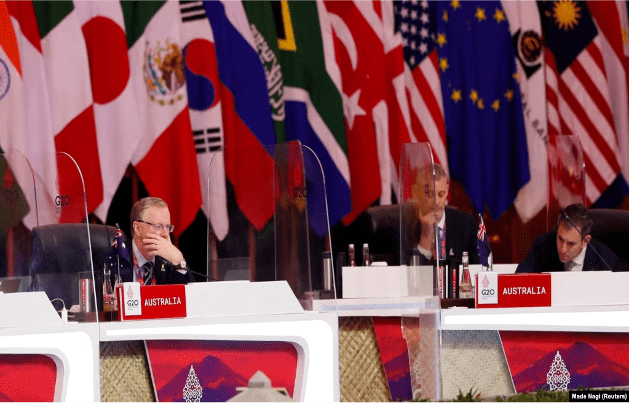
Australia pledged on Tuesday to increase investment in Pacific island nations, offering A$6.3 million ($4.3 million) to support their financial systems. Some Western banks are cutting ties with the region because of risk factors, while China is trying to increase its influence there. Some Western bankers have terminated long-standing banking relationships with small Pacific nations, while others are considering closing operations and restricting access to dollar-denominated bank accounts in those countries. "We know that the Pacific is the fastest-moving region in the world for correspondent banking services," Australian Treasurer Jim Chalmers said in a speech at the Pacific Banking Forum in Brisbane. "What's at stake here is the Pacific's ability to engage with the world," he said, with much of the region at risk of being cut off from the global financial system. Chalmers said Australia would provide A$6.3 million ($4.3 million) to the Pacific to develop secure digital identity infrastructure and strengthen compliance with anti-money laundering and counter-terrorist financing requirements. Experts say Western banks are de-risking to meet financial regulations, making it harder for them to do business in Pacific island nations, where compliance standards sometimes lag, undermining their financial resilience. Australia's ANZ Bank is in talks with governments about how to make its Pacific island businesses more profitable amid concerns about rising Chinese influence as financial services leave the West, Chief Executive Shayne Elliott said Tuesday. ANZ is the largest bank in the Pacific region, with operations in nine countries, though some of those businesses are not financially sustainable, Elliott said in an interview on the sidelines of the forum. "If we were there purely for commercial purposes, we would have closed it a long time ago," he said. Western countries, which have traditionally dominated the Pacific, are increasingly concerned about China's plans to expand its influence in the region after it signed several major defense, trade and financial agreements with the region. Bank of China signed an agreement with Nauru this year to explore opportunities in the country, following Australia's Bendigo Bank saying it would withdraw from the country. Mr. Chalmers said Australia was working with Nauru to ensure that banking services in the country could continue. ANZ Bank exited its retail business in Papua New Guinea in recent years, while Westpac considered selling its operations in Fiji and Papua New Guinea but decided to keep them. The Pacific lost about 80% of its correspondent banking relationships for dollar-denominated services between 2011 and 2022, Australian Assistant Treasurer Stephen Jones told the forum, which was co-hosted by Australia and the United States. “We would be very concerned if there were countries acting in the region whose primary objective was to advance their own national interests rather than the interests of Pacific island countries,” Mr. Jones said on the first day of the forum in Brisbane. He made the comment when asked about Chinese banks filling a vacuum in the Pacific. Meanwhile, Washington is stepping up efforts to support Pacific island countries in limiting Chinese influence. "We recognize the economic and strategic importance of the Pacific region, and we are committed to deepening engagement and cooperation with our allies and partners to enhance financial connectivity, investment and integration," said Brian Nelson, U.S. Treasury Undersecretary for Counterterrorism and Financial Intelligence. The United States is aware of the problem of Western banks de-risking in the Pacific region and is committed to addressing it, Nelson told the forum's participants. He said data showed that the number of correspondent banking relationships in the Pacific region has declined at twice the global average rate over the past decade, and the World Bank and the Asian Development Bank are developing plans to improve correspondent banking relationships. U.S. Treasury Secretary Janet Yellen said in a video address to the forum on Monday (July 8) that the United States is focused on supporting economic resilience in the Pacific region, including by strengthening access to correspondent banks. She said that when President Biden and Australian Prime Minister Anthony Albanese met at the White House last year, they particularly emphasized the importance of increasing economic connectivity, development and opportunities in the Pacific region, and a key to achieving that goal is to ensure that people and businesses in the region have access to the global financial system.