link1s.site

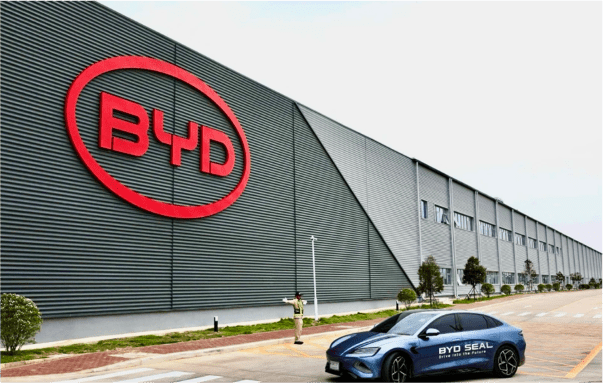
Turkey has cancelled a 40 percent tariff on Chinese cars, and BYD has invested $1 billion to build a factory

Byd has grown rapidly in China over the past few years, becoming the country's best-selling car brand and the world's biggest selling electric car brand. Byd opened its first electric car factory in Southeast Asia on Thursday in Thailand. Byd also took over a former Ford Motor Co. plant in Brazil and has been looking for a site for a Mexican plant. Europe's first automotive plant is under construction in Hungary.

Byd's second-quarter sales jumped to a record 982,747 vehicles, up more than 40 per cent from a year earlier. Although the company's sales in Europe have been sluggish so far, it is making a big marketing push in the region to replace Volkswagen as the main automotive sponsor of the European Championship.

According to a recent Fortune report, officials said that Turkish President Recep Tayyip Erdogan is expected to announce the agreement for BYD to build the plant at a signing ceremony on Monday in Manisa province, where the plant will be built. The officials spoke on condition of anonymity because they were not authorized to speak publicly. Byd representatives declined to comment. Turkish Industry and Technology Minister Mohamed Fatih Kassir said in May that he was in advanced discussions with BYD and Chery on investment in Turkey.

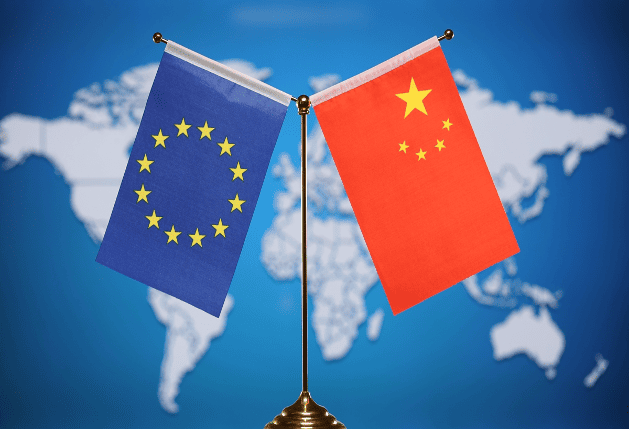
The new plant will improve BYD's access to the European Union, as Turkey has a customs union agreement with the EU. The European Union this week announced temporary punitive tariffs on electric vehicles imported from China, with BYD imposing an additional 17.4 percent tariff on top of the existing 10 percent tariff. Other Chinese carmakers have been hit with higher tariffs. Investing in Turkey would strengthen the presence of Chinese carmakers in Europe at a time of escalating trade tensions.

Clear Check | Russian satellite disintegrated and hit GPS and Starlink satellites?
On June 27, the U.S. Space Command announced that a retired Russian satellite disintegrated in low Earth orbit on June 26, generating more than 100 pieces of debris, forcing astronauts on the International Space Station to hide for about an hour. The X-platform account of the International Space Station showed that shortly after 9 p.m. Eastern Time on June 26, NASA instructed the crew on the space station to hide in their respective spacecraft for safety because NASA learned in the morning of the 26th that a satellite disintegrated near the space station. About an hour later, the crew was allowed to leave the spacecraft and the space station resumed normal operation. There are rumors on social platforms that the satellite hit six U.S. GPS satellites after the disintegration and damaged 20 Starlink satellites developed by Space Exploration Technologies Corporation (SpaceX) led by Musk, triggering speculation that the relevant satellites were deliberately disintegrated.
Insurers fret over militant attacks, AI hacks at Paris Olympics
LONDON, July 5 (Reuters) - Insurers are nervous that militant attacks or AI-generated fake images could derail the Paris Olympics, risking event cancellations and millions of dollars in claims. Insurers faced losses after the 2020 Tokyo Olympics were postponed for a year due to the COVID-19 pandemic. Since then, wars in Ukraine and Gaza and a spate of elections this year, including in France, have driven up fears of politically-motivated violence at high-profile global events. The Olympics take place in Paris from July 26-Aug 11 and the Paralympics from Aug 28-Sept 8. German insurer Allianz (ALVG.DE), opens new tab is insurance partner for the Games. Other insurers, such as the Lloyd's of London (SOLYD.UL) market, are also providing cover. "We are all aware of the geopolitical situation the world is in," said Eike Buergel, head of Allianz's Olympic and Paralympic programme. "We are convinced that the IOC (International Olympic Committee), Paris 2024 and the national organising committees, together with the French authorities, are taking the right measures when it comes to challenges on the ground."
Avi Bruce appointed as head of IDF Central Command
On the evening of July 8, local time, the Israel Defense Forces issued a statement saying that Major General Avi Bluth replaced Yehuda Fox as the commander of the Israeli Central Command. Earlier that day, the Israeli army held a handover ceremony, which was presided over by the Israeli Chief of Staff Halevy. Avi Bluth joined the Israel Defense Forces in 1993 and commanded the Israeli military operations in the West Bank. In May this year, Bruce was promoted to major general and served as a military commander in the Israeli Central Command. CCTV reporters learned that in late April this year, Yehuda Fox, then commander of the Israeli Central Command, requested to resign and retire from the army in August this year. Fox had previously stated that he should bear part of the responsibility for the military intelligence failure on October 7 last year, and "must end his term like everyone else." According to the official website of the Israeli Defense Forces, the Central Command is one of the four major commands of the Israeli army, headquartered in Jerusalem, and its responsibility covers nearly one-third of Israel's territory.
US foreign policy is advanced smartphone with weak battery
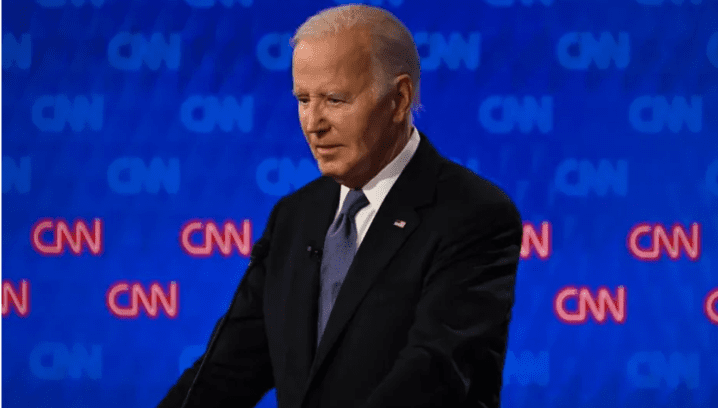
A couple of days ago, a Quad summit meeting in Sydney scheduled for May 24 was abruptly canceled. The US president had to pull out of his long-anticipated trip to Australia and Papua New Guinea. Instead, the heads of the four Quad member states got together on the margins of the G7 Summit in Hiroshima on May 20. The main reason for the change of plans was the continuous struggle between the White House and Republicans on the Hill over the national debt ceiling. If no compromise is reached, the US federal government might fail to meet its financial commitments already in June; such a technical default would have multiple negative repercussions for the US, as well as for the global economy and finance at large. Let us hope that a compromise between the two branches of US power will be found and that the ceiling of the national debt will be raised once again. However, this rather awkward last-minute cancellation of the Quad summit reflects a fundamental US problem - a growing imbalance between the US geopolitical ambitions and the fragility of the national financial foundation to serve these ambitions. The Biden administration appears to be fully committed to bringing humankind back to the unipolar world that existed right after the end of the Cold War some 30 years ago, but the White House no longer has enough resources at its disposal to sustain such an undertaking. As they say in America: You cannot not have champagne on a beer budget. The growing gap between the ends that the US seeks in international relations and the means that it has available is particularly striking in the case of the so-called dual containment policy that Washington now pursues toward Russia and China. Even half a century ago, when the US was much stronger in relative terms than it is today, the Nixon administration realized that containing both Moscow and Beijing simultaneously was not a good idea: "Dual containment" would imply prohibitively high economic costs for the US and would result in too many unpredictable political risks. The Nixon administration decided to focus on containing the Soviet Union as the most important US strategic adversary of the time. This is why Henry Kissinger flew to Beijing in July 1971 to arrange the first US-China summit in February 1972 leading to a subsequent rapid rapprochement between the two nations. In the early days of the Biden administration, it seemed that the White House was once again trying to avoid the unattractive "dual containment" option. The White House rushed to extend the New START in January 2021 and held an early US-Russia summit meeting five months later in Geneva. At that point many analysts predicted that Biden would play Henry Kissinger in reverse - that is he would try to peace with the relatively weaker opponent (Moscow) in order to focus on containing the stronger one (Beijing). However, after the beginning of the Russia-Ukraine conflict, it became clear that no accommodation with the Kremlin was on Biden's mind any longer. Still, having decided to take a hard-line stance toward Moscow and to lead a broad Western coalition in providing military and economic assistance to Kiev, Washington has not opted for a more accommodative or at least a more flexible policy toward Beijing. On the contrary, over last year one could observe a continuous hardening of the US' China policy - including granting more political and military support to the Taiwan island, encouraging US allies and partners in Asia to increase their defense spending, engaging in more navel activities in the Pacific and imposing more technology sanctions on China. In the meantime, economic and social problems within the US are mounting. The national debt ceiling is only the tip of an iceberg - the future of the American economy is now clouded by high US Federal Reserve interest rates that slow down growth, feed unemployment and might well lead to a recession. Moreover, the US society remains split along the same lines it was during the presidency of Donald Trump. The Biden administration has clearly failed to reunite America: Many of the social, political, regional, ethnic and even generational divisions have got only deeper since January 2021. It is hard to imagine how a nation divided so deeply and along so many lines could demonstrate continuity and strategic vision in its foreign policy, or to allocate financial resources needed to sustain a visionary and consistent global leadership. Of course, the "dual containment" policy is not the only illustration of the gap between the US ambitions and its resources. The same gap inevitably pops up at every major forum that the US conducts with select groups of countries from the Global South - Africa, Southeast Asia, Latin America or the Middle East. The Biden administration has no shortage of arguments warning these countries about potential perils of cooperating with Moscow or Beijing, but it does not offer too many plausible alternatives that would showcase the US generosity, its strategic vision, and its true commitment to the burning needs of the US interlocutors. To cut it short, Uncle Sam brings lots of sticks to such meetings, but not enough carrots to win the audience. In sum, US foreign policy under President Joe Biden reminds people of a very advanced and highly sophisticated smartphone that has a rather weak battery, which is not really energy efficient. The proud owner of the gadget has to look perennially for a power socket in order not to have the phone running out of power at any inappropriate moment. Maybe the time has come for the smartphone owner to look for another model that would have fewer fancy apps, but a stronger and a more efficient battery, which will make the appliance more convenient and reliable.
Adult Film Star Jesse Jane's Cause of Death Revealed
New details about Jesse Jane’s death have emerged. More than six months after the former adult film star was found dead alongside her boyfriend Brett Hasenmueller in her Moore, Oklahoma, home from a suspected overdose, authorities confirmed what led to the tragedy. Jane and Hasenmueller reportedly died of an accidental fentanyl and cocaine overdose according to TMZ, citing the Oklahoma City Medical Examiner’s Office. E! News has reached out to the Examiner’s Office for comment but had not yet heard back. In late January, local outlet KFOR reported that Moore Police found Jane and Hasemueller’s bodies while performing a wellness check after the couple had not been heard from in several days. Moore PD's Lt. Francisco Franco told The New York Times at the time that it was believed Jane died from a drug overdose, but that both deaths remained under investigation. Jane, who was 43 at the time of her passing, acted in a number of adult films starting in 2003 before transitioning to other projects, including an appearance in Baywatch: Hawaiian Wedding and 2004's Starsky and Hutch, as well as season two of Entourage. Pretty Pastel Please, YouTuber, Instagram By 2007, Jane had officially retired from the adult film industry, pivoting into making her own line of sex toys. At the time of her death, BSG Public Relations President Brian Gross shared in a statement to E! News, "Jesse Jane was a vivacious person who had an absolute and ultimate love for life. During her time in the adult industry, of which I was able to spend wonderful moments with her, she was an incredible professional who cheered everyone on and brought sunshine to every film set she worked on." "There is not one person in the adult industry who didn't spend time with her, whether onset or in a social setting, that she didn't make smile, laugh or both. She would light up a room as soon as she walked in," he continued, "I will personally miss her very much for the reasons above. Her smile was everything."