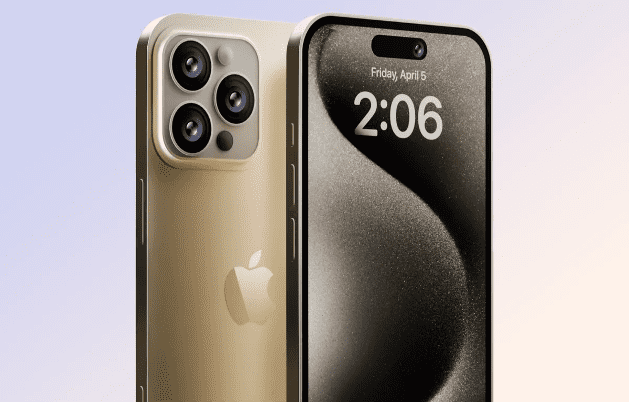
iPhone 16 Pro leak just confirmed a huge camera upgrade
The tetraprism lens with 5x optical zoom currently exclusive to the iPhone 15 Pro Max could be headed to both the iPhone 16 Pro and iPhone 16 Pro Max, narrowing the gap between Apple's premium flagships. That's according to a new report from analyst Ming-Chi Kuo, who cites a recent earnings call with Apple lens supplier Largan. In the call, a spokesperson from Largan said "some flagship specifications will be extended to other models" in the second half of 2024, presumably in reference to the upcoming iPhone Pro models. "Apple is Largan’s largest customer, and Largan is also Apple’s largest lens supplier," Kuo said. "Therefore, the quote likely refers to the fact that the new iPhone 16 Pro and Pro Max will have a tetraprism camera in 2H24 (while only the iPhone 15 Pro Max had this camera in 2H23).” The report goes on to say that the tetraprism camera for the iPhone 16 Pro series won't be all that different from the one in the iPhone 15 Pro Max. While the lack of an upgrade is disappointing, it's not necessarily a bad thing as these kinds of lenses are already top-of-the-line. They represent a major increase over prior models’ zoom capabilities, and they're capable of offering more depth while still fitting into super-slim smartphones. That being said, Apple does appear to be revamping the main camera and ultra-wide camera on the iPhone 16 Pro Max. Evidence continues to mount that both iPhone 16 Pro models will share the same 5x optical zoom camera. Earlier this week, DigitTimes in Asia (via 9to5Mac) reported that Apple is set to ramp up orders for tetraprism lenses as it expands their use in its upcoming iPhone series. Industry sources told the outlet that Largan and Genius Electronic Optical were tapped as the primary suppliers. Apple would be wise to streamline its Pro-level iPhones with the same camera setup; then all customers have to consider with their choice of a new iPhone is the size and price. Of course, this should all be taken with a grain of sand for now until we hear more from Apple. It's still a while yet before Apple's usual September time window for iPhone launches. In the meantime, be sure to check out all the rumors so far in our iPhone 16, iPhone 16 Pro and iPhone 16 Pro Max hubs.
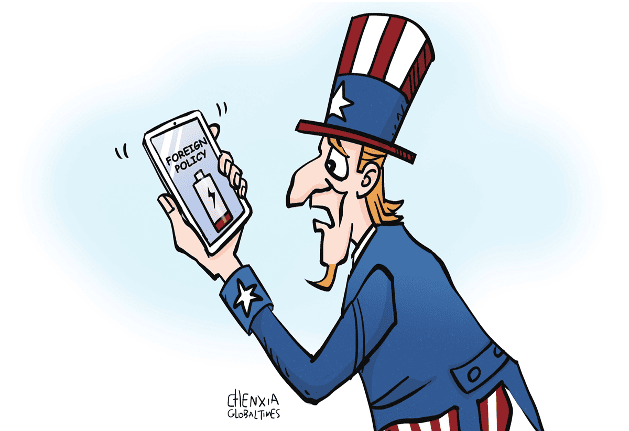
US foreign policy is advanced smartphone with weak battery
A couple of days ago, a Quad summit meeting in Sydney scheduled for May 24 was abruptly canceled. The US president had to pull out of his long-anticipated trip to Australia and Papua New Guinea. Instead, the heads of the four Quad member states got together on the margins of the G7 Summit in Hiroshima on May 20. The main reason for the change of plans was the continuous struggle between the White House and Republicans on the Hill over the national debt ceiling. If no compromise is reached, the US federal government might fail to meet its financial commitments already in June; such a technical default would have multiple negative repercussions for the US, as well as for the global economy and finance at large. Let us hope that a compromise between the two branches of US power will be found and that the ceiling of the national debt will be raised once again. However, this rather awkward last-minute cancellation of the Quad summit reflects a fundamental US problem - a growing imbalance between the US geopolitical ambitions and the fragility of the national financial foundation to serve these ambitions. The Biden administration appears to be fully committed to bringing humankind back to the unipolar world that existed right after the end of the Cold War some 30 years ago, but the White House no longer has enough resources at its disposal to sustain such an undertaking. As they say in America: You cannot not have champagne on a beer budget. The growing gap between the ends that the US seeks in international relations and the means that it has available is particularly striking in the case of the so-called dual containment policy that Washington now pursues toward Russia and China. Even half a century ago, when the US was much stronger in relative terms than it is today, the Nixon administration realized that containing both Moscow and Beijing simultaneously was not a good idea: "Dual containment" would imply prohibitively high economic costs for the US and would result in too many unpredictable political risks. The Nixon administration decided to focus on containing the Soviet Union as the most important US strategic adversary of the time. This is why Henry Kissinger flew to Beijing in July 1971 to arrange the first US-China summit in February 1972 leading to a subsequent rapid rapprochement between the two nations. In the early days of the Biden administration, it seemed that the White House was once again trying to avoid the unattractive "dual containment" option. The White House rushed to extend the New START in January 2021 and held an early US-Russia summit meeting five months later in Geneva. At that point many analysts predicted that Biden would play Henry Kissinger in reverse - that is he would try to peace with the relatively weaker opponent (Moscow) in order to focus on containing the stronger one (Beijing). However, after the beginning of the Russia-Ukraine conflict, it became clear that no accommodation with the Kremlin was on Biden's mind any longer. Still, having decided to take a hard-line stance toward Moscow and to lead a broad Western coalition in providing military and economic assistance to Kiev, Washington has not opted for a more accommodative or at least a more flexible policy toward Beijing. On the contrary, over last year one could observe a continuous hardening of the US' China policy - including granting more political and military support to the Taiwan island, encouraging US allies and partners in Asia to increase their defense spending, engaging in more navel activities in the Pacific and imposing more technology sanctions on China. In the meantime, economic and social problems within the US are mounting. The national debt ceiling is only the tip of an iceberg - the future of the American economy is now clouded by high US Federal Reserve interest rates that slow down growth, feed unemployment and might well lead to a recession. Moreover, the US society remains split along the same lines it was during the presidency of Donald Trump. The Biden administration has clearly failed to reunite America: Many of the social, political, regional, ethnic and even generational divisions have got only deeper since January 2021. It is hard to imagine how a nation divided so deeply and along so many lines could demonstrate continuity and strategic vision in its foreign policy, or to allocate financial resources needed to sustain a visionary and consistent global leadership. Of course, the "dual containment" policy is not the only illustration of the gap between the US ambitions and its resources. The same gap inevitably pops up at every major forum that the US conducts with select groups of countries from the Global South - Africa, Southeast Asia, Latin America or the Middle East. The Biden administration has no shortage of arguments warning these countries about potential perils of cooperating with Moscow or Beijing, but it does not offer too many plausible alternatives that would showcase the US generosity, its strategic vision, and its true commitment to the burning needs of the US interlocutors. To cut it short, Uncle Sam brings lots of sticks to such meetings, but not enough carrots to win the audience. In sum, US foreign policy under President Joe Biden reminds people of a very advanced and highly sophisticated smartphone that has a rather weak battery, which is not really energy efficient. The proud owner of the gadget has to look perennially for a power socket in order not to have the phone running out of power at any inappropriate moment. Maybe the time has come for the smartphone owner to look for another model that would have fewer fancy apps, but a stronger and a more efficient battery, which will make the appliance more convenient and reliable.
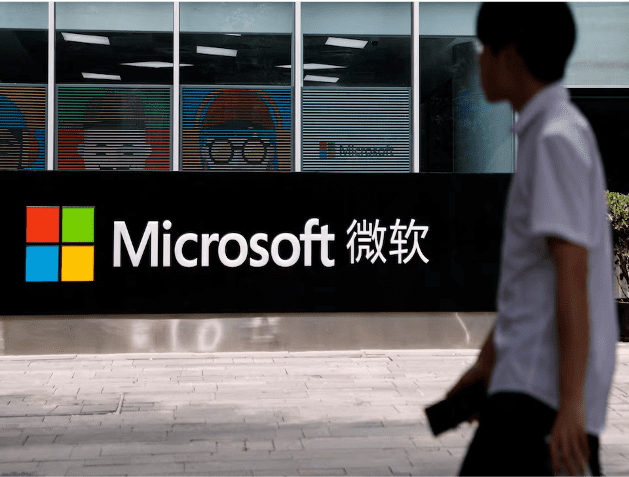
Microsoft to offer Apple devices to employees in China, cites absence of Android services
July 8 (Reuters) - Microsoft (MSFT.O), opens new tab intends to offer Apple's (AAPL.O), opens new tab iOS-based devices to its employees in China to access authentication apps, a company spokesperson said on Monday, citing absence of Google's (GOOGL.O), opens new tab Android services in the country. Microsoft has been under increased scrutiny after a series of security breaches, the latest being that of Russian hackers who spied and accessed emails of the company's employees and customers earlier this year. The development was first reported by Bloomberg News, which, citing an internal memo, said the Windows OS-maker instructed its employees in China to use Apple devices at workplace from September. As a part of Microsoft's global Secure Future Initiative, the move to switch to iOS-devices stems from the lack of availability of Google Play Store in China that limits its employees' access to security apps such as Microsoft Authenticator and Identity Pass, the report added. "Due to the lack of availability of Google Mobile Services in this region, we look to offer employees a means of accessing these required apps, such as an iOS device," a company spokesperson told Reuters in an email. Microsoft is among those U.S. companies that have a strong presence in China. It entered the Chinese market in 1992 and also operates a large research and development center in the country. The company will provide iPhone 15 models to employees, currently using Android handsets across China, including Hong Kong, the Bloomberg report said.

Portadown businessman avoids jail for sexual assault of teen under his employment
Defence said the defendant 'continues to deny' the charges and bail in the sum of £1,000 was fixed for appeal
A Portadown man has avoided jail after sexually assaulting a 16-year-old shop worker under his employment. -ADVERTISEMENT- Brian Thomas Chapman (58), of Moyallan Road, appeared before Newry Magistrates’ Court on Monday for sentencing on two counts of sexual assault. The prosecution outlined that on September 23, 2020, a 16-year-old student in the employment of Brian Chapman, disclosed to her mother about incidents that had occurred in her workplace. She said Chapman had put his hand on her thigh and the back of her leg. She also disclosed that she had been getting extra money from him and he had been sending her text messages. The allegations were reported to police the next day, September 24. The victim then took part in an interview on October 9, in which she said, when she was alone in Chapman’s office, he placed his hand on her upper thigh and his other hand on her lower back, underneath her trousers. The defendant was arrested and interviewed at Lurgan police station, where he denied the allegations. His phone was seized and an examination was carried out. The first interview of the defendant took place on October 9, during which he admitted to sending a message about wanting the victim to work 24/7, but stated this was a joke. The second interview took place on January 28, 2021, where he admitted to sending the 24/7 message, but denied sending other messages, such as “hope you’re spending the pounds on something special”. Throughout this process, Chapman denied sending the messages and denied any of the sexual assaults alleged by the victim. On the Chapman’s criminal record, the prosecution added that he was convicted of three common assaults on appeal. In terms of commission, these matters pre-dated this case but the conviction occurred during the running of this case and also involved a female working for the defendant. Prosecution continued that the age of the victim was an aggravating feature, arguing there was a “vulnerability” due to the “power-imbalance” between Chapman and the young student working for him. An additional aggravating feature, they said, was that during the course of the defence, part of the defence was that the victim had “manipulated or manufactured” some of the text messages that were sent. A defence lawyer, speaking on the pre-sentence report, noted the author deemed Chapman to be of low risk. He also noted that similar offences were contested in the County Court in respect of another complaint, with the judge substituting indecent assault charges for common assault. He also argued a Sexual Offences Prevention Order (SOPO) was not necessary as the offending was four years ago, there has been no repetition and risk had been addressed. District Judge Eamonn King noted the defendant was convicted on two of four original charges following a contest, which ran over a number of days, with the case adjourned for a pre-sentence report and victim impact statement to be produced. He added the defendant “continues to deny” the charges and seeks to appeal the outcome. District Judge King, on reading the pre-sentence report, noted the defendant “denies ever hugging or touching the individual and he denies any sexual attraction to the victim”, but pointed to a paragraph in the report which stated, “From the available evidence, it’s possible to surmise that he demonstrated risk taking and impulsive behaviour. It appears that he took advantage of his position and power in a bid to meet his sexual needs, given the victim’s young age and the fact that he was her employer”. The report added that this demonstrated “limited victim empathy and responsibility due to his denial of the offences”. On the victim impact statement, District Judge King described her as a young girl getting her first job, with the “world as her oyster”. He continued: “As a result of what she says occurred, that turned on its head. It left her feeling inwardly uncomfortable, anxious and lonely. She cut herself off from her friends. She stopped going out. She didn’t want to go to school.” He also described a “degree of manipulation” in the case, as this was the victim’s first job and there was a power imbalance between her as an employee, and Chapman as the employer. In his sentencing remarks, District Judge King, said: “I’ve taken time to emphasise to the victim in this case that the victim did nothing wrong. The victim did everything right and the victim shouldn’t feel lonely, anxious or isolated. “The victim should feel confident, strong and outgoing.” Owing to the defendant’s ongoing denial of the charges, he added: “My sentencing exercise isn’t the conclusion of the case today, but I will sentence, so that we can move towards the conclusion going forward. “I am satisfied, irrespective of what the pre-sentence report says, that the defendant took advantage of someone, attempted to groom someone and was guilty of the two offences.” On the two counts, Chapman was sentenced to three months in prison, suspended for two years. He was also made subject to a Sexual Offences Prevention Order (SOPO) for five years and placed on the sex offenders’ register for seven years. Following sentencing, District Judge King fixed bail for appeal at £1,000.
McDonald’s expands operational map in Chinese market, to roll out more outlets in the country
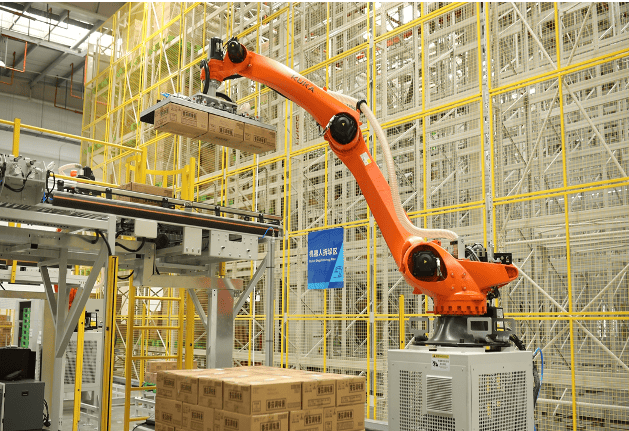
McDonald's China, together with its four major suppliers announced the launch of an industrial park in Xiaogan city, Central China's Hubei Province on Wednesday, highlighting the importance of Chinese market in terms of supply chain for food business. With a combined investment of 1.5 billion yuan ($206 million), the park, named Hubei Smart Food Industrial Park, is a joint project with Bimbo QSR, XH Supply Chain, Tyson Foods Inc, and Zidan, according to information provided to the Global Times. The park is expected to produce 34,000 tons of meat products, 270 million buns, 30 million pastries, and 2 billion packaged products annually. It also features a 25,000-square-meter high-standard automated warehouse for frozen, refrigerated, and dry goods, reducing logistics time by 90 percent from manufacturing to arriving at the destination. Leveraging local geographical advantages, the park will become a supply hub for McDonald's in central and western China, enhancing supply efficiency and stability for its outlets there, the company said. "McDonald's has been deeply rooted in China for over 30 years, and the park is an echo of our long-term development in China," said Phyllis Cheung, CEO of McDonald's China. "Without any long-term strategy, we don't have any structural advantage in China," Cheung noted. The US food giant continues to expand its business map in China. As of the end of June in 2024, there were over 6,000 restaurants and over 200,000 employees in the market. China has become the second largest and fastest-growing market of McDonald's. In 2023, McDonald's China unveiled the ambition of operating 10,000 restaurants by 2028. To support this, McDonald's and its suppliers have invested over 12 billion yuan from between 2018 to 2023 to develop new production capacities and enhance supply chain sustainability. Observers said that the industrial park reflect foreign companies' confidence in operating in China as the country takes concrete measures in furthering reform and opening-up. China's foreign direct investment from January to May 2024 reached 412.51 billion yuan, with the number of newly-established foreign-backed companies reaching 21,764, rising by 17.4 percent year-on-year, data from China's Ministry of Commerce revealed. According to a recent survey by the American Chamber of Commerce in China, the majority of US companies saw improved profitability in China in 2023, and half of the survey participants put China as their first choice or within their top three investment destinations globally. Olaf Korzinovski, EVP of Volkswagen China, who is responsible for production and components, also shared his understanding of supply chains in China with the Global Times. Volkswagen has been operating in China for about 40 years. "In order to seize greater value for our customers," Volkswagen Group is stepping up pace of innovation in China, and systematically purshing forward the digitalization process, Korzinovski noted, adding the company is strengthening local capabilities with accelerated decision-making efficiency. Global Times