link1s.site

UAE insurance sector continued to grow in Q4-23: CBUAE

The UAE insurance sector continued to grow in Q4-2023, as reflected by increase in the gross written premiums. As of year-end, the number of licensed insurance companies in the UAE remained at 60, according to the Central Bank of the UAE's (CBUAE) Quarterly Economic Review (Q4-2023).

The insurance sector comprised 23 traditional national companies, 10 Takaful national and 27 foreign companies, while the number of insurance related professions remained at 491.

The review on insurance sector structure and activity showed that the gross written premium increased by 12.7% Y-o-Y in Q4 2023 to AED 53.2 billion, mostly due to an increase in health insurance premiums by 16.5% Y-o-Y and an increase in property and liability insurance premiums by 18.9% Y-o-Y, while the insurance of persons and fund accumulation premiums decreased by 12.4% Y-o-Y, resulting primarily from decrease in individual life premiums.

Gross paid claims of all types of insurance plans increased by 12.8% Y-o-Y to AED 31.1 billion at the end of 2023. This was mainly driven by the increase in claims paid in health insurance by 16.9% Y-o-Y and increase in paid claims in property and liability insurance by 10.9% Y-o-Y, partially offset by the decline in claims paid in insurance of persons and fund accumulation by 2.8% Y-o-Y.

The total technical provisions of all types of insurance increased by 8.4% Y-o-Y to AED 74.4 billion in Q4 2023 compared to AED68.6 billion in Q4 2022.

The volume of invested assets in the insurance sector amounted to AED 76 billion (60.4% of total assets) in Q4 2023 compared to AED 71.4 billion (59.4% of total assets) in Q4 2022.

The retention ratio of written insurance premiums for all types of insurance was 52.9 % (AED 28.1 billion) in Q4 2023, compared to 54.9% (AED 25.9 billion) at the end of 2022.

The UAE insurance sector remained well capitalized in terms of early warning ratios and risk assessment. Own funds to minimum capital requirement ratio increased to 335.7% in Q4 2023, compared to 309.3% at the end of 2022, due to an increase in own funds eligible to meet the minimum capital requirements.

Also, own funds to solvency capital requirement ratio rose to 221% in Q4 2023 compared to 208.5% in Q4 2022, due to an increase in own funds eligible to meet solvency capital requirements.

Finally, own funds to minimum guarantee fund ratio reached to 316.3% at the end of 2023 down from 314.6% a year earlier, due to higher eligible funds to meet minimum guarantee funds.

In terms of profitability, the net total profit to net written premiums increased to 6.5% in Q4 2023, compared to 2.9% at the end of 2022. The return on average assets increased to 0.3% in Q4 2023 compared to the 0.1% at the of the previous year.

Boeing will be fined 3.5 billion yuan for "conspiracy to defraud" in two air crashes. Will the company slide into the abyss?
Taking the initiative to plead guilty to Boeing is not small, but it can avoid being exposed to more problems when it is publicly tried, which is a "minor penalty" for Boeing. So now the families of the crash victims are very opposed to the move, demanding that the trial continue to be open. But after all, Boeing is America's oldest industrial son, whether it is Trump or Biden, and finally have to gently put down, give a chance. The Justice Department had been seeking a guilty plea from Boeing as early as May, when it launched the investigation. After all, if you plead guilty, you only need to pay a fine, and if you really go to court, you don't know how many quality problems Boeing will be exposed by your witnesses. Boeing also knew it had too many flaws, and paying a $243.6 million fine and bringing in a third party to monitor its compliance for three years, totaling more than $400 million in additional expenses, is small change for Boeing. Given Boeing's style in the past few years, this fine may not even force Boeing to tighten production line management. Just this kind of "reconciliation" that completely excludes the victims of the crash can not get the families to agree. Paul Cassell, an attorney for the victims' families, said he plans to ask the federal judge overseeing the case to reject the agreement and "hold this case to an open trial so that all the facts of this case can be presented in a fair and public manner before a jury." The demand is reasonable, but the US judge will most likely side with Boeing.
The Apple Watch is reportedly getting a birthday makeover
Apple is planning to revamp its smartwatch as its 10th birthday nears. The improvements include larger displays and thinner builds, Bloomberg reported. The revamped watches may also get a new chip, which could enable some AI enhancements. The Apple Watch is about to turn 10, so Apple is planning a birthday revamp, including larger displays and thinner builds, Bloomberg reported. Both versions of the new Series 10 watches will have screens similar to the large displays found on the Apple Watch Ultra, the report said. The revamped watches are also expected to contain a new chip that may permit some AI enhancements later on. Last month, Apple pulled back the curtain on its generative-AI plans with Apple Intelligence. Advertisement It hopes the artificial-intelligence features will prove alluring enough to persuade consumers to buy new Apple products. The announcement has been generally well received by Wall Street. Dan Ives of Wedbush Securities wrote in a Monday note that the "iPhone 16 AI-driven upgrade could represent a golden upgrade cycle for Cupertino." "We believe AI technology being introduced into the Apple ecosystem will bring monetization opportunities on both the services as well as iPhone/hardware front and adds $30 to $40 per share," he added. Apple's stock closed on Friday at just over $226 a share, up 22% this year and valuing the company at $3.47 trillion. That puts it just behind Microsoft, which was worth $3.48 trillion at Friday's close. The tech giants have been vying for the title of the world's most valuable company in recent months — with the chipmaker Nvidia briefing claiming the crown last month. Apple also announced some software updates for the watch at its Worldwide Developers Conference last month. The latest version of the device's software, watchOS 11, emphasizes fitness and health, introducing tools that allow users to rate workouts and adjust effort ratings. WatchOS 11 will also use machine learning to curate the best photos for users' displays. Apple has previously used product birthdays to release new versions of devices. The iPhone X's release marked the 10th anniversary of the smartphone. However, it's not clear exactly when Apple plans to release the revamped watches, Bloomberg said. The company announced the Apple Watch in September 2014, with CEO Tim Cook calling it "the most personal product we've ever made." Apple did not immediately respond to a request for comment made outside normal working hours.
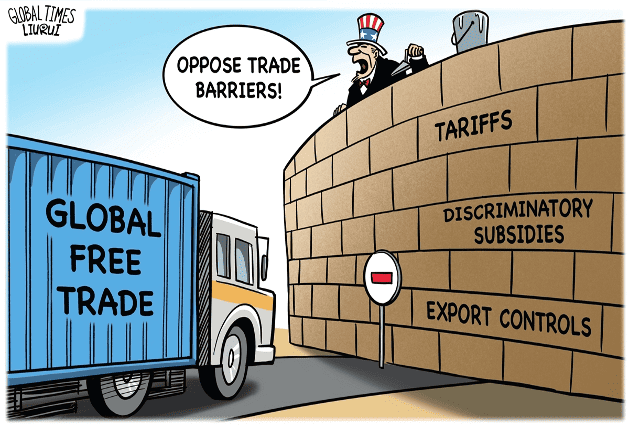
US politicians' lurch to levying high tariffs to damage global economic sustainability
US politicians are advocating for steep tariffs, echoing the protectionist Fordney-McCumber Tariff of 1922. Despite potential international retaliation, risks to global economic rules and a shift from post-World War II principles, US politicians have promised to increase trade barriers against China, causing concerns for the sustainability of global economic harmony. A century ago, the Republican Congress passed the Fordney-McCumber Tariff of 1922. This post-World War-I effort to protect the US from German competition and rescue America's own businesses from falling prices sparked a global wave of tariff hikes. While long forgotten, echoes of Fordney-McCumber now reverberate across the US political landscape. Once again, politicians are grasping the tariff as a magic talisman against its own economic ills and to contain the rise of China. The Democratic Party of the 1920s opposed tariffs, because duties are harmful to consumers and farmers, but today both President Joe Biden and former President Donald Trump favor national delivery through protectionism. Trump promised that his second term, if elected, would impose 60-percent tariffs on everything arriving from China and 10-percent tariffs on imports from the rest of the world, apparently including the imports covered by 14 free trade agreements with America's 20 partners. He initially promised 100-percent tariffs on electric vehicles (EVs), but when Biden declared that he was hiking tariffs on EVs from China to 100-percent, Trump raised the ante to 200-percent. On May 14, 2024, the White House imposed tariffs ranging from 25 percent (on items such as steel, aluminum and lithium batteries) to 50 percent (semiconductors, solar cells, syringes and needles) and 100 percent (electric vehicles) on Chinese imports. US government officials offer "national security" and "supply chain vulnerability" as the justification for levying high tariffs. To deflect worries about inflation, US Trade Representative Katherine Tai declared, "first of all, I think that that link, in terms of tariffs to prices, has been largely debunked." Contrary findings by the United States International Trade Commission and a number of distinguished economists, as well as Biden's own 2019 statement criticizing Trump's tariffs - "Trump doesn't get the basics. He thinks tariffs are being paid by China… [but] the American people are paying his tariffs" - forced Tai's office to wind back her declaration. The fact that prohibitive barriers to imports of solar cells, batteries and EVs will delay the green economy carries zero political weight with Trump and little with Biden. Nor does either of them worry about the prospects of Chinese retaliation and damage to the fabric of global economic rules. Historical lessons - unanticipated consequences of the foolish Fordney-McCumber Tariff of 1922 and the Smoot-Hawley Tariff of 1930 - are seen as irrelevant by the candidates and their advisers. The US' lurch from its post-World War II free trade principles offers China a golden opportunity. On the world stage, China will espouse open free trade and investment. China will encourage EV and battery firms to establish plants in Europe, Brazil, Mexico and elsewhere, essentially daring the US to damage its own alliances by restricting third country imports containing Chinese components. Whether the fabric of global economic rules that has delivered astounding prosperity to the world will survive through the 21st century remains to be seen. Much will depend on the decisions of other large economic powers, not only China but also the European Union and Japan, as well as middle powers, such as Australia, Brazil, Chile, ASEAN and South Korea. Their actions and reactions will reshape the rules of the 21st century. If others follow America down this costly path, the world will become less prosperous and vastly more unpredictable. If they resist, the US risks being diminished and more isolated. The author is a non-resident Senior Fellow at the Peterson Institute of International Economics. bizopinion@globaltimes.com.cn
Record numbers of people are flying. So why are airlines’ profits plunging?
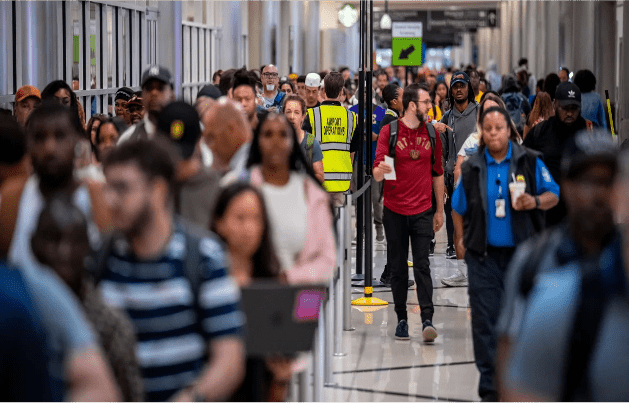
New York CNN — A record number of passengers are expected to pass through US airports this holiday travel week. You’d think this would be a great time to run an airline. You’d be wrong. Airlines face numerous problems, including higher costs, such as fuel, wages and interest rates. And problems at Boeing mean airlines have too few planes to expand routes to support a record numbers of flyers. Strong bookings can’t entirely offset that financial squeeze. The good news for passengers is they will be spared most of the problems hurting airlines’ bottom lines — at least in the near term. Airfares are driven far more by supply and demand, not their costs. But in the long run, the airlines’ difficulties could mean fewer airline routes, less passenger choice and ultimately a less pleasant flying experience. Profit squeeze Industry analysts expect airlines to report a drop of about $2 billion in profit, or 33%, when they report financial results for the April to June period this year. That would follow losses of nearly $800 million across the industry in the first quarter. Labor costs and jet fuel prices, the airlines’ two largest costs, are both sharply higher this year. Airline pilot unions just landed double-digit pay hikes to make up for years of stagnant wages; flight attendant unions now want comparable raises. Jet fuel prices are climbing because of higher demand in the summer. According to the International Air Transport Association’s jet fuel monitor, prices are up 1.4% in just the last week, and about 4% in the last month. Adding to the airlines’ problems is the crisis at Boeing, as well as the less-well-publicized problems with some of the jet engines on planes from rival Airbus. Since an Alaska Airlines Boeing 737 Max jet lost a door plug on a January 5 flight, leaving a gaping hole in the side of the plane 10 minutes after takeoff, the Federal Aviation Administration has limited how many jets Boeing can make over concerns about quality and safety. As a result, airlines have dramatically reduced plans to expand their fleets and replace older planes with more fuel efficient models. In some cases, airlines have asked pilots to take time off without pay, and carriers such as Southwest and United have announced pilot hiring freezes. In addition to the problems at Boeing, hundreds of the Airbus A220 and A320 family of jets globally have also been grounded for at least a month or more to deal with engine problems. Just about all the planes with those engines have been out of sevice for at least a few days to undergo examinations. And Airbus has also cut back the number of planes it expects to deliver to airlines this year because of supply chain problems. Problems for flyers For now, competition in the industry remains fierce: There are 6% more seats available this month compared to July of 2023, according to aviation analytics firm Cirium. And that’s helped to drive fares down — good news for passengers, but more bad news for airlines’ profits. Southwest announced in April that it would stop serving four airports to trim costs — Bellingham International Airport in Washington state, Cozumel International Airport in Mexico, Syracuse Hancock International Airport in New York and Houston’s George Bush Intercontinental Airport. Many more cities lost air service during the financial hard times of the pandemic. While upstart airlines are driving prices lower for travelers, those discount carriers might not survive long term. As the major carriers are making less money, many of the upstarts are flat-out losing money.
South Korean government decides not to punish interns who resign
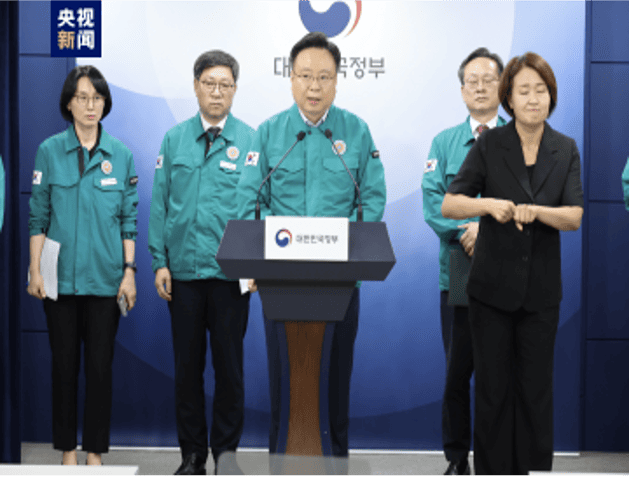
South Korea's Minister of Health and Welfare Cho Kyu-hong said at a press conference on the 8th local time that after comprehensively considering the suggestions of frontline interns and the situation on the front line of medical care, the government decided that from that day on, all interns and residents who resigned would not be given administrative sanctions such as revoking their medical licenses. Cho Kyu-hong also said that for interns and residents who have returned to work and those who have resigned and are preparing to re-register for internship courses in September, the government will make special cases to try to minimize the internship gap and not affect the relevant doctors from obtaining specialist medical licenses. Cho Kyu-hong said that the government believes that in order to minimize the diagnosis and treatment gaps for critically ill and emergency patients and ensure the smooth training process of interns and residents, it is in the public interest, so it has made a decision not to punish interns and residents who resigned. It is hoped that major hospitals will complete the resignation processing of doctors who have not returned to work before July 15 and determine the scale of vacancies. Previously, large general hospitals in South Korea, such as Seoul National University Hospital, Yonsei University Severance Hospital, and Seoul Asan Medical Center, suspended or limited their medical services in an effort to cancel all penalties against interns and residents.