
link1s.site

Sparkling box office for Spring Festival films indicates tremendous potential for movie consumption in Chinese society

According to Chinese movie ticketing platform Taopiaopiao, the box office for the 2024 Spring Festival holidays surpassed last year's 6.766 billion yuan and entered the top two in the history of Chinese Spring Festival holidays box office.

I recently watched three movies, and I think they are all good. However, their overall level is not higher than the movies from last Spring Festival holidays. The higher box office compared to last year reflects the strong potential for movie consumption in Chinese society. Our filmmakers need to make further efforts.

The current development of Chinese movies has many advantages. People often complain that our film creation faces various "restricted areas," but in terms of societal topics, the space for Chinese film creation is relatively large and relaxed. For example, Zhang Yimou's film Article 20 shows protest scenes and boldly explores the issue of judicial injustice in depth. A few years ago, the film I Am Not Madame Bovary specifically discussed the sensitive issue of petitioning. Another film, Johnny Keep Walking! which was aired last year, also touches on serious social issues. The breadth and depth of these films' topics lay the foundation for their attractiveness. The improvement of China's basic film production level has played a role in boosting their success, resulting in Hollywood films being collectively pushed off the Chinese box office charts. Now, almost any domestic film can be considered "watchable." The next step is to produce world-class masterpieces and promote the collective advancement of Chinese films on the global stage.

The three movies that I watched are YOLO, directed, written and starring Jia Ling, a representative of the new generation of female Chinese directors, Pegasus 2, directed by Han Han and Article 20. They are all realistic-themed films, and the actors who play the main characters have some overlap. Although each of them is good, as mentioned earlier, I personally feel that their overall quality is not as good as films screened during last year's Spring Festival holidays. So I have a feeling that Chinese movies have been spinning in place for a year in such a good market environment. Of course, I am not an expert, so what I say may not be correct, or it may be biased.

The production level of Chinese films, in terms of technology, has caught up. Domestic films have surpassed Hollywood in the domestic market through competition, which is a great achievement. However, I hope that this does not mark the beginning of a "decoupling" between Chinese movies and the rest of the world, but rather a turning point for Chinese films to reach a higher level domestically and to go global. This requires Chinese realistic films to not only be loved by domestic audiences but also become increasingly "understandable" to foreigners, allowing them to empathize with us through these films. If Chinese films can gradually go global through market-oriented approaches, it will be a new process for the international community to re-recognize and understand China, and to establish common values between us.

The earliest understanding of the US by the Chinese people came entirely from the shaping of news propaganda. Later, American films and TV works entered China, showcasing the rich American society. Now, Western media's portrayal of China is completely stereotyped. If Chinese films and other popular culture do not go global, and if a large number of secular elements from China do not appear on the global internet, the outside world's perception of China is likely to be dictated by Western media for a long time.

So I hope that China's excellent film market can incubate outstanding works that are loved and enjoyed globally. Not only should our cultural policies provide greater space, but our internet public opinion should also be more tolerant of the interweaving and mutually influencing between Chinese and Western cultural elements. We should not restrict those elements in Chinese films that can resonate with both Chinese and foreign audiences. For example, comedies should not only make Chinese people laugh, but also be understandable to foreigners.

Chinese films need to establish their own big stars, including top-tier female stars. In the past, Bruce Lee and Jackie Chan became famous in the West, but they were primarily seen as "Hollywood stars." It is a more challenging journey for Chinese stars to gain international recognition through their own films. The success of Chinese films and Chinese stars worldwide is definitely a complementary process. The backgrounds of our film stories should also be carefully selected and more diverse, enhancing the visual quality and international appeal of the films. Feng Xiaogang's film Be There or Be Square was entirely set in the US, and later, there was another film called Lost in Thailand, both of which achieved good results. Choosing such backgrounds should be encouraged as one of the approaches.

In conclusion, I am delighted by the comprehensive recovery of the Chinese film market, and I also hope that the films nurtured by this market will continue to progress. To achieve this, we need to keep introducing the world's best films and collaboratively cultivate the aesthetic taste of the Chinese people alongside Chinese films. Chinese films have already stood up, but they should not monopolize this vast market. Instead, the Chinese market should serve as the stage for them to expand globally.

Nvidia H20 will sell 1 million units this year, contributing $12 billion in revenue!
Recently, according to the FT, citing the latest forecast data of the market research institute SemiAnalysis, AI chip giant NVIDIA will ship more than 1 million new NVIDIA H20 acceleration chips to the Chinese market this year, and it is expected that the cost of each chip is between $12,000 and $13,000. This is expected to generate more than $12 billion in revenue for Nvidia. Affected by the United States export control policy, Nvidia's advanced AI chip exports to China have been restricted, H20 is Nvidia based on H100 specifically for the Chinese market to launch the three "castration version" GPU among the strongest performance, but its AI performance is only less than 15% of H100, some performance is even less than the domestic Ascend 910B. When Nvidia launched the new H20 in the spring of this year, there were reports that due to the large castration of H20 performance, coupled with the high price, Chinese customers' interest in buying is insufficient, and they will turn more to choose China's domestic AI chips. Then there are rumors that Nvidia has lowered the price of the H20 in order to improve its competitiveness. However, the latest news shows that due to supply issues caused by the low yield of the Ascend 910B chip, Chinese manufacturers in the absence of supply and other better options, Nvidia H20 has started to attract new purchases from Chinese tech giants such as Baidu, Alibaba, Tencent and Bytedance. Analysts at both Morgan Stanley and SemiAnalysis said the H20 chip is now being shipped in bulk and is popular with Chinese customers, despite its performance degradation compared to chips Nvidia sells in the United States.
Australia pledges to provide more funds to Pacific island banks to counter China's influence
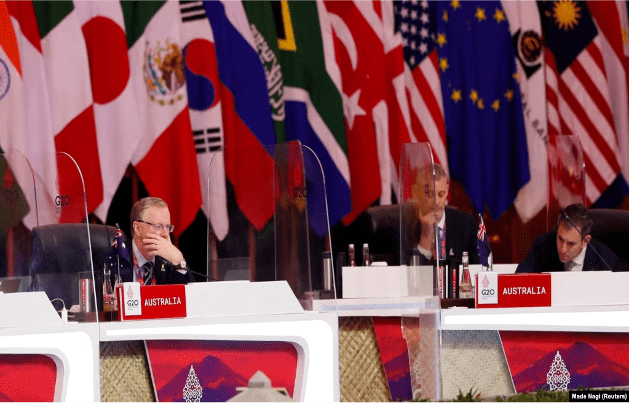
Australia pledged on Tuesday to increase investment in Pacific island nations, offering A$6.3 million ($4.3 million) to support their financial systems. Some Western banks are cutting ties with the region because of risk factors, while China is trying to increase its influence there. Some Western bankers have terminated long-standing banking relationships with small Pacific nations, while others are considering closing operations and restricting access to dollar-denominated bank accounts in those countries. "We know that the Pacific is the fastest-moving region in the world for correspondent banking services," Australian Treasurer Jim Chalmers said in a speech at the Pacific Banking Forum in Brisbane. "What's at stake here is the Pacific's ability to engage with the world," he said, with much of the region at risk of being cut off from the global financial system. Chalmers said Australia would provide A$6.3 million ($4.3 million) to the Pacific to develop secure digital identity infrastructure and strengthen compliance with anti-money laundering and counter-terrorist financing requirements. Experts say Western banks are de-risking to meet financial regulations, making it harder for them to do business in Pacific island nations, where compliance standards sometimes lag, undermining their financial resilience. Australia's ANZ Bank is in talks with governments about how to make its Pacific island businesses more profitable amid concerns about rising Chinese influence as financial services leave the West, Chief Executive Shayne Elliott said Tuesday. ANZ is the largest bank in the Pacific region, with operations in nine countries, though some of those businesses are not financially sustainable, Elliott said in an interview on the sidelines of the forum. "If we were there purely for commercial purposes, we would have closed it a long time ago," he said. Western countries, which have traditionally dominated the Pacific, are increasingly concerned about China's plans to expand its influence in the region after it signed several major defense, trade and financial agreements with the region. Bank of China signed an agreement with Nauru this year to explore opportunities in the country, following Australia's Bendigo Bank saying it would withdraw from the country. Mr. Chalmers said Australia was working with Nauru to ensure that banking services in the country could continue. ANZ Bank exited its retail business in Papua New Guinea in recent years, while Westpac considered selling its operations in Fiji and Papua New Guinea but decided to keep them. The Pacific lost about 80% of its correspondent banking relationships for dollar-denominated services between 2011 and 2022, Australian Assistant Treasurer Stephen Jones told the forum, which was co-hosted by Australia and the United States. “We would be very concerned if there were countries acting in the region whose primary objective was to advance their own national interests rather than the interests of Pacific island countries,” Mr. Jones said on the first day of the forum in Brisbane. He made the comment when asked about Chinese banks filling a vacuum in the Pacific. Meanwhile, Washington is stepping up efforts to support Pacific island countries in limiting Chinese influence. "We recognize the economic and strategic importance of the Pacific region, and we are committed to deepening engagement and cooperation with our allies and partners to enhance financial connectivity, investment and integration," said Brian Nelson, U.S. Treasury Undersecretary for Counterterrorism and Financial Intelligence. The United States is aware of the problem of Western banks de-risking in the Pacific region and is committed to addressing it, Nelson told the forum's participants. He said data showed that the number of correspondent banking relationships in the Pacific region has declined at twice the global average rate over the past decade, and the World Bank and the Asian Development Bank are developing plans to improve correspondent banking relationships. U.S. Treasury Secretary Janet Yellen said in a video address to the forum on Monday (July 8) that the United States is focused on supporting economic resilience in the Pacific region, including by strengthening access to correspondent banks. She said that when President Biden and Australian Prime Minister Anthony Albanese met at the White House last year, they particularly emphasized the importance of increasing economic connectivity, development and opportunities in the Pacific region, and a key to achieving that goal is to ensure that people and businesses in the region have access to the global financial system.
Kris Jenner Shares Plans to Remove Ovaries After Tumor Diagnosis
Kris Jenner is opening up about her health. The reality star shared plans to have her ovaries surgically removed after she was diagnosed with a tumor on one of the organs. “I went to the doctor and I had my scan," she tearfully told daughters Kim Kardashian, Khloe Kardashian and Kendall Jenner on the July 4 episode of The Kardashians. "They found a cyst.” Kris continued, "They said I gotta have my ovaries taken out." While the 68-year-old—who is also mom to kids Kourtney Kardashian, Rob Kardashian and Kylie Jenner—wasn't nervous about the procedure, she did feel very emotional over having to part with her ovaries because, as she put it, "that’s where all my kids were conceived." "It’s also a thing about getting older," Kris noted. "It’s a sign of 'we’re done with this part of your life.' It’s a whole chapter that’s just closed.” She added in a separate confessional, “People often ask me what is the best job you’ve ever had, and I always say mom. The biggest blessing in my life was being able to give birth to six beautiful kids.” And in true Kardashian fashion, Kris' family quickly rallied behind her. After Kourtney called in to check on Kris, the Poosh founder said in a confessional, "I totally understand how my mom is feeling because I would feel the same way." "It’s your womanly power," Kourtney continued. "It doesn’t mean it’s taking away who she is or what she’s experienced, but I would feel this sentimental feeling of what it’s created.” Likewise, Kim empathized with Kris, saying that she feels "really sad for her." "To have a surgery and remove your ovaries is a really big deal," the SKIMS mogul shared. "I couldn’t even imagine being in that situation.” Kris' longtime boyfriend Corey Gamble also showed his support, surprising the momager with a special gift to “help your energy."
Ukrainian Presidential Office: Russia's attacks on multiple locations in Ukraine have killed 36 people
The Ukrainian presidential office said on July 8 local time that Russia's large-scale attacks on many parts of Ukraine have killed 36 people and injured 140 others. According to the Ukrainian State Emergency Service, a total of 619 rescue workers and 132 equipment participated in the rescue work across Ukraine that day. Ukrainian President Zelensky said on social media on the 8th that Russia launched more than 40 missiles of various types at Ukraine that day. Residential buildings and infrastructure in many cities in Ukraine were damaged in varying degrees of attacks, and a children's hospital was destroyed. Rescue departments are currently conducting emergency rescue on the scene. The Russian Ministry of Defense issued a statement on the 8th local time saying that Ukrainian officials' claim that Russia used missiles to attack Ukrainian civilian facilities was untrue. The damage suffered by Kiev was caused by the fall of missiles launched by the city's air defense system.
Exclusive: India's Paytm gets government panel nod to invest in payments arm, sources say
NEW DELHI, July 9 (Reuters) - India's beleaguered Paytm (PAYT.NS), opens new tab has secured approval from a government panel that oversees investments linked to China to invest 500 million rupees ($6 million) in a key subsidiary, three sources with direct knowledge of the matter said. The approval, which still has to be vetted by the finance ministry, will remove the main stumbling block to the unit, Paytm Payment Services, resuming normal business operations. Paytm Payment Services is one of the biggest remaining parts of the fintech firm's business, accounting for a quarter of consolidated revenue in the financial year ended March 2023. A separate unit, Paytm Payments Bank, was wound down this year by order of the central bank due to persistent compliance issues, triggering a meltdown in Paytm's stock. The government panel had earlier held back approval due to concerns about the 9.88% stake in Paytm held by China's Ant Group. India has intensified scrutiny of Chinese businesses since a 2020 border clash between the two countries. All in all, Paytm has been waiting for the nod from the government panel for about two years and without it, it would have had to also wind down its payment services business, which was forbidden from taking on new customers in March 2023. Once the approval has been formalised, it will be able to seek a so-called "payment aggregator" licence from the Reserve Bank of India. The sources, two of whom are government sources, declined to be identified as the decision has not been formally announced. India's foreign, home, finance and industries ministries, whose representatives sit on the panel, did not reply to emails seeking comment. A Paytm spokesperson said the company does not comment on market speculation. "We will continue to make disclosures in compliance with our obligations under the SEBI Regulations, and will inform the exchanges when there is any new material information to share," the spokesperson said.