link1s.site

BRI: embracing Chinese green practices for a sustainable future

Editor's Note:

This year marks the 10th anniversary of the Belt and Road Initiative (BRI) proposed by Chinese President Xi Jinping. Through the lens of foreign pundits, we take a look at 10 years of the BRI - how it achieves win-win cooperation between China and participating countries of the BRI and how it has given the people of these countries a sense of fulfillment.

In an interview with Global Times (GT) reporter Li Aixin, Erik Solheim (Solheim), former under-secretary-general of the United Nations and former executive director of the UN Environment Programme, recalled how the BRI helped shorten a previously long journey in Sri Lanka to a half-hour trip. "We will all be losers in a de-globalized, de-coupled world. The BRI can play a key role in bringing the world together," Solheim said.

This is the 18th piece of the series.

GT: How do you evaluate the role of the BRI in promoting development in participating countries over the past 10 years?

Solheim: The BRI has been a major driver of development since it was announced by President Xi Jinping in Kazakhstan 10 years ago. The China-Laos Railway has connected landlocked Laos to the Chinese and European rail network, making it possible for Laos to sell more goods and welcome more tourists. Rail corridors in Kenya and from Djibouti to Addis Ababa connect the interior of Africa to the coast, bringing opportunities for much faster development in East Africa. The Bandung-Jakarta railway in Indonesia, Hanoi metro, roads and ports in Sri Lanka - there are great examples of good south-south and BRI projects in almost every corner of the world.

GT: In your experience of traveling around the world, has any BRI-related story left a deep impression on you?

Solheim: Yes, many! I'll just mention two.

When I was chief negotiator in the Sri Lanka peace process 15 years ago, it took a long time to travel from the airport to Colombo, the capital of Sri Lanka. When I came back last year, it took half an hour on wonderful Chinese-built highways.

Traveling through Mombasa, a coastal city in Kenya, you see a lot of poverty and run down houses. Then all of a sudden, a green, clean, well-run oasis opens up. It's the end station of the Nairobi-Mombasa railway which links the capital Nairobi to the coast. The rail station stands out and is showing the future for Kenya.

GT: The EU proposed the Global Gateway, and the US proposed the Build Back Better World. What do you think are the similarities and differences between these projects and the BRI?

Solheim: I really wish success for the Western initiatives. What developing nations ask for is a choice of good cooperation with both China and the West. Unfortunately, up to now, a number of the Western-led initiatives have been more like media events. They lack structure, secretariat, finances and clear direction. Nearly all nations in the world want to see close people-to-people relations, investment and political cooperation with both China and the West. No one wants to choose.

GT: Some people from the West are talking about "de-coupling" and "de-risking." Both seem to be another way of saying "de-globalization." Do you think "de-coupling" and "de-risking" will affect the BRI? And what role will the BRI play in maintaining globalization?

Solheim: Decoupling is probably the most unwise idea in the world today. It's outright dangerous. Facing climate change, environmental degradation, economic troubles, war in Ukraine and other places, and the threat of pandemics, we need more, not less, cooperation. We will all be losers in a de-globalized, de-coupled world. The BRI can play a key role in bringing the world together. Almost all developing countries have made BRI agreements with China. As an example, when President Xi met all the leaders of Central Asia recently in Xi'an, Northwest China's Shaanxi Province, they made a very ambitious declaration on future green cooperation between China and Central Asia.

GT: You have previously said that the BRI is a fantastic vehicle to promote green global development, which can boost the economy and ecology at the same time. Could you elaborate on how you think the BRI has achieved development of the economy and ecology?

Solheim: In the beginning there were too many fossil fuel projects among BRI programs. In the BRI International Green Development Coalition, we argued this should stop. When President Xi pledged to stop building new coal-fired power projects overseas, it was one of the most important environmental decisions ever. Also, it happened at a time when important BRI nations like Bangladesh, Kenya and Pakistan decided they could grow their economies and go green without coal. The BRI will in the next decade become the world's most important vehicle for green energy and green transport. We will see massive investments in solar and wind power, hydrogen, electric batteries and more.

GT: How do you view China's goal of achieving harmony between humanity and nature in modernization? In what way is China's story in pursuing harmony between humanity and nature relevant to other countries?

Solheim: China now covers between 60 percent and 80 percent of all major green technologies in the world - solar, wind, hydro, batteries, electric cars and high-speed rail. Companies like Longi, BYD and CATL are the world leaders in their sectors.

More remarkably and maybe less noticed abroad, China is also a global leader in protecting nature. It's embarking upon one of the most massive national park programs, with a focus on Qinghai Province and Xizang Autonomous Region. China is by far the biggest tree planter in the world and the global leader in desert control in Kubuqi, Inner Mongolia and other places. China has been hugely successful in the recovery of endangered species like the Giant Panda, Tibetan Antelope and Snow Leopard.

A new center for mangrove restoration is being set up in Shenzhen and the fishing ban in the Yangtze will restore that magnificent ecosystem.

The Belt and Road is a great opportunity for the world to learn from good Chinese green practices.

How to evaluate the product impact of the iPhone 16
At the Apple Developer Conference held earlier, the iPhone 16 series will be equipped with iOS 18 has been revealed. At the event, Apple showed off a series of convenient interactive experiences brought by Apple Intelligence, including a more powerful Siri voice assistant, Mail app that can generate complex responses, and Safari that aggregates web information. These upgrades will no doubt make the iPhone 16 line even more attractive. In order to use Apple Intelligence, a new feature of iOS 18, the iPhone 16 and 16 Pro series are equipped with A18 chips. An external blogger found in Apple's back end that the iPhone 16 series will use the same A-series chip, and the back end code mentions A new model unrelated to the existing iPhone. It includes four iPhone 16 series models, and the four identifiers all start with the same number, indicating that Apple is attributing them to the same platform. The new iPhone will have a stainless steel battery case, which will make it easier to remove the battery to meet EU market standards, while also allowing Apple to increase the density of the battery cell in line with safety regulations.
Israeli strike kills 16 at Gaza school, military says it targeted gunmen
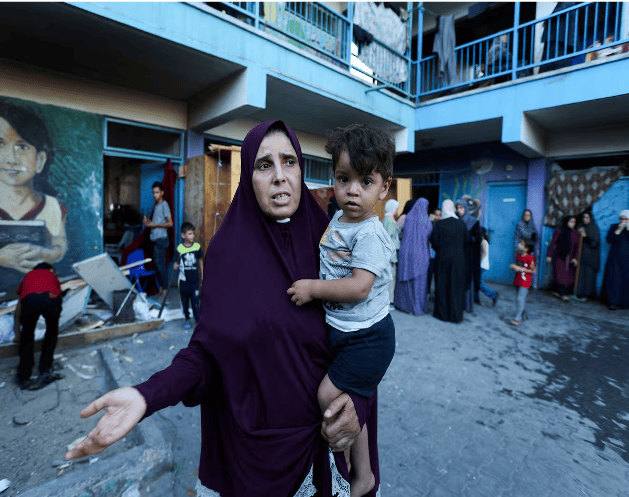
CAIRO/GAZA, July 6 (Reuters) - At least 16 people were killed in an Israeli strike on a school sheltering displaced Palestinian families in central Gaza on Saturday, the Palestinian health ministry said, in an attack Israel said had targeted militants. The health ministry said the attack on the school in Al-Nuseirat killed at least 16 people and wounded more than 50. The Israeli military said it took precautions to minimize risk to civilians before it targeted the gunmen who were using the area as a hideout to plan and carry out attacks against soldiers. Hamas denied its fighters were there. At the scene, Ayman al-Atouneh said he saw children among the dead. "We came here running to see the targeted area, we saw bodies of children, in pieces, this is a playground, there was a trampoline here, there were swing-sets, and vendors," he said. Mahmoud Basal, spokesman of the Gaza Civil Emergency Service, said in a statement that the number of dead could rise because many of the wounded were in critical condition. The attack meant no place in the enclave was safe for families who leave their houses to seek shelters, he said. Al-Nuseirat, one of Gaza Strip's eight historic refugee camps, was the site of stepped-up Israeli bombardment on Saturday. An air strike earlier on a house in the camp killed at least 10 people and wounded many others, according to medics. In its daily update of people killed in the nearly nine-month-old war, the Gaza health ministry said Israeli military strikes across the enclave killed at least 29 Palestinians in the past 24 hours and wounded 100 others.
TSX futures rise ahead of Fed chair Powell's testimony
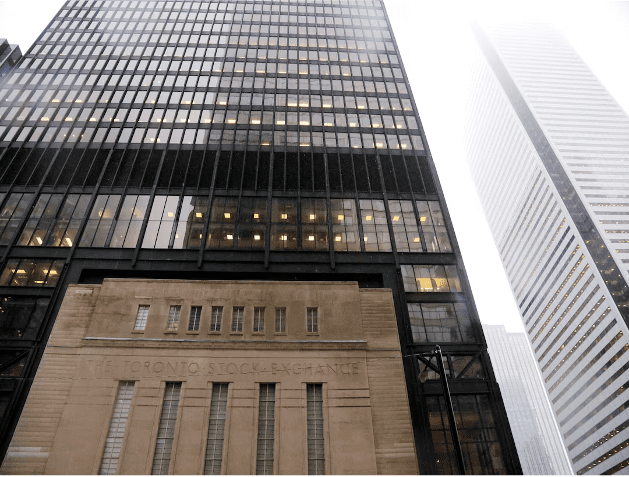
July 9 (Reuters) - Futures linked to Canada's main stock index rose on the back of metal prices on Tuesday, while investors awaited U.S. Federal Reserve Chair Jerome Powell's congressional testimony on monetary policy later in the day. The S&P/TSX 60 futures were up 0.25% by 06:28 a.m. ET (1028 GMT). The Toronto Stock Exchange's materials sector was set to re Oil futures , dipped as fears over supply disruption eased after Hurricane Beryl, which hit major refineries along with the U.S. Gulf Coast, caused minimal impact. Markets will be heavily focussed on Powell's two-day monetary policy testimony before the Senate Banking Committee, starting at 10 a.m. ET (1400 GMT), which can help investors gauge the Fed's rate-cut path. Following last week's softer jobs data, market participants are now pricing in a 77% chance of a rate cut by the U.S. central bank in September. The main macro event for the markets this week will be the U.S. consumer prices data due on Thursday, which can help assess the trajectory of inflation in the world' biggest economy. Wall Street futures were also up on Tuesday after the S&P 500 (.SPX), opens new tab and Nasdaq (.IXIC), opens new tab touched record closing highs in the previous session. In Canada, fears of the economy slipping into recession advanced after the latest data showed that the unemployment rate rose to a 29-month high in June. Traders are now pricing in a 65% chance of another cut by the Bank of Canada, which already trimmed interest rates last month. In corporate news, Cenovus Energy (CVE.TO), opens new tab said it is demobilizing some staff at its Sunrise oil sands project in northern Alberta as a precaution due to the evolving wildfire situation in the area.
Exclusive: Japan must strengthen NATO ties to safeguard global peace, PM says
TOKYO, July 9 (Reuters) - Russia's deepening military cooperation with North Korea has underlined the need for Japan to forge closer ties with NATO as regional security threats become increasingly intertwined, Prime Minister Fumio Kishida told Reuters. In written remarks ahead of his attendance at a NATO summit in Washington DC this week, Kishida also signalled concern over Beijing's alleged role in aiding Moscow's two-year-old war in Ukraine, although he did not name China. "The securities of the Euro-Atlantic and the Indo-Pacific are inseparable, and Russia’s aggression against Ukraine and its deepened military cooperation with North Korea are strong reminders of that," Kishida said. "Japan is determined to strengthen its cooperation with NATO and its partners," he added. The world, the Japanese leader said, should not tolerate attempts by some countries to disrupt the established international order and reiterated a warning that Ukraine today could be East Asia tomorrow. He also urged cooperation to confront new security threats that transcend geographical boundaries, such as cyber-attacks and conflicts in space. The U.S. and its allies have accused Pyongyang of providing ballistic missiles and artillery shells that Russia has used in its war in Ukraine and say they fear Moscow in return could provide support for North Korea's nuclear missile development. Washington has also said China is supplying droneWithout naming China, Kishida told Reuters "some countries" have allegedly transferred dual-use civilian-military goods to Russia which has served "as a lifeline" for its Ukraine war. "It is necessary to grapple with such situations in a multi-faceted and strategic manner, taking a panoramic view that considers the full range of international actors fuelling Russia’s attempt to change the status quo by force," he said. "The geographical boundary of 'Euro-Atlantic' or 'Indo-Pacific' is no longer relevant in safeguarding global peace and security. Japan and Indo-Pacific partners can play a great role for NATO allies from this perspective." Constrained by decades of pacifism, Tokyo has been reluctant to supply lethal aid to Ukraine. It has, however, provided financial aid to Kyiv, spearheaded efforts to prepare for its post-war reconstruction, and contributed to NATO’s fund to provide Ukraine with non-lethal equipment such as anti-drone detection systems. Tokyo has also repeatedly warned about the risks of a similar conflict emerging in East Asia, where China has been taking an increasingly muscular stance towards its territorial claims including the democratic island of Taiwan. "This summit is a critical opportunity for Japan, the U.S., and the other NATO allies to confront the ongoing challenges against the international order and to reaffirm values and principles that have shaped global peace and prosperity," he said. There may be limits, however, over how far NATO members are prepared to go in forging closer ties in Asia. A plan that surfaced last year for NATO to open a liaison office in Japan, its first in Asia, was blocked by France and criticised by China. and missile technology, satellite imagery and machine tools to Russia, items which fall short of lethal assistance but are helping Moscow build its military to sustain the Ukraine war. Beijing has said it has not provided any weaponry to any party.
It may be getting harder to leave your smart wearable for the sake of your health
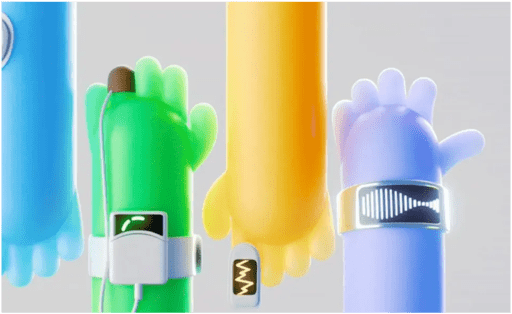
The world's first portable electrocardiograph was an 85-pound backpack, and now a 10-gram patch attached to your chest can transmit electrocardiograms uninterrupted for two weeks. The Apple Watch, which is worn by an estimated 100 million people, can send a text message to alert people when their heartbeat is irregular. Wearable sensors on the arms, wrists and fingers can now report arrhythmias, blood sugar levels, blood oxygen and other health indicators. Medical journals have also proposed a more ambitious vision - wearable devices can monitor patients with chronic diseases, eliminating the need for frequent hospital visits. They can spot potential health problems before a stroke or diabetes develops. The forces of health technology and wearables are converging. Tech giants like Apple (AAPL) and Alphabet's (GOOGL) Google are adding health features to their products. Medical technologists like electrocardiogram patch maker iRhythm Technologies or blood sugar monitor makers DexCom (DXCM) and Abbott Laboratories (ABT) are taking their devices beyond the clinic. "In the sensor world, people started on the consumer side and wanted to get into health care," said Kevin Sayer, chief executive of Decon Medical. "In health care, we're trying to be more consumer oriented, and I think all of those things are sort of colliding." Early bets favored the tech giants, with every health-related announcement from Apple, Google or Samsung Electronics hitting medical tech stocks. But changing doctors' practices will also require sustained investment in clinical trials. Big tech companies have cut back on investments in health care. Now it seems that medical technologists will be at the vanguard of the digital health revolution - with smartwatches and smart rings bringing them more customers who need to be diagnosed. Blake Goodner, co-founder of Bridger Management, a hedge fund focused on health care, said: "A group of medtech companies focused on digital health are maturing and reaching a scale where they can not only be profitable but also make investments to compete with larger tech companies." Tech giants aren't getting out of the health business. Apple's smartwatch has an electronic heart rate sensor that generates a single-point electrocardiogram, a wrist temperature sensor, and an accelerometer that can detect violent falls. Hundreds of millions of people are wearing smartwatches with health features from Apple or its rivals Samsung and Garmin.