link1s.site

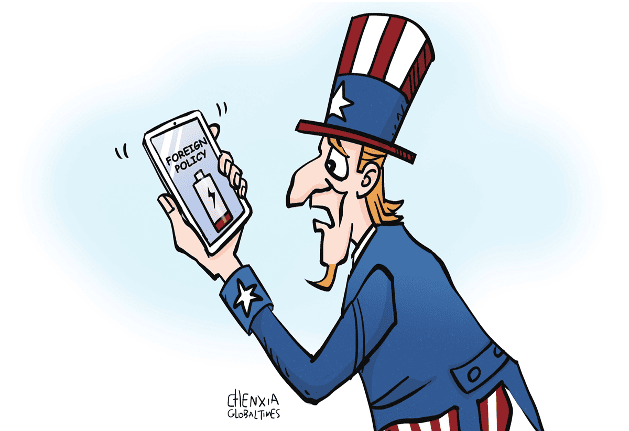
US foreign policy is advanced smartphone with weak battery

A couple of days ago, a Quad summit meeting in Sydney scheduled for May 24 was abruptly canceled. The US president had to pull out of his long-anticipated trip to Australia and Papua New Guinea. Instead, the heads of the four Quad member states got together on the margins of the G7 Summit in Hiroshima on May 20.

The main reason for the change of plans was the continuous struggle between the White House and Republicans on the Hill over the national debt ceiling.

If no compromise is reached, the US federal government might fail to meet its financial commitments already in June; such a technical default would have multiple negative repercussions for the US, as well as for the global economy and finance at large. Let us hope that a compromise between the two branches of US power will be found and that the ceiling of the national debt will be raised once again.

However, this rather awkward last-minute cancellation of the Quad summit reflects a fundamental US problem - a growing imbalance between the US geopolitical ambitions and the fragility of the national financial foundation to serve these ambitions.

The Biden administration appears to be fully committed to bringing humankind back to the unipolar world that existed right after the end of the Cold War some 30 years ago, but the White House no longer has enough resources at its disposal to sustain such an undertaking. As they say in America: You cannot not have champagne on a beer budget.

The growing gap between the ends that the US seeks in international relations and the means that it has available is particularly striking in the case of the so-called dual containment policy that Washington now pursues toward Russia and China. Even half a century ago, when the US was much stronger in relative terms than it is today, the Nixon administration realized that containing both Moscow and Beijing simultaneously was not a good idea: "Dual containment" would imply prohibitively high economic costs for the US and would result in too many unpredictable political risks. The Nixon administration decided to focus on containing the Soviet Union as the most important US strategic adversary of the time. This is why Henry Kissinger flew to Beijing in July 1971 to arrange the first US-China summit in February 1972 leading to a subsequent rapid rapprochement between the two nations.

In the early days of the Biden administration, it seemed that the White House was once again trying to avoid the unattractive "dual containment" option. The White House rushed to extend the New START in January 2021 and held an early US-Russia summit meeting five months later in Geneva. At that point many analysts predicted that Biden would play Henry Kissinger in reverse - that is he would try to peace with the relatively weaker opponent (Moscow) in order to focus on containing the stronger one (Beijing).

However, after the beginning of the Russia-Ukraine conflict, it became clear that no accommodation with the Kremlin was on Biden's mind any longer. Still, having decided to take a hard-line stance toward Moscow and to lead a broad Western coalition in providing military and economic assistance to Kiev, Washington has not opted for a more accommodative or at least a more flexible policy toward Beijing.

On the contrary, over last year one could observe a continuous hardening of the US' China policy - including granting more political and military support to the Taiwan island, encouraging US allies and partners in Asia to increase their defense spending, engaging in more navel activities in the Pacific and imposing more technology sanctions on China.

In the meantime, economic and social problems within the US are mounting. The national debt ceiling is only the tip of an iceberg - the future of the American economy is now clouded by high US Federal Reserve interest rates that slow down growth, feed unemployment and might well lead to a recession. Moreover, the US society remains split along the same lines it was during the presidency of Donald Trump. The Biden administration has clearly failed to reunite America: Many of the social, political, regional, ethnic and even generational divisions have got only deeper since January 2021. It is hard to imagine how a nation divided so deeply and along so many lines could demonstrate continuity and strategic vision in its foreign policy, or to allocate financial resources needed to sustain a visionary and consistent global leadership.

Of course, the "dual containment" policy is not the only illustration of the gap between the US ambitions and its resources. The same gap inevitably pops up at every major forum that the US conducts with select groups of countries from the Global South - Africa, Southeast Asia, Latin America or the Middle East.

The Biden administration has no shortage of arguments warning these countries about potential perils of cooperating with Moscow or Beijing, but it does not offer too many plausible alternatives that would showcase the US generosity, its strategic vision, and its true commitment to the burning needs of the US interlocutors. To cut it short, Uncle Sam brings lots of sticks to such meetings, but not enough carrots to win the audience.

In sum, US foreign policy under President Joe Biden reminds people of a very advanced and highly sophisticated smartphone that has a rather weak battery, which is not really energy efficient. The proud owner of the gadget has to look perennially for a power socket in order not to have the phone running out of power at any inappropriate moment. Maybe the time has come for the smartphone owner to look for another model that would have fewer fancy apps, but a stronger and a more efficient battery, which will make the appliance more convenient and reliable.

United Airlines Boeing 757 loses tire during takeoff
United Airlines confirmed that a tire fell off a Boeing 757 passenger plane when it took off from Los Angeles International Airport in the early morning of July 8, local time. It is reported that there has been no report of any material damage or casualties in this accident. United Airlines said in a statement that the aircraft tire has been found and the investigation is ongoing. There were 174 passengers and 7 crew members on the flight involved. The flight left Los Angeles International Airport at around 7:15 on July 8 and flew to Denver. Unlike the aircraft tire falling incident on a United Airlines flight in March, the pilot of this flight continued the journey to Denver and landed smoothly there.
Ukrainian Presidential Office: Russia's attacks on multiple locations in Ukraine have killed 36 people
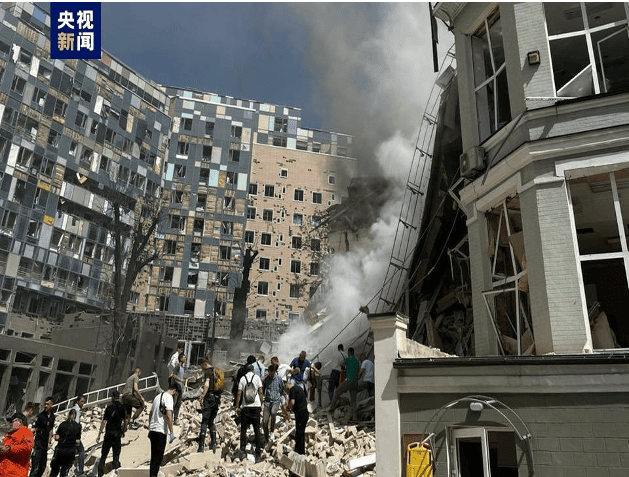
The Ukrainian presidential office said on July 8 local time that Russia's large-scale attacks on many parts of Ukraine have killed 36 people and injured 140 others. According to the Ukrainian State Emergency Service, a total of 619 rescue workers and 132 equipment participated in the rescue work across Ukraine that day. Ukrainian President Zelensky said on social media on the 8th that Russia launched more than 40 missiles of various types at Ukraine that day. Residential buildings and infrastructure in many cities in Ukraine were damaged in varying degrees of attacks, and a children's hospital was destroyed. Rescue departments are currently conducting emergency rescue on the scene. The Russian Ministry of Defense issued a statement on the 8th local time saying that Ukrainian officials' claim that Russia used missiles to attack Ukrainian civilian facilities was untrue. The damage suffered by Kiev was caused by the fall of missiles launched by the city's air defense system.
NHTSA opens recall query into about 94,000 Jeep Wrangler 4xe SUVs
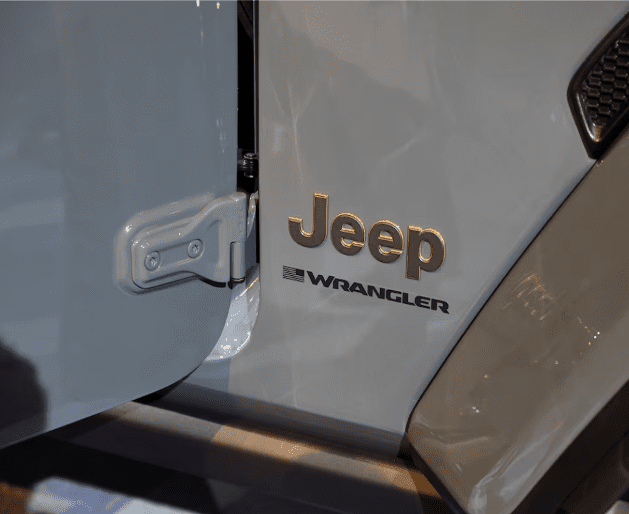
July 9 (Reuters) - The National Highway Traffic Safety Administration (NHTSA) has opened a recall query into 94,275 Stellantis-owned (STLAM.MI), opens new tab Jeep SUVs over a loss of motive power, the U.S. auto safety regulator said on Tuesday. The investigation targets Jeep's Wrangler 4xe hybrid SUVs manufactured between 2021 through 2024. Chrysler had previously recalled, opens new tab the same model in 2022 to address concerns related to an engine shutdown. A recall query is an investigation opened by safety regulators when a remedy to solve an issue appears inadequate. The complaints noted in the new report include both failures in vehicles that received the recall remedy and those not covered by the prior recall, the NHTSA said.
South African rand stable as markets await US interest rate hints
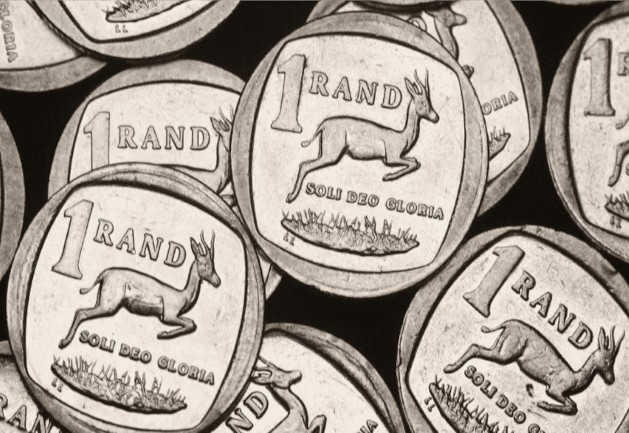
JOHANNESBURG, July 9 (Reuters) - The South African rand was little changed in early trade on Tuesday, as markets awaited the Federal Reserve chair's testimony in Washington and U.S. June inflation data for clues on the country's future interest rate path. At 0644 GMT, the rand traded at 18.1300 against the dollar , near its previous close of 18.1175. "The rand has opened marginally softer at 18.13 this morning, and we expect trading to remain range-bound in the short term," said Andre Cilliers, currency strategist at TreasuryONE. Markets will listen to the tone of Fed Chair Jerome Powell's testimony in Washington on Tuesday and Wednesday and look to June inflation data out of the U.S. later this week for hints on the future interest rate path in the world's biggest economy. "Analysts will be gauging the Fed's response to the recent softer U.S. economic and labour data, with markets already starting to price in two rate cuts this year," Cilliers added. The risk-sensitive rand often takes cues from global drivers like U.S. economic policy in the absence of major local factors. South Africa's benchmark 2030 government bond was slightly stronger in early deals, with the yield down 1 basis point at 9.74%.
Google may bring Google Wallet for Indian users
Google Wallet can help you store your IDs, driving license, loyalty cards, concert tickets and more. You can also store your payment cards and use tap to pay to pay anywhere Google Pay is accepted. Google wallet is available in various countries but Google never launched it in India. Google let indian users stick with the Gpay which facilitates UPI payments. Tap to pay is not part of it. Also we can not store things such as IDs and Passes in indian version of Gpay. This might change and Google may launch Google Wallet in India. With the recent version of Google Wallet and Google Play Services, Google has added some flags and code which indicate that Google is working on something for Indian users regarding wallet. The first change I noticed recently when going through the Google Play Services apk was addition of two new flags Both flags are part of com.google.android.gms.pay package in the Google Play Services. This package contains all the flags for features of Gpay/Wallet. Google does server side flipping of flags to enable/disable features for users. So both these flags doesn't really provide any info about what features enabling these flags is going to bring. But the point here is that Google Wallet is not launched in India so why Google added these flags inside Play Services ? The answer could be that Google may be working on bringing Google Wallet to India. It can enable tap to pay, store payments and various other features for Indian users which we don't have in the current Gpay for India. I found similar flags in the analysis Google Wallet APK - These flags are also disabled by default. But this is again a clear indication of Google working towards something for Indian users. In both cases, enabling the flags doesn't bring anything noticeable UI or feature because there is nothing much added besides flags. Google has dogfood/testing versions internally, so the code will show up slowly in upcoming versions. The last piece of code I found is also from Google Play Services. In case you don't know, Google was working on Digilocker integration in the Google Files app which was supposed to bring your digital document inside the app such as driving license, COVID certificates, aadhar card. But Google has ditched the effort of bringing these features and they removed the "Important" tab (where digilocker was supposed to be integrated) from the Google Files app completely. So things are going to change and here is how. This is the code which I found in the Google Play Services - So the word "PASS" along with PAN, DRIVERS LICENCE, VACC CERTIFICATE & AADHAR CARD, is clear indication of the possibility of Google adding support for these directly through Google Wallet using Digilocker, just like Samsung Pass does it. This code is not old as I have checked older beta versions of Play Services where this code is not present. Here is a string which was added in a previous beta version a few weeks ago but I completely ignored it because it didn't make any sense without flags and the other code - This addition was surprising because there was nothing regarding digilocker before in the Play Services. In the words "pay_valuable", the "pay" to Wallet/Gpay and "valuable" refers to the things like Passes, loyalty cards and transit cards. Since we are talking about digilocker, these "valuable" are driving license, vaccination certificate, PAN card and Aadhar card which can be store in Google Wallet after digilocker integration. That's all about it. We will know more about it in upcoming app updates or maybe Google can itself annouce something about this.