Avi Bruce appointed as head of IDF Central Command
On the evening of July 8, local time, the Israel Defense Forces issued a statement saying that Major General Avi Bluth replaced Yehuda Fox as the commander of the Israeli Central Command. Earlier that day, the Israeli army held a handover ceremony, which was presided over by the Israeli Chief of Staff Halevy. Avi Bluth joined the Israel Defense Forces in 1993 and commanded the Israeli military operations in the West Bank. In May this year, Bruce was promoted to major general and served as a military commander in the Israeli Central Command. CCTV reporters learned that in late April this year, Yehuda Fox, then commander of the Israeli Central Command, requested to resign and retire from the army in August this year. Fox had previously stated that he should bear part of the responsibility for the military intelligence failure on October 7 last year, and "must end his term like everyone else." According to the official website of the Israeli Defense Forces, the Central Command is one of the four major commands of the Israeli army, headquartered in Jerusalem, and its responsibility covers nearly one-third of Israel's territory.
McDonald’s expands operational map in Chinese market, to roll out more outlets in the country
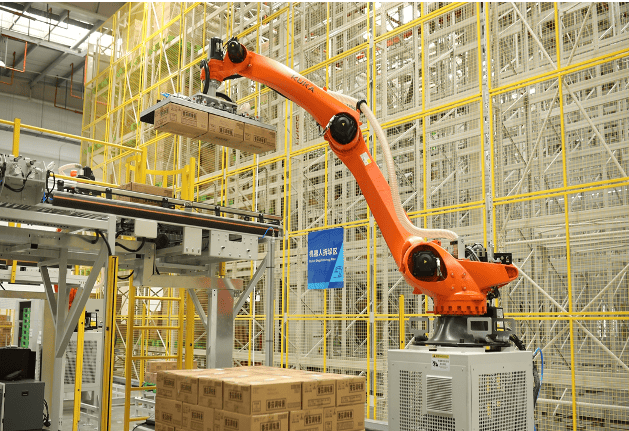
McDonald's China, together with its four major suppliers announced the launch of an industrial park in Xiaogan city, Central China's Hubei Province on Wednesday, highlighting the importance of Chinese market in terms of supply chain for food business. With a combined investment of 1.5 billion yuan ($206 million), the park, named Hubei Smart Food Industrial Park, is a joint project with Bimbo QSR, XH Supply Chain, Tyson Foods Inc, and Zidan, according to information provided to the Global Times. The park is expected to produce 34,000 tons of meat products, 270 million buns, 30 million pastries, and 2 billion packaged products annually. It also features a 25,000-square-meter high-standard automated warehouse for frozen, refrigerated, and dry goods, reducing logistics time by 90 percent from manufacturing to arriving at the destination. Leveraging local geographical advantages, the park will become a supply hub for McDonald's in central and western China, enhancing supply efficiency and stability for its outlets there, the company said. "McDonald's has been deeply rooted in China for over 30 years, and the park is an echo of our long-term development in China," said Phyllis Cheung, CEO of McDonald's China. "Without any long-term strategy, we don't have any structural advantage in China," Cheung noted. The US food giant continues to expand its business map in China. As of the end of June in 2024, there were over 6,000 restaurants and over 200,000 employees in the market. China has become the second largest and fastest-growing market of McDonald's. In 2023, McDonald's China unveiled the ambition of operating 10,000 restaurants by 2028. To support this, McDonald's and its suppliers have invested over 12 billion yuan from between 2018 to 2023 to develop new production capacities and enhance supply chain sustainability. Observers said that the industrial park reflect foreign companies' confidence in operating in China as the country takes concrete measures in furthering reform and opening-up. China's foreign direct investment from January to May 2024 reached 412.51 billion yuan, with the number of newly-established foreign-backed companies reaching 21,764, rising by 17.4 percent year-on-year, data from China's Ministry of Commerce revealed. According to a recent survey by the American Chamber of Commerce in China, the majority of US companies saw improved profitability in China in 2023, and half of the survey participants put China as their first choice or within their top three investment destinations globally. Olaf Korzinovski, EVP of Volkswagen China, who is responsible for production and components, also shared his understanding of supply chains in China with the Global Times. Volkswagen has been operating in China for about 40 years. "In order to seize greater value for our customers," Volkswagen Group is stepping up pace of innovation in China, and systematically purshing forward the digitalization process, Korzinovski noted, adding the company is strengthening local capabilities with accelerated decision-making efficiency. Global Times

How to evaluate the product impact of the iPhone 16
At the Apple Developer Conference held earlier, the iPhone 16 series will be equipped with iOS 18 has been revealed. At the event, Apple showed off a series of convenient interactive experiences brought by Apple Intelligence, including a more powerful Siri voice assistant, Mail app that can generate complex responses, and Safari that aggregates web information. These upgrades will no doubt make the iPhone 16 line even more attractive. In order to use Apple Intelligence, a new feature of iOS 18, the iPhone 16 and 16 Pro series are equipped with A18 chips. An external blogger found in Apple's back end that the iPhone 16 series will use the same A-series chip, and the back end code mentions A new model unrelated to the existing iPhone. It includes four iPhone 16 series models, and the four identifiers all start with the same number, indicating that Apple is attributing them to the same platform. The new iPhone will have a stainless steel battery case, which will make it easier to remove the battery to meet EU market standards, while also allowing Apple to increase the density of the battery cell in line with safety regulations.
Samsung expects profits to jump by more than 1,400%
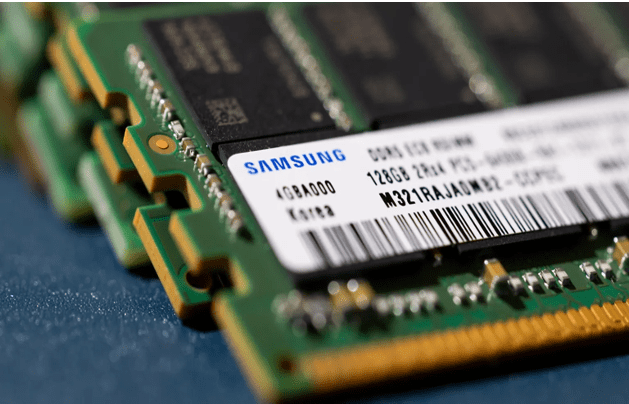
Samsung Electronics expects its profits for the three months to June 2024 to jump 15-fold compared to the same period last year. An artificial intelligence (AI) boom has lifted the prices of advanced chips, driving up the firm's forecast for the second quarter. The South Korean tech giant is the world's largest maker of memory chips, smartphones and televisions. The announcement pushed Samsung shares up more than 2% during early trading hours in Seoul. The firm also reported a more than 10-fold jump in its profits for the first three months of this year. In this quarter, it said it is expecting its profit to rise to 10.4tn won ($7.54bn; £5.9bn), from 670bn won last year. That surpasses analysts' forecasts of 8.8tn won, according to LSEG SmartEstimate. "Right now we are seeing skyrocketing demand for AI chips in data centers and smartphones," said Marc Einstein, chief analyst at Tokyo-based research and advisory firm ITR Corporation. Optimism about AI is one reason for the broader market rally over the last year, which pushed the S&P 500 and the Nasdaq in the United States to new records on Wednesday. The market value of chip-making giant Nvidia surged past $3tn last month, briefly holding the top spot as the world's most valuable company. "The AI boom which massively boosted Nvidia is also boosting Samsung's earnings and indeed those of the entire sector," Mr Einstein added. Samsung Electronics is the flagship unit of South Korean conglomerate Samsung Group. Next week, the tech company faces a possible three-day strike, which is expected to start on Monday. A union of workers is demanding a more transparent system for bonuses and time off.
Hollywood's strongest supporting actor has been launched, AI is not far from subverting "Dreamworks"?
As a major city in the United States and even the global film industry, Hollywood has gathered a large number of veteran film and television production companies, including Universal Pictures, Warner Bros., Paramount Pictures, Disney Pictures, MGM Pictures, etc. In addition, new streaming forces such as Netflix have also entered in recent years. When the new generation of technology represented by generative AI sweeps the world, the movie "dream factory" is also experiencing a transformative moment. In early May last year, the US film and television industry launched a series of strikes that lasted for five months. Two labor disputes, led by the Writers Guild and the Screen Actors Guild, have caused the worst industry disruption since the 2020 pandemic, forcing many film projects and TV shows to halt or delay production. The strike has been costly, with Kevin Klowden, chief global strategist at the Milken Institute think tank, estimating it has cost the U.S. economy more than $5 billion, affecting not only film and television production companies, but also surrounding service industries such as catering, trucking and dry cleaning. One of the main conflicts between labor and management is that many actors and screenwriters have expressed concerns about "unemployment" due to the "invasion" of artificial intelligence. Luo Chenya has been working in the film and television industry for more than 10 years, including scriptwriter, documentary photographer and assistant director. She told the first financial reporter that after ChatGPT became popular, she also tried to use chatbots to assist script creation. "I can talk to the AI about my ideas and ideas, and it will help analyze and refine my ideas, and even make some suggestions that I think are quite effective." But on the execution level, the idea of writing it down into a very specific scene, character action, it doesn't really help me." Luo Chenya said that AI still needs more training and evolution in script writing, but the ability to present images is amazing. "AI can directly generate images, which can indeed save labor to a great extent, and may even replace photographers in the future." In post-production, AI can beautify images and modify flaws." A place to be fought over Earlier this year, OpenAI released the Vincennes video model Sora on its website, which can create videos up to a minute long, generating complex scenes with multiple characters, specific types of movement, and precise theme and background details. In addition to being able to generate video from text, the model can also generate video from still images, precisely animating the image content. "Vincennes Video can quickly produce high-quality video content, greatly improving production efficiency, and generative AI helps to improve the analysis of user preferences and personalized recommendations, and enhance the attractiveness of content." These technologies will disrupt traditional video production and content distribution models, and media companies need to adapt and change their operating models." Wang Haoyu, CEO of Mairui Asset Management, said in an interview with the first financial reporter. For this reason, Hollywood giants have long made big bets and stepped up their layout.