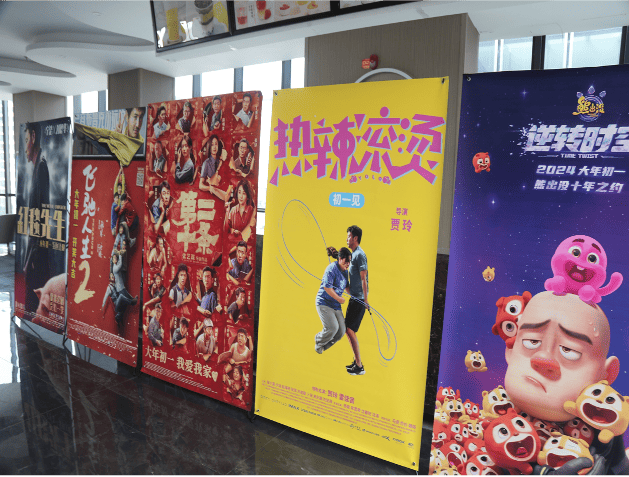
Sparkling box office for Spring Festival films indicates tremendous potential for movie consumption in Chinese society
According to Chinese movie ticketing platform Taopiaopiao, the box office for the 2024 Spring Festival holidays surpassed last year's 6.766 billion yuan and entered the top two in the history of Chinese Spring Festival holidays box office. I recently watched three movies, and I think they are all good. However, their overall level is not higher than the movies from last Spring Festival holidays. The higher box office compared to last year reflects the strong potential for movie consumption in Chinese society. Our filmmakers need to make further efforts. The current development of Chinese movies has many advantages. People often complain that our film creation faces various "restricted areas," but in terms of societal topics, the space for Chinese film creation is relatively large and relaxed. For example, Zhang Yimou's film Article 20 shows protest scenes and boldly explores the issue of judicial injustice in depth. A few years ago, the film I Am Not Madame Bovary specifically discussed the sensitive issue of petitioning. Another film, Johnny Keep Walking! which was aired last year, also touches on serious social issues. The breadth and depth of these films' topics lay the foundation for their attractiveness. The improvement of China's basic film production level has played a role in boosting their success, resulting in Hollywood films being collectively pushed off the Chinese box office charts. Now, almost any domestic film can be considered "watchable." The next step is to produce world-class masterpieces and promote the collective advancement of Chinese films on the global stage. The three movies that I watched are YOLO, directed, written and starring Jia Ling, a representative of the new generation of female Chinese directors, Pegasus 2, directed by Han Han and Article 20. They are all realistic-themed films, and the actors who play the main characters have some overlap. Although each of them is good, as mentioned earlier, I personally feel that their overall quality is not as good as films screened during last year's Spring Festival holidays. So I have a feeling that Chinese movies have been spinning in place for a year in such a good market environment. Of course, I am not an expert, so what I say may not be correct, or it may be biased. The production level of Chinese films, in terms of technology, has caught up. Domestic films have surpassed Hollywood in the domestic market through competition, which is a great achievement. However, I hope that this does not mark the beginning of a "decoupling" between Chinese movies and the rest of the world, but rather a turning point for Chinese films to reach a higher level domestically and to go global. This requires Chinese realistic films to not only be loved by domestic audiences but also become increasingly "understandable" to foreigners, allowing them to empathize with us through these films. If Chinese films can gradually go global through market-oriented approaches, it will be a new process for the international community to re-recognize and understand China, and to establish common values between us. The earliest understanding of the US by the Chinese people came entirely from the shaping of news propaganda. Later, American films and TV works entered China, showcasing the rich American society. Now, Western media's portrayal of China is completely stereotyped. If Chinese films and other popular culture do not go global, and if a large number of secular elements from China do not appear on the global internet, the outside world's perception of China is likely to be dictated by Western media for a long time. So I hope that China's excellent film market can incubate outstanding works that are loved and enjoyed globally. Not only should our cultural policies provide greater space, but our internet public opinion should also be more tolerant of the interweaving and mutually influencing between Chinese and Western cultural elements. We should not restrict those elements in Chinese films that can resonate with both Chinese and foreign audiences. For example, comedies should not only make Chinese people laugh, but also be understandable to foreigners. Chinese films need to establish their own big stars, including top-tier female stars. In the past, Bruce Lee and Jackie Chan became famous in the West, but they were primarily seen as "Hollywood stars." It is a more challenging journey for Chinese stars to gain international recognition through their own films. The success of Chinese films and Chinese stars worldwide is definitely a complementary process. The backgrounds of our film stories should also be carefully selected and more diverse, enhancing the visual quality and international appeal of the films. Feng Xiaogang's film Be There or Be Square was entirely set in the US, and later, there was another film called Lost in Thailand, both of which achieved good results. Choosing such backgrounds should be encouraged as one of the approaches. In conclusion, I am delighted by the comprehensive recovery of the Chinese film market, and I also hope that the films nurtured by this market will continue to progress. To achieve this, we need to keep introducing the world's best films and collaboratively cultivate the aesthetic taste of the Chinese people alongside Chinese films. Chinese films have already stood up, but they should not monopolize this vast market. Instead, the Chinese market should serve as the stage for them to expand globally.
McDonald’s expands operational map in Chinese market, to roll out more outlets in the country
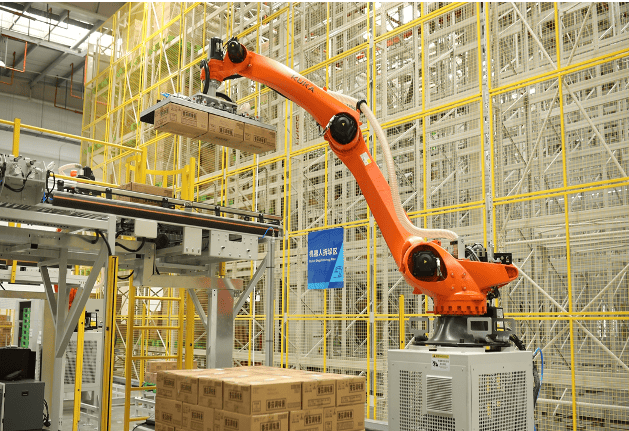
McDonald's China, together with its four major suppliers announced the launch of an industrial park in Xiaogan city, Central China's Hubei Province on Wednesday, highlighting the importance of Chinese market in terms of supply chain for food business. With a combined investment of 1.5 billion yuan ($206 million), the park, named Hubei Smart Food Industrial Park, is a joint project with Bimbo QSR, XH Supply Chain, Tyson Foods Inc, and Zidan, according to information provided to the Global Times. The park is expected to produce 34,000 tons of meat products, 270 million buns, 30 million pastries, and 2 billion packaged products annually. It also features a 25,000-square-meter high-standard automated warehouse for frozen, refrigerated, and dry goods, reducing logistics time by 90 percent from manufacturing to arriving at the destination. Leveraging local geographical advantages, the park will become a supply hub for McDonald's in central and western China, enhancing supply efficiency and stability for its outlets there, the company said. "McDonald's has been deeply rooted in China for over 30 years, and the park is an echo of our long-term development in China," said Phyllis Cheung, CEO of McDonald's China. "Without any long-term strategy, we don't have any structural advantage in China," Cheung noted. The US food giant continues to expand its business map in China. As of the end of June in 2024, there were over 6,000 restaurants and over 200,000 employees in the market. China has become the second largest and fastest-growing market of McDonald's. In 2023, McDonald's China unveiled the ambition of operating 10,000 restaurants by 2028. To support this, McDonald's and its suppliers have invested over 12 billion yuan from between 2018 to 2023 to develop new production capacities and enhance supply chain sustainability. Observers said that the industrial park reflect foreign companies' confidence in operating in China as the country takes concrete measures in furthering reform and opening-up. China's foreign direct investment from January to May 2024 reached 412.51 billion yuan, with the number of newly-established foreign-backed companies reaching 21,764, rising by 17.4 percent year-on-year, data from China's Ministry of Commerce revealed. According to a recent survey by the American Chamber of Commerce in China, the majority of US companies saw improved profitability in China in 2023, and half of the survey participants put China as their first choice or within their top three investment destinations globally. Olaf Korzinovski, EVP of Volkswagen China, who is responsible for production and components, also shared his understanding of supply chains in China with the Global Times. Volkswagen has been operating in China for about 40 years. "In order to seize greater value for our customers," Volkswagen Group is stepping up pace of innovation in China, and systematically purshing forward the digitalization process, Korzinovski noted, adding the company is strengthening local capabilities with accelerated decision-making efficiency. Global Times

EV maker Lucid to recall over 5,200 Air luxury sedans for software error, US regulator says
July 9 (Reuters) - Lucid Group (LCID.O), opens new tab will recall about 5,251 of its 2022-2023 Air luxury sedans due to a software error that could cause a loss of power, according to a notice from the U.S. National Highway Traffic Safety Administration published on Tuesday. The regulator added the EV maker will also recall about 7,506 of its 2022-2024 Air luxury sedans due to an issue with a coolant heater that could fail to defrost the windshield. Lucid had released an over-the-air software update in June as a fix for the software error and a separate update to identify a high voltage coolant heater failure and provide a warning to the drivers of the affected vehicles. The company had reported second-quarter deliveries above market expectations on Monday, as price cuts helped boost demand for its luxury electric sedans.

The US and Australia will work to improve financial links in the Pacific region to counter China's influence
U.S. and Australian officials said on Monday (July 8) that both countries are committed to improving financial connectivity in the Pacific and strengthening banking services in the region to resist China's growing covetousness. According to Reuters, at the two-day Pacific Banking Forum co-hosted by the United States and Australia, Australian Assistant Treasurer Stephen Jones said that Canberra hopes to be the partner of choice in the Pacific region, both in banking and defense. "If there are countries acting in this region whose main goal is to promote their own national interests rather than the interests of Pacific island countries, we will be very concerned," Jones said at the first day of the forum in Brisbane. He made this comment when asked about Chinese banks filling the vacuum in the Pacific region. The report said that as some Western banks have interrupted their long-standing business relationships with banks in small Pacific island countries, while others are preparing to close their businesses, these Pacific island countries face many challenges and their ability to obtain US dollar-dominated banking business is limited. The report said that experts said that Western banks are taking de-risking actions to meet financial regulations, which makes it more difficult to do business in Pacific island countries. This in turn weakens the financial resilience of these island nations. At the same time, Washington is also stepping up efforts to support Pacific island nations in limiting China's influence. Brian Nelson, U.S. Treasury Undersecretary for Counterterrorism and Financial Intelligence, said, "We recognize the economic and strategic importance of the Pacific region, and we are committed to deepening engagement and cooperation with our allies and partners to enhance financial connectivity, investment and integration." The report said that neither the United States nor Australia has yet announced detailed plans at the forum, but comments from officials from both countries reflect the growing unease among Western countries that have traditionally had influence in the Pacific region about China's growing influence in the region.

Morning Bid: Eyes switch to inflation vs elections, Powell up
A look at the day ahead in U.S. and global markets from Mike Dolan After an intense month focused on election risk around the world, markets quickly switched back to the more prosaic matter of the cost of money - and whether disinflation is resuming to the extent it allows borrowing costs to finally fall. Thursday's U.S. consumer price update for June is the key moment of the week for many investors - with the headline rate expected to have fallen two tenths of a percentage point to 3.1% but with 'core' rates still stuck at 3.4%. With Federal Reserve chair Jerome Powell starting his two-pronged semi-annual congressional testimony later on Tuesday, the consensus CPI forecast probably reflects what the central bank thinks of the situation right now - encouraging but not there yet. But as the U.S. unemployment rate is now back above 4.0% for the first time since late 2021, markets may look for a more nuanced approach from the Fed chair that sees it increasingly wary of a sudden weakening of the labor market as real time quarterly GDP estimates ebb again to about 1.5%. There were some other reasons for Fed optimism in the lead up to the testimony. The path U.S. inflation is expected to follow over coming years generally softened in June, amid retreating projections of price increases for a wide array of consumer goods and services, a New York Fed survey showed on Monday. Inflation a year from now was seen at 3% as of June - down from the expected rise of 3.2% in May - and five-year expectations fell to 2.8% from 3%. Crude oil prices are better behaved this week, too, falling more than 3% from the 10-week highs hit late last week and halving the annual oil price gain to 10%. The losses on Tuesday came after a hurricane that hit a key U.S. oil-producing hub in Texas caused less damage than many in markets had expected - easing concerns over supply disruption. Before Powell starts speaking later, there will also be an update on U.S. small business confidence for last month.