link1s.site

"Corrupt Politicians GPT" "Fiscal Bill GPT", Kenyan protesters use AI to "protest"

In the past few weeks of anti-government activities in Kenya, AI tools have been creatively used by protesters to serve protests.

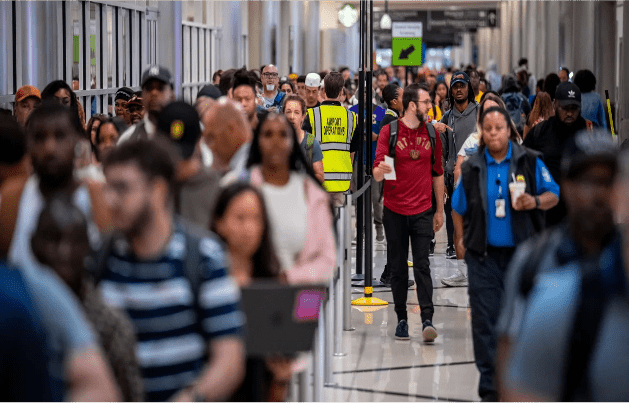
According to the US "Flag" News Agency on July 5, protests in Kenya triggered by the 2024 fiscal bill are still continuing. In the past few weeks, Kenyan protesters, mainly young people, have creatively developed a series of AI tools to assist anti-government activities. The Kenyan government expressed concern about the risks associated with the use of AI tools in protests.

Kelvin Onkundi, a software engineer in Kenya, developed the "Fiscal Bill GPT", which operates similarly to ChatGPT and can receive questions about the fiscal bill and generate responses. Martin Siele, a reporter from the "Flag" News Agency, analyzed: "The 'Fiscal Bill GPT' can convert professional terms in many legislative fields into easy-to-understand information for protesters, helping Kenyans understand the potential impact of the fiscal bill." Another software engineer, Marion Kavengi, developed the "SHIF GPT" to provide Kenyans with information about the upcoming Social Health Insurance Fund (SHIF).

In addition to AI tools designed to help people understand controversial policies, protesters have also developed "Corrupt Politicians GPT" to assist protest demonstrations. After entering the name of a politician on the platform, the platform will generate a list of corruption scandals about the politician in chronological order. Developer BenwithSon wrote on the social platform X on June 28: "'Corrupt Politicians GPT' allows people to search for any scandal related to any politician. I have seen some leaders stand at the forefront of the political arena, but they are corrupt behind the scenes."

Kenyan Chief Minister and Foreign Minister Mudavadi issued a communiqué to ambassadors of various countries in Nairobi on July 2 local time on protests and relevant government measures, expressing concerns about the use of AI and false information in protests. Mudavadi said: "AI technology is used by people with ulterior motives, which will fill the global information system with false narratives."

The Kenya Times reported on June 30 that AI technology enables people to force the government to increase transparency and strengthen accountability, and its role in Kenyan political activities is becoming increasingly prominent.

Martin Siller believes that AI is reshaping African political behavior in many ways. AI is a new tool for both governments and opposition parties in Africa, but Kenya is one of the African countries with the most developers, and its young protesters are particularly good at using AI technology to fight the government.

The 2024 fiscal bill voted and passed by the Kenyan National Assembly on June 25 clearly stated that additional taxes will be levied to repay the interest on high sovereign debt, triggering large-scale demonstrations. After President Ruto announced the withdrawal of the tax increase bill on the evening of the 26th, demonstrations in many parts of Kenya continued. According to Reuters on July 3, Kenyan anti-government protesters are re-adjusting their activities to prevent the protests from turning into violent incidents.
Audi RS e-tron GT intelligent cockpit innovation analysis
RS e-tron GT: Shares J1 platform with Porsche Taycan. The iconic closed hexagonal "big mouth" is quite a brand recognition, and the rear of the car uses a decorative design shaped like a diffuser. Although the difference between it and the regular e-tron GT is very limited, the "RS" nameplate on the rear of the car means that it is not an ordinary person, of course, low-key is also the style of AUD-Sport. The center console continues the family design of the Audi brand, the lines are simple and refined, and the center control screen, the front air conditioning control panel and the function keys below are obviously tilted to the driver's side, echoing the product positioning of the driver's car. Sports seats, leather fabrics with red stitches, etc. appear in the configuration table of the car, rendering the interior sports atmosphere just right, and the overall beauty of the cabin has been affirmed by the reviewers. Although the official model of the cockpit chip selected by the car has not been announced, it has a high score in the evaluation items such as the cold start speed of the car, the start speed of the core application and the navigation search speed, which shows that the car performance is good. In addition, in terms of specifications and accuracy, the car received full marks in the touch accuracy and screen sharpness evaluation, and the daily high-frequency interaction experience is excellent. Of course, if you optimize the voice car control ability, its intelligent experience will be a higher level.
UAE insurance sector continued to grow in Q4-23: CBUAE
The UAE insurance sector continued to grow in Q4-2023, as reflected by increase in the gross written premiums. As of year-end, the number of licensed insurance companies in the UAE remained at 60, according to the Central Bank of the UAE's (CBUAE) Quarterly Economic Review (Q4-2023). The insurance sector comprised 23 traditional national companies, 10 Takaful national and 27 foreign companies, while the number of insurance related professions remained at 491. The review on insurance sector structure and activity showed that the gross written premium increased by 12.7% Y-o-Y in Q4 2023 to AED 53.2 billion, mostly due to an increase in health insurance premiums by 16.5% Y-o-Y and an increase in property and liability insurance premiums by 18.9% Y-o-Y, while the insurance of persons and fund accumulation premiums decreased by 12.4% Y-o-Y, resulting primarily from decrease in individual life premiums. Gross paid claims of all types of insurance plans increased by 12.8% Y-o-Y to AED 31.1 billion at the end of 2023. This was mainly driven by the increase in claims paid in health insurance by 16.9% Y-o-Y and increase in paid claims in property and liability insurance by 10.9% Y-o-Y, partially offset by the decline in claims paid in insurance of persons and fund accumulation by 2.8% Y-o-Y. The total technical provisions of all types of insurance increased by 8.4% Y-o-Y to AED 74.4 billion in Q4 2023 compared to AED68.6 billion in Q4 2022. The volume of invested assets in the insurance sector amounted to AED 76 billion (60.4% of total assets) in Q4 2023 compared to AED 71.4 billion (59.4% of total assets) in Q4 2022. The retention ratio of written insurance premiums for all types of insurance was 52.9 % (AED 28.1 billion) in Q4 2023, compared to 54.9% (AED 25.9 billion) at the end of 2022. The UAE insurance sector remained well capitalized in terms of early warning ratios and risk assessment. Own funds to minimum capital requirement ratio increased to 335.7% in Q4 2023, compared to 309.3% at the end of 2022, due to an increase in own funds eligible to meet the minimum capital requirements. Also, own funds to solvency capital requirement ratio rose to 221% in Q4 2023 compared to 208.5% in Q4 2022, due to an increase in own funds eligible to meet solvency capital requirements. Finally, own funds to minimum guarantee fund ratio reached to 316.3% at the end of 2023 down from 314.6% a year earlier, due to higher eligible funds to meet minimum guarantee funds. In terms of profitability, the net total profit to net written premiums increased to 6.5% in Q4 2023, compared to 2.9% at the end of 2022. The return on average assets increased to 0.3% in Q4 2023 compared to the 0.1% at the of the previous year.
Argentina's government reform bill officially takes effect: granting the president special powers in areas such as administration
On the 8th, the Argentine government promulgated the "Foundations and Starting Points for Argentine Freedom" comprehensive bill and a package of fiscal measures, marking the official entry into force of the government reform bill. According to the official gazette of the Argentine government, Argentine President Milley, Chief Cabinet Minister Guillermo Francos and Economy Minister Luis Caputo jointly signed Decrees No. 592 and No. 593 to promulgate these two new reform measures. The comprehensive bill declared Argentina to enter a one-year public emergency in the administrative, economic, financial and energy fields, and granted the president special powers in these fields. It also includes the relaxation of economic regulations, labor reforms and the implementation of a large-scale investment incentive system. The package of fiscal measures involves anti-money laundering, tax deferral, tariffs, re-imposition of high-salary income tax and reduction of personal property taxes. On June 28, after six months of negotiations, the two reform bills were finally passed by the Argentine Congress.
Stanford AI project team apologizes for plagiarizing Chinese model
An artificial intelligence (AI) team at Stanford University apologized for plagiarizing a large language model (LLM) from a Chinese AI company, which became a trending topic on the Chinese social media platforms, where it sparked concern among netizens on Tuesday. We apologize to the authors of MiniCPM [the AI model developed by a Chinese company] for any inconvenience that we caused for not doing the full diligence to verify and peer review the novelty of this work, the multimodal AI model Llama3-V's developers wrote in a post on social platform X. The apology came after the team from Stanford University announced Llama3-V on May 29, claiming it had comparable performance to GPT4-V and other models with the capability to train for less than $500. According to media reports, the announcement published by one of the team members quickly received more than 300,000 views. However, some netizens from X found and listed evidence of how the Llama3-V project code was reformatted and similar to MiniCPM-Llama3-V 2.5, an LLM developed by a Chinese technology company, ModelBest, and Tsinghua University. Two team members, Aksh Garg and Siddharth Sharma, reposted a netizen's query and apologized on Monday, while claiming that their role was to promote the model on Medium and X (formerly Twitter), and that they had been unable to contact the member who wrote the code for the project. They looked at recent papers to validate the novelty of the work but had not been informed of or were aware of any of the work by Open Lab for Big Model Base, which was founded by the Natural Language Processing Lab at Tsinghua University and ModelBest, according to their responses. They noted that they have taken all references to Llama3-V down in respect to the original work. In response, Liu Zhiyuan, chief scientist at ModelBest, spoke out on the Chinese social media platform Zhihu, saying that the Llama3-V team failed to comply with open-source protocols for respecting and honoring the achievements of previous researchers, thus seriously undermining the cornerstone of open-source sharing. According to a screenshot leaked online, Li Dahai, CEO of ModelBest, also made a post on his WeChat moment, saying that the two models were verified to have highly similarity in terms of providing answers and even the same errors, and that some relevant data had not yet been released to the public. He said the team hopes that their work will receive more attention and recognition, but not in this way. He also called for an open, cooperative and trusting community environment. Director of the Stanford Artificial Intelligence Laboratory Christopher Manning also responded to Garg's explanation on Sunday, commenting "How not to own your mistakes!" on X. As the incident became a trending topic on Sina Weibo, Chinese netizens commented that academic research should be factual, but the incident also proves that the technology development in China is progressing. Global Times
How China can transform from passive to active amid US chip curbs
On Monday, executives from the three major chip giants in the US - Intel, Qualcomm, and Nvidia - met with US officials, including Antony Blinken, to voice their opposition to the Biden administration's plan of imposing further restrictions on chip sales to Chinese companies and investments in China. The Semiconductor Industry Association also released a similar statement, opposing the exclusion of US semiconductor companies from the Chinese market. First of all, we mustn't believe that the appeals of these companies and industry associations will collectively change the determination of US political elites to stifle China's progress. These US elites are very fearful of China's rapid development, and they see "chip chokehold" as a new discovery and a successful tactic formed under US leadership and with the cooperation of allies. Currently, the chip industry is the most complex technology in human history, with only a few companies being at the forefront. They are mainly from the Netherlands, Taiwan island, South Korea, and Japan, most of which are in the Western Pacific. These countries and regions are heavily influenced by the US. Although these companies have their own expertise, they still use some American technologies in their products. Therefore, Washington quickly persuaded them to form an alliance to collectively prevent the Chinese mainland from obtaining chips and manufacturing technology. Washington is proud of this and wants to continuously tighten the noose on China. The New York Times directly titled an article "'An Act of War': Inside America's Silicon Blockade Against China, " in which an American AI expert, Gregory Allen, publicly claimed that this is an act of war against China. He further stated that there are two dates that will echo in history from 2022: The first is February 24, when the Russia-Ukraine conflict broke out, and the second is October 7, when the US imposed a sweeping set of export controls on selling microchips to China. China must abandon its illusions and launch a challenging and effective counterattack. We already have the capability to produce 28nm chips, and we can use "small chip" technology to assemble small semiconductors into a more powerful "brain," exploring 14nm or even 7nm. Additionally, China is the world's largest commercial market for commodity semiconductors. Last year, semiconductor procurement in China amounted to $180 billion, surpassing one-third of the global total. In the past, China had been faced with the choice between independent innovation and external purchases. Due to the high returns from external purchases, it is easy for it to become the overwhelming choice over independent research and development. However, now the US is gradually blocking the option of external purchases, and China has no strategic choice but to independently innovate, which in turn puts tremendous pressure on American companies. Scientists generally expect that, although China may take some detours, such as recently apprehending several company leaders who fraudulently obtained subsidies from national semiconductor policies, China has the ability to gradually overcome the chip difficulties. And we will form our own breakthroughs and industrial chain, which is expected to put quite a lot of pressure on US companies. If domestic firms acquire half of China's $180 billion per year in chip acquisitions, this would provide a significant boost for the industry as a whole and help it advance steadily. The New York Times refers to the battle on chips as a bet by Washington. "If the controls are successful, they could handicap China for a generation; if they fail, they may backfire spectacularly, hastening the very future the United States is trying desperately to avoid," it argued. Whether it is a war or a game, when the future is uncertain, what US companies hope for most of all is that they can sell simplified versions of high-end chips to China, so that the option of external purchases by China continues to exist and remains attractive. This can not only maintain the interests of the US companies, enabling them to obtain sufficient funds to develop more advanced technologies, but also disrupt China's plans for independent innovation. This idea is entirely based on their own commercial interests and also has a certain political and national strategic appeal. Hence, there is no shortage of supporters within the US government. US Secretary of the Treasury Janet Yellen seems to be one of them, as she has repeatedly stated that the US' restrictions on China will not "fundamentally" hurt China, but will only be "narrowly targeted." The US will balance its strict suppression on China from the perspective of maintaining its technological hegemony, while also leaving some room for China, in order to undermine China's determination to counterattack in terms of independent innovation. China needs to use this mentality of the US to its advantage. On the one hand, China should continue to purchase US chips to maintain its economic fundamentals, and on the other hand, it should firmly support the development of domestic semiconductor companies from both financial and market perspectives. If China were to continue relying on exploiting the gaps in US chip policies in the long term, akin to a dependency on opium, it would only serve to weaken China further as it becomes increasingly addicted. China's market is extremely vast, and its innovation capabilities are generally improving and expanding. Although the chip industry is highly advanced, if there is one country that can win this counterattack, it is China. As long as we resolutely continue on the path of independent innovation, this road will definitely become wider. Various breakthroughs and turning points that are unimaginable today may soon occur.