
link1s.site

Russian military launches massive missile attack, Kiev children's hospital hit; President Biden issues statement condemning Russia's "brutalism"

A children's hospital in the Ukrainian capital was hit by a Russian missile on Monday as part of a wave of airstrikes across Ukraine that has killed at least 31 people and injured 154 others.

"Russian terrorists have once again launched a massive missile attack on Ukrainian cities - Kiev, Dnipro, Kryvyi Rih, Slaviansk, Kramatorsk," said Ukrainian President Volodymyr Zelenskyy.

Zelensky said Russia fired more than 40 missiles of different types at the five cities in daytime attacks, hitting residential buildings and public infrastructure. The Ukrainian air force said it intercepted 30 missiles.

Authorities said the attack on Kiev killed seven people, while the attack on Kryvyi Rih, Zelensky's birthplace in central Ukraine, killed 10 and injured 47.

United Nations Secretary-General António Guterres condemned the attacks, calling the assault on the Kiev hospital and another medical facility in the capital's Dniprovsky district "particularly egregious," said his spokesman, Stephane Dujarric.

"Direct attacks on civilians and civilian objects are prohibited under international humanitarian law. Any such attacks are unacceptable and must cease immediately," Dujarric said.

The U.N. Security Council will meet Tuesday to discuss the Russian strikes, diplomats said.

The Russian Defense Ministry said the strikes targeted Ukrainian defense factories and a military aviation base and were successful. It denied striking any civilian facilities and claimed, without evidence, that photos from Kiev showed the damage was caused by a Ukrainian anti-aircraft missile.

Ukrainian Air Force Colonel Yurii Ignat said Russia has been improving the effectiveness of its air strikes by equipping its missiles with enhanced features, including so-called heat decoys that can throw air defense systems off target.

In comments sent to The Associated Press, he said the cruise missiles flew low in Monday's attack -- just 50 meters off the ground -- making them harder to hit.

Western countries, led by the United States, have provided Ukraine with billions of dollars in arms support. They will hold a three-day NATO summit in Washington starting Tuesday to work out how to reassure Kiev of NATO's strong support and give Ukrainians hope that their country can survive the largest conflict in Europe since World War II.

"Today's Russian missile strike that killed dozens of Ukrainian civilians and caused damage and loss of life to Kyiv's largest children's hospital is a horrifying reminder of Russia's brutality," U.S. President Joe Biden said in a statement Monday. "It is critical that the world continues to stand with Ukraine at this important moment and that we do not ignore Russian aggression." Biden said in the statement that he will meet with President Zelensky during the NATO summit in Washington this week "to make clear our unwavering support for Ukraine." Biden continued: "We will join our allies in announcing new measures to strengthen Ukraine's air defenses and help protect their cities and civilians from Russian attacks. The United States stands with the Ukrainian people." Czech President Petr Pavel said the hospital attack was "inexcusable" and he hoped the NATO summit would reach a consensus that Russia is "the greatest threat and we must be fully prepared to deal with it." Zelensky said during a visit to Poland that he hoped the NATO summit would provide Ukraine with more air defense systems. The Ukrainian leader said rescuers were digging through the rubble of the Ohmatdit Children's Hospital in Kyiv and that the number of casualties was not yet known. Kyiv Mayor Vitali Klitschko said at least 16 people were injured, including seven children, and the attack caused a two-story wing of the hospital to partially collapse.

Doors and windows were blown off the hospital's 10-story main building, and the walls were charred. The floor of one room was splattered with blood. Hospital officials said the intensive care unit, operating room and oncology department were damaged.

UAE insurance sector continued to grow in Q4-23: CBUAE
The UAE insurance sector continued to grow in Q4-2023, as reflected by increase in the gross written premiums. As of year-end, the number of licensed insurance companies in the UAE remained at 60, according to the Central Bank of the UAE's (CBUAE) Quarterly Economic Review (Q4-2023). The insurance sector comprised 23 traditional national companies, 10 Takaful national and 27 foreign companies, while the number of insurance related professions remained at 491. The review on insurance sector structure and activity showed that the gross written premium increased by 12.7% Y-o-Y in Q4 2023 to AED 53.2 billion, mostly due to an increase in health insurance premiums by 16.5% Y-o-Y and an increase in property and liability insurance premiums by 18.9% Y-o-Y, while the insurance of persons and fund accumulation premiums decreased by 12.4% Y-o-Y, resulting primarily from decrease in individual life premiums. Gross paid claims of all types of insurance plans increased by 12.8% Y-o-Y to AED 31.1 billion at the end of 2023. This was mainly driven by the increase in claims paid in health insurance by 16.9% Y-o-Y and increase in paid claims in property and liability insurance by 10.9% Y-o-Y, partially offset by the decline in claims paid in insurance of persons and fund accumulation by 2.8% Y-o-Y. The total technical provisions of all types of insurance increased by 8.4% Y-o-Y to AED 74.4 billion in Q4 2023 compared to AED68.6 billion in Q4 2022. The volume of invested assets in the insurance sector amounted to AED 76 billion (60.4% of total assets) in Q4 2023 compared to AED 71.4 billion (59.4% of total assets) in Q4 2022. The retention ratio of written insurance premiums for all types of insurance was 52.9 % (AED 28.1 billion) in Q4 2023, compared to 54.9% (AED 25.9 billion) at the end of 2022. The UAE insurance sector remained well capitalized in terms of early warning ratios and risk assessment. Own funds to minimum capital requirement ratio increased to 335.7% in Q4 2023, compared to 309.3% at the end of 2022, due to an increase in own funds eligible to meet the minimum capital requirements. Also, own funds to solvency capital requirement ratio rose to 221% in Q4 2023 compared to 208.5% in Q4 2022, due to an increase in own funds eligible to meet solvency capital requirements. Finally, own funds to minimum guarantee fund ratio reached to 316.3% at the end of 2023 down from 314.6% a year earlier, due to higher eligible funds to meet minimum guarantee funds. In terms of profitability, the net total profit to net written premiums increased to 6.5% in Q4 2023, compared to 2.9% at the end of 2022. The return on average assets increased to 0.3% in Q4 2023 compared to the 0.1% at the of the previous year.
WhatsApp's new feature will let Meta AI edit your photos for you
WhatsApp beta version 2.24.14.20 has a new feature that allows users to share photos with Meta AI. The AI chatbot will analyze uploaded images and provide information or context about the content. Users may be able to request specific edits to their photos directly through Meta AI, though the extent of this feature is still unknown. As the battle for AI dominance heats up, Meta is adding a new trick to its AI chatbot, Meta AI, which is already part of Facebook, Instagram, and WhatsApp. While Meta AI already has impressive text capabilities, such as replying to questions, suggesting captions, and holding conversations, users cannot currently share or upload photos to the Meta AI chat. WaBetaInfo has uncovered the exciting new feature in the WhatsApp beta for Android version 2.24.14.20. This feature will allow Meta AI to interact with photos shared by users, reply to photos, and even edit them. As shown in the attached screenshot, WhatsApp is testing a new camera button in the Meta AI chat, designed to function similarly to the camera button in regular chats. This addition will allow users to manually share photos with Meta AI, a capability that is currently unavailable. With this new functionality, users will be able to ask questions about their photos, presumably allowing users to ask the AI to identify objects or locations or provide context about the photo’s content. Moreover, the screenshot suggests that Meta AI will also offer the option to edit photos, enabling users to make changes to their images directly within the chat by sharing a prompt. The exact scope of this image editing feature remains unclear, leaving us to wonder if it will be limited to simple tweaks or if it will unleash a powerful AI-driven photo editing suite. The possibilities are both exciting and intriguing, and this feature could definitely be a big hit, especially if it performs as promised. While this new image-sharing feature would mean Meta will analyze and face-scan the photos you upload, the screenshot includes a disclaimer indicating that users will have the option to delete their photos whenever they want. As of now, it seems that the feature is still in development, so it might be some time before we finally get to see it roll out publicly. Recently, we also reported about WhatsApp working on an “Imagine Me” feature that would allow Meta AI to generate AI avatars of you based on a set of your photos. WhatsApp in our newsletters WhatsApp is a leading messaging app, keep up to date on the latest, and learn about more Android apps today!
Australia pledges to provide more funds to Pacific island banks to counter China's influence
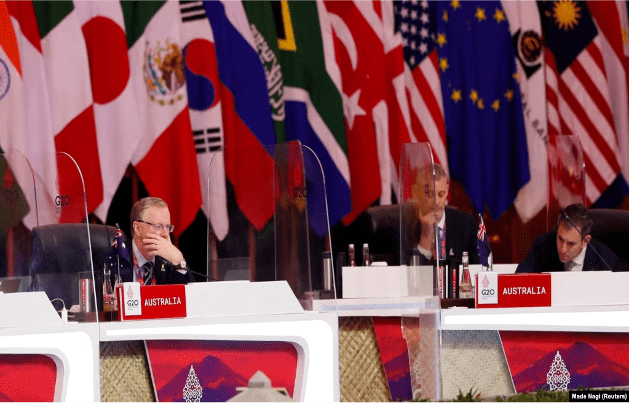
Australia pledged on Tuesday to increase investment in Pacific island nations, offering A$6.3 million ($4.3 million) to support their financial systems. Some Western banks are cutting ties with the region because of risk factors, while China is trying to increase its influence there. Some Western bankers have terminated long-standing banking relationships with small Pacific nations, while others are considering closing operations and restricting access to dollar-denominated bank accounts in those countries. "We know that the Pacific is the fastest-moving region in the world for correspondent banking services," Australian Treasurer Jim Chalmers said in a speech at the Pacific Banking Forum in Brisbane. "What's at stake here is the Pacific's ability to engage with the world," he said, with much of the region at risk of being cut off from the global financial system. Chalmers said Australia would provide A$6.3 million ($4.3 million) to the Pacific to develop secure digital identity infrastructure and strengthen compliance with anti-money laundering and counter-terrorist financing requirements. Experts say Western banks are de-risking to meet financial regulations, making it harder for them to do business in Pacific island nations, where compliance standards sometimes lag, undermining their financial resilience. Australia's ANZ Bank is in talks with governments about how to make its Pacific island businesses more profitable amid concerns about rising Chinese influence as financial services leave the West, Chief Executive Shayne Elliott said Tuesday. ANZ is the largest bank in the Pacific region, with operations in nine countries, though some of those businesses are not financially sustainable, Elliott said in an interview on the sidelines of the forum. "If we were there purely for commercial purposes, we would have closed it a long time ago," he said. Western countries, which have traditionally dominated the Pacific, are increasingly concerned about China's plans to expand its influence in the region after it signed several major defense, trade and financial agreements with the region. Bank of China signed an agreement with Nauru this year to explore opportunities in the country, following Australia's Bendigo Bank saying it would withdraw from the country. Mr. Chalmers said Australia was working with Nauru to ensure that banking services in the country could continue. ANZ Bank exited its retail business in Papua New Guinea in recent years, while Westpac considered selling its operations in Fiji and Papua New Guinea but decided to keep them. The Pacific lost about 80% of its correspondent banking relationships for dollar-denominated services between 2011 and 2022, Australian Assistant Treasurer Stephen Jones told the forum, which was co-hosted by Australia and the United States. “We would be very concerned if there were countries acting in the region whose primary objective was to advance their own national interests rather than the interests of Pacific island countries,” Mr. Jones said on the first day of the forum in Brisbane. He made the comment when asked about Chinese banks filling a vacuum in the Pacific. Meanwhile, Washington is stepping up efforts to support Pacific island countries in limiting Chinese influence. "We recognize the economic and strategic importance of the Pacific region, and we are committed to deepening engagement and cooperation with our allies and partners to enhance financial connectivity, investment and integration," said Brian Nelson, U.S. Treasury Undersecretary for Counterterrorism and Financial Intelligence. The United States is aware of the problem of Western banks de-risking in the Pacific region and is committed to addressing it, Nelson told the forum's participants. He said data showed that the number of correspondent banking relationships in the Pacific region has declined at twice the global average rate over the past decade, and the World Bank and the Asian Development Bank are developing plans to improve correspondent banking relationships. U.S. Treasury Secretary Janet Yellen said in a video address to the forum on Monday (July 8) that the United States is focused on supporting economic resilience in the Pacific region, including by strengthening access to correspondent banks. She said that when President Biden and Australian Prime Minister Anthony Albanese met at the White House last year, they particularly emphasized the importance of increasing economic connectivity, development and opportunities in the Pacific region, and a key to achieving that goal is to ensure that people and businesses in the region have access to the global financial system.
Morning Bid: Eyes switch to inflation vs elections, Powell up
A look at the day ahead in U.S. and global markets from Mike Dolan After an intense month focused on election risk around the world, markets quickly switched back to the more prosaic matter of the cost of money - and whether disinflation is resuming to the extent it allows borrowing costs to finally fall. Thursday's U.S. consumer price update for June is the key moment of the week for many investors - with the headline rate expected to have fallen two tenths of a percentage point to 3.1% but with 'core' rates still stuck at 3.4%. With Federal Reserve chair Jerome Powell starting his two-pronged semi-annual congressional testimony later on Tuesday, the consensus CPI forecast probably reflects what the central bank thinks of the situation right now - encouraging but not there yet. But as the U.S. unemployment rate is now back above 4.0% for the first time since late 2021, markets may look for a more nuanced approach from the Fed chair that sees it increasingly wary of a sudden weakening of the labor market as real time quarterly GDP estimates ebb again to about 1.5%. There were some other reasons for Fed optimism in the lead up to the testimony. The path U.S. inflation is expected to follow over coming years generally softened in June, amid retreating projections of price increases for a wide array of consumer goods and services, a New York Fed survey showed on Monday. Inflation a year from now was seen at 3% as of June - down from the expected rise of 3.2% in May - and five-year expectations fell to 2.8% from 3%. Crude oil prices are better behaved this week, too, falling more than 3% from the 10-week highs hit late last week and halving the annual oil price gain to 10%. The losses on Tuesday came after a hurricane that hit a key U.S. oil-producing hub in Texas caused less damage than many in markets had expected - easing concerns over supply disruption. Before Powell starts speaking later, there will also be an update on U.S. small business confidence for last month.
Zuckerberg surfed and drank beer on vacation, Musk: I prefer to work
After Meta CEO Mark Zuckerberg posted a video on his Facebook and Instagram accounts of his free time during the Independence Day holiday on the X platform, Musk said, "I prefer to work." Zuckerberg posted a video of himself surfing on a hydrofoil in a tuxedo, waving an American flag and drinking a beer, and wrote: "Happy birthday America." The video quickly went viral, and after greg shared it on the X platform, Musk replied: "I hope he continues to have fun on the yacht." I prefer to work." Musk, a workaholic, attended the 29th annual Barron Investment Conference in November 2022, where he said: "My workload went from 78 hours a week to 120 hours a week..." In 2018, he slept on the floor of the Gigafactory in Fremont in an effort to ramp up production of the Tesla Model 3.