link1s.site

Adult Film Star Jesse Jane's Cause of Death Revealed

New details about Jesse Jane’s death have emerged.

More than six months after the former adult film star was found dead alongside her boyfriend Brett Hasenmueller in her Moore, Oklahoma, home from a suspected overdose, authorities confirmed what led to the tragedy.

Jane and Hasenmueller reportedly died of an accidental fentanyl and cocaine overdose according to TMZ, citing the Oklahoma City Medical Examiner’s Office.

E! News has reached out to the Examiner’s Office for comment but had not yet heard back.

In late January, local outlet KFOR reported that Moore Police found Jane and Hasemueller’s bodies while performing a wellness check after the couple had not been heard from in several days.

Moore PD's Lt. Francisco Franco told The New York Times at the time that it was believed Jane died from a drug overdose, but that both deaths remained under investigation.

Jane, who was 43 at the time of her passing, acted in a number of adult films starting in 2003 before transitioning to other projects, including an appearance in Baywatch: Hawaiian Wedding and 2004's Starsky and Hutch, as well as season two of Entourage.

Pretty Pastel Please, YouTuber, Instagram

By 2007, Jane had officially retired from the adult film industry, pivoting into making her own line of sex toys.

At the time of her death, BSG Public Relations President Brian Gross shared in a statement to E! News, "Jesse Jane was a vivacious person who had an absolute and ultimate love for life. During her time in the adult industry, of which I was able to spend wonderful moments with her, she was an incredible professional who cheered everyone on and brought sunshine to every film set she worked on."

"There is not one person in the adult industry who didn't spend time with her, whether onset or in a social setting, that she didn't make smile, laugh or both. She would light up a room as soon as she walked in," he continued, "I will personally miss her very much for the reasons above. Her smile was everything."

See Pregnant Margot Robbie Debut Her Baby Bump
This Barbie is going to be a mother. And Margot Robbie has no problem putting her burgeoning baby bump on full display. In fact, the Barbie star, who is pregnant with her Tom Ackerley’s first baby, debuted recently her bump while vacationing on Italy’s Lake Como with her husband July 7. For the outing, Margot donned a black blazer over a white tee that was cropped above her stomach, showing off a sweet baby bump. She finished off the look with low-rise black trousers, black platform sandals and a summery straw bag. For his part, Tom—whom Margot wed in a 2016 ceremony in her native Australia—wore olive green trousers and a cream-colored button-down shirt and tan sneakers. The couple were photographed waiting on a dock in Lake Como before they hopped in a boat and sailed off into a literal sunset. While Margot and Tom, both 34, haven’t spoken publicly about their upcoming bundle of joy, the I, Tonya alum has previously expressed hope to have a big family one day. As she told Porter in 2018, “If I'm looking into my future 30 years from now, I want to see a big Christmas dinner with tons of kids there.” Tom and Margot’s new chapter comes over ten years after their love story first began on the set of 2014's Suite Française, in which Margot starred while Tom worked as a third assistant director. But while she was immediately smitten, Margot was convinced her love would go unrequited. "I was always in love with him, but I thought, ‘Oh, he would never love me back,'" she admitted to Vogue in 2016. "'Don't make it weird, Margot. Don't be stupid and tell him that you like him.' And then it happened, and I was like, ‘Of course we're together. This makes so much sense, the way nothing has ever made sense before.'"
China proposes to establish BCI committee to strive for domestic innovation
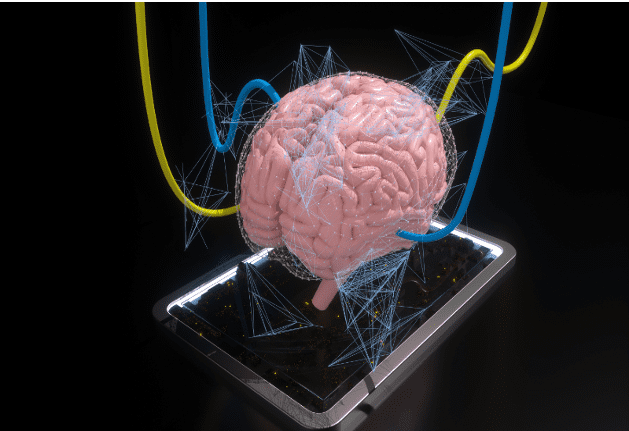
China is mulling over establishing a Brain-Computer Interface (BCI) standardization technical committee under its Ministry of Industry and Information Technology (MIIT), aiming to guide enterprises to enhance industrial standards and boost domestic innovation. The proposed committee, revealed by the MIIT on Monday, will work on composing a BCI standards roadmap for the entire industry development as well as the standards for the research and development of the key technologies involved, according to the MIIT. China has taken strides in developing the BCI industry over the years, not only providing abundant policy support but also generous financial investment, Li Wenyu, secretary of the Brain-Computer Interface Industrial Alliance, told the Global Times. From last year to 2024, both the central and local governments have successively issued relevant policies to support industrial development. The MIIT in 2023 rolled out a plan selecting and promoting a group of units with strong innovation capabilities to break through landmark technological products and accelerate the application of new technologies and products. The Beijing local government also released an action plan to accelerate the industry in the capital (2024-2030) this year. In 2023, there were no fewer than 20 publicly disclosed financing events for BCI companies in China, with a total disclosed amount exceeding 150 million yuan ($20.6 million), Li said. “The strong support from the government has injected momentum into industrial innovation.” The fact that China's BCI industry started later than Western countries such as the US is a reality, leading to the gap in China regarding technological breakthroughs, industrial synergy, and talent development, according to Li. To further close gaps and solve bottlenecks in BCI industrial development, Li suggested that the industry explore various technological approaches to suit different application scenarios and encourage more medical facilities powered by BCI to initiate clinical trials by optimizing the development of BCI-related ethics. Additionally, he highlighted that standard development is one of the aspects to enhance the overall level and competitiveness of the industry chain, which could, in turn, empower domestic BCI innovation. While China's BCI technology generally lags behind leading countries like the US in terms of system integration and clinical application, this has not hindered the release of Neucyber, which stands as China's first "high-performance invasive BCI." Neucyber, an invasive implanted BCI technology, was independently developed by Chinese scientists from the Chinese Institute for Brain Research in Beijing. Li Yuan, Business Development Director of Beijing Xinzhida Neurotechnology, the company that co-developed this BCI system, told the Global Times that the breakthrough of Neucyber could not have been achieved without the efforts of the institute gathering superior resources from various teams in Beijing. A group of mature talents were gathered within the institute, from specific fields involving electrodes, chips, algorithms, software, and materials, Li Yuan said. Shrugging off the outside world's focus on China’s competition with the US in this regard, Li Yuan said her team doesn’t want to be imaginative and talk too much, but strives to produce a set of products step by step that can be useful in actual applications. In addition, Li Wenyu also attributed the emergence of Neucyber to the independent research atmosphere and the well-established talent nurturing mechanism in the Chinese Institute for Brain Research. He said that to advance China’s BCI industry, it is necessary not only to cultivate domestic talents but also to introduce foreign talents to enhance China's research and innovation capabilities. The proposed plan for establishing the BCI standardization technical committee under the MIIT will solicit public opinions until July 30, 2024.
South Korean government decides not to punish interns who resign
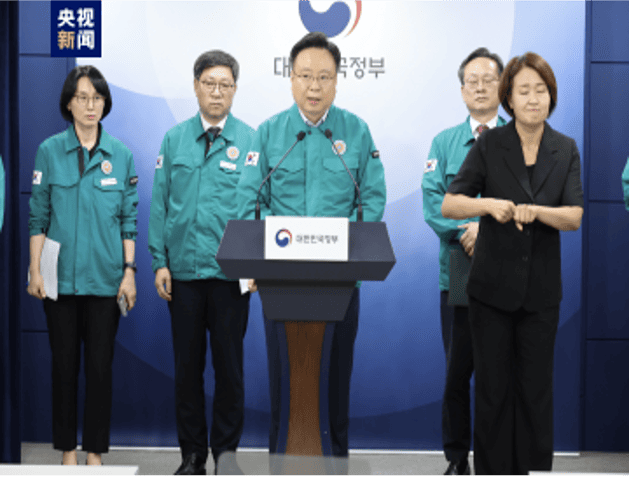
South Korea's Minister of Health and Welfare Cho Kyu-hong said at a press conference on the 8th local time that after comprehensively considering the suggestions of frontline interns and the situation on the front line of medical care, the government decided that from that day on, all interns and residents who resigned would not be given administrative sanctions such as revoking their medical licenses. Cho Kyu-hong also said that for interns and residents who have returned to work and those who have resigned and are preparing to re-register for internship courses in September, the government will make special cases to try to minimize the internship gap and not affect the relevant doctors from obtaining specialist medical licenses. Cho Kyu-hong said that the government believes that in order to minimize the diagnosis and treatment gaps for critically ill and emergency patients and ensure the smooth training process of interns and residents, it is in the public interest, so it has made a decision not to punish interns and residents who resigned. It is hoped that major hospitals will complete the resignation processing of doctors who have not returned to work before July 15 and determine the scale of vacancies. Previously, large general hospitals in South Korea, such as Seoul National University Hospital, Yonsei University Severance Hospital, and Seoul Asan Medical Center, suspended or limited their medical services in an effort to cancel all penalties against interns and residents.
Exclusive: Japan must strengthen NATO ties to safeguard global peace, PM says
TOKYO, July 9 (Reuters) - Russia's deepening military cooperation with North Korea has underlined the need for Japan to forge closer ties with NATO as regional security threats become increasingly intertwined, Prime Minister Fumio Kishida told Reuters. In written remarks ahead of his attendance at a NATO summit in Washington DC this week, Kishida also signalled concern over Beijing's alleged role in aiding Moscow's two-year-old war in Ukraine, although he did not name China. "The securities of the Euro-Atlantic and the Indo-Pacific are inseparable, and Russia’s aggression against Ukraine and its deepened military cooperation with North Korea are strong reminders of that," Kishida said. "Japan is determined to strengthen its cooperation with NATO and its partners," he added. The world, the Japanese leader said, should not tolerate attempts by some countries to disrupt the established international order and reiterated a warning that Ukraine today could be East Asia tomorrow. He also urged cooperation to confront new security threats that transcend geographical boundaries, such as cyber-attacks and conflicts in space. The U.S. and its allies have accused Pyongyang of providing ballistic missiles and artillery shells that Russia has used in its war in Ukraine and say they fear Moscow in return could provide support for North Korea's nuclear missile development. Washington has also said China is supplying droneWithout naming China, Kishida told Reuters "some countries" have allegedly transferred dual-use civilian-military goods to Russia which has served "as a lifeline" for its Ukraine war. "It is necessary to grapple with such situations in a multi-faceted and strategic manner, taking a panoramic view that considers the full range of international actors fuelling Russia’s attempt to change the status quo by force," he said. "The geographical boundary of 'Euro-Atlantic' or 'Indo-Pacific' is no longer relevant in safeguarding global peace and security. Japan and Indo-Pacific partners can play a great role for NATO allies from this perspective." Constrained by decades of pacifism, Tokyo has been reluctant to supply lethal aid to Ukraine. It has, however, provided financial aid to Kyiv, spearheaded efforts to prepare for its post-war reconstruction, and contributed to NATO’s fund to provide Ukraine with non-lethal equipment such as anti-drone detection systems. Tokyo has also repeatedly warned about the risks of a similar conflict emerging in East Asia, where China has been taking an increasingly muscular stance towards its territorial claims including the democratic island of Taiwan. "This summit is a critical opportunity for Japan, the U.S., and the other NATO allies to confront the ongoing challenges against the international order and to reaffirm values and principles that have shaped global peace and prosperity," he said. There may be limits, however, over how far NATO members are prepared to go in forging closer ties in Asia. A plan that surfaced last year for NATO to open a liaison office in Japan, its first in Asia, was blocked by France and criticised by China. and missile technology, satellite imagery and machine tools to Russia, items which fall short of lethal assistance but are helping Moscow build its military to sustain the Ukraine war. Beijing has said it has not provided any weaponry to any party.
Morning Bid: Eyes switch to inflation vs elections, Powell up
A look at the day ahead in U.S. and global markets from Mike Dolan After an intense month focused on election risk around the world, markets quickly switched back to the more prosaic matter of the cost of money - and whether disinflation is resuming to the extent it allows borrowing costs to finally fall. Thursday's U.S. consumer price update for June is the key moment of the week for many investors - with the headline rate expected to have fallen two tenths of a percentage point to 3.1% but with 'core' rates still stuck at 3.4%. With Federal Reserve chair Jerome Powell starting his two-pronged semi-annual congressional testimony later on Tuesday, the consensus CPI forecast probably reflects what the central bank thinks of the situation right now - encouraging but not there yet. But as the U.S. unemployment rate is now back above 4.0% for the first time since late 2021, markets may look for a more nuanced approach from the Fed chair that sees it increasingly wary of a sudden weakening of the labor market as real time quarterly GDP estimates ebb again to about 1.5%. There were some other reasons for Fed optimism in the lead up to the testimony. The path U.S. inflation is expected to follow over coming years generally softened in June, amid retreating projections of price increases for a wide array of consumer goods and services, a New York Fed survey showed on Monday. Inflation a year from now was seen at 3% as of June - down from the expected rise of 3.2% in May - and five-year expectations fell to 2.8% from 3%. Crude oil prices are better behaved this week, too, falling more than 3% from the 10-week highs hit late last week and halving the annual oil price gain to 10%. The losses on Tuesday came after a hurricane that hit a key U.S. oil-producing hub in Texas caused less damage than many in markets had expected - easing concerns over supply disruption. Before Powell starts speaking later, there will also be an update on U.S. small business confidence for last month.