link1s.site

Kris Jenner Shares Plans to Remove Ovaries After Tumor Diagnosis

Kris Jenner is opening up about her health.

The reality star shared plans to have her ovaries surgically removed after she was diagnosed with a tumor on one of the organs.

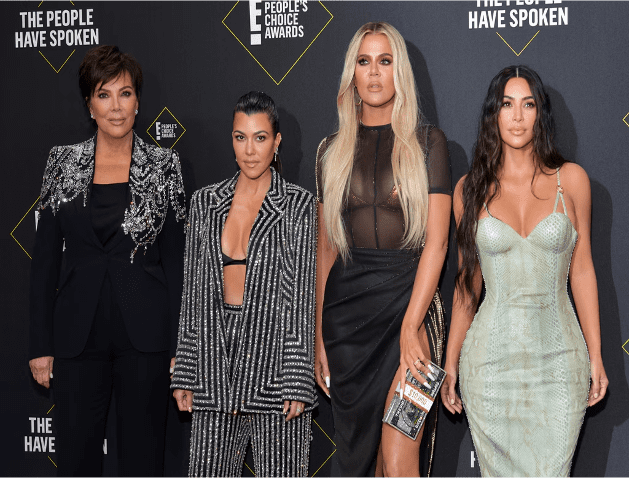
“I went to the doctor and I had my scan," she tearfully told daughters Kim Kardashian, Khloe Kardashian and Kendall Jenner on the July 4 episode of The Kardashians. "They found a cyst.”

Kris continued, "They said I gotta have my ovaries taken out."

While the 68-year-old—who is also mom to kids Kourtney Kardashian, Rob Kardashian and Kylie Jenner—wasn't nervous about the procedure, she did feel very emotional over having to part with her ovaries because, as she put it, "that’s where all my kids were conceived."

"It’s also a thing about getting older," Kris noted. "It’s a sign of 'we’re done with this part of your life.' It’s a whole chapter that’s just closed.”

She added in a separate confessional, “People often ask me what is the best job you’ve ever had, and I always say mom. The biggest blessing in my life was being able to give birth to six beautiful kids.”

And in true Kardashian fashion, Kris' family quickly rallied behind her. After Kourtney called in to check on Kris, the Poosh founder said in a confessional, "I totally understand how my mom is feeling because I would feel the same way."

"It’s your womanly power," Kourtney continued. "It doesn’t mean it’s taking away who she is or what she’s experienced, but I would feel this sentimental feeling of what it’s created.”

Likewise, Kim empathized with Kris, saying that she feels "really sad for her."

"To have a surgery and remove your ovaries is a really big deal," the SKIMS mogul shared. "I couldn’t even imagine being in that situation.”

Kris' longtime boyfriend Corey Gamble also showed his support, surprising the momager with a special gift to “help your energy."

iPhone 16 Pro leak just confirmed a huge camera upgrade
The tetraprism lens with 5x optical zoom currently exclusive to the iPhone 15 Pro Max could be headed to both the iPhone 16 Pro and iPhone 16 Pro Max, narrowing the gap between Apple's premium flagships. That's according to a new report from analyst Ming-Chi Kuo, who cites a recent earnings call with Apple lens supplier Largan. In the call, a spokesperson from Largan said "some flagship specifications will be extended to other models" in the second half of 2024, presumably in reference to the upcoming iPhone Pro models. "Apple is Largan’s largest customer, and Largan is also Apple’s largest lens supplier," Kuo said. "Therefore, the quote likely refers to the fact that the new iPhone 16 Pro and Pro Max will have a tetraprism camera in 2H24 (while only the iPhone 15 Pro Max had this camera in 2H23).” The report goes on to say that the tetraprism camera for the iPhone 16 Pro series won't be all that different from the one in the iPhone 15 Pro Max. While the lack of an upgrade is disappointing, it's not necessarily a bad thing as these kinds of lenses are already top-of-the-line. They represent a major increase over prior models’ zoom capabilities, and they're capable of offering more depth while still fitting into super-slim smartphones. That being said, Apple does appear to be revamping the main camera and ultra-wide camera on the iPhone 16 Pro Max. Evidence continues to mount that both iPhone 16 Pro models will share the same 5x optical zoom camera. Earlier this week, DigitTimes in Asia (via 9to5Mac) reported that Apple is set to ramp up orders for tetraprism lenses as it expands their use in its upcoming iPhone series. Industry sources told the outlet that Largan and Genius Electronic Optical were tapped as the primary suppliers. Apple would be wise to streamline its Pro-level iPhones with the same camera setup; then all customers have to consider with their choice of a new iPhone is the size and price. Of course, this should all be taken with a grain of sand for now until we hear more from Apple. It's still a while yet before Apple's usual September time window for iPhone launches. In the meantime, be sure to check out all the rumors so far in our iPhone 16, iPhone 16 Pro and iPhone 16 Pro Max hubs.
Explainer: How Boeing's Starliner can bring its astronauts back to Earth
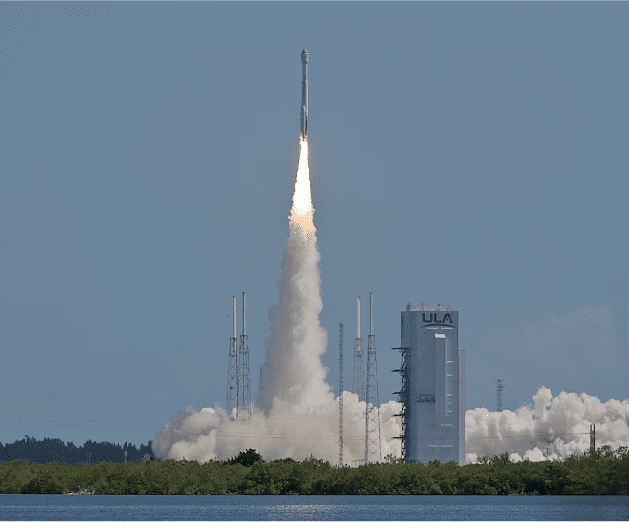
WASHINGTON, June 24 (Reuters) - Problems with Boeing's Starliner capsule, still docked at the International Space Station (ISS), have upended the original plans for its return of its two astronauts to Earth, as last-minute fixes and tests draw out a mission crucial to the future of Boeing's (BA.N), opens new tab space division. NASA has rescheduled the planned return three times, and now has no date set for it. Since its June 5 liftoff, the capsule has had five helium leaks, five maneuvering thrusters go dead and a propellant valve fail to close completely, prompting the crew in space and mission managers in Houston to spend more time than expected pursuing fixes mid-mission. Here is an explanation of potential paths forward for Starliner and its veteran NASA astronauts, Barry "Butch" Wilmore and Sunita "Suni" Williams. THE CURRENT SITUATION Starliner can stay docked at the ISS for up to 45 days, according to comments by NASA's commercial crew manager Steve Stich to reporters. But if absolutely necessary, such as if more problems arise that mission officials cannot fix in time, it could stay docked for up to 72 days, relying on various backup systems, according to a person familiar with flight planning. Internally at NASA, Starliner's latest targeted return date is July 6, according to this source, who spoke on condition of anonymity. Such a return date would mean that the mission, originally planned for eight days, instead would last a month. Starliner's expendable propulsion system is part of the craft's "service module." The current problems center on this system, which is needed to back the capsule away from the ISS and position it to dive through Earth's atmosphere. Many of Starliner's thrusters have overheated when fired, and the leaks of helium - used to pressurize the thrusters - appear to be connected to how frequently they are used, according to Stich.
"Corrupt Politicians GPT" "Fiscal Bill GPT", Kenyan protesters use AI to "protest"
In the past few weeks of anti-government activities in Kenya, AI tools have been creatively used by protesters to serve protests. According to the US "Flag" News Agency on July 5, protests in Kenya triggered by the 2024 fiscal bill are still continuing. In the past few weeks, Kenyan protesters, mainly young people, have creatively developed a series of AI tools to assist anti-government activities. The Kenyan government expressed concern about the risks associated with the use of AI tools in protests. Kelvin Onkundi, a software engineer in Kenya, developed the "Fiscal Bill GPT", which operates similarly to ChatGPT and can receive questions about the fiscal bill and generate responses. Martin Siele, a reporter from the "Flag" News Agency, analyzed: "The 'Fiscal Bill GPT' can convert professional terms in many legislative fields into easy-to-understand information for protesters, helping Kenyans understand the potential impact of the fiscal bill." Another software engineer, Marion Kavengi, developed the "SHIF GPT" to provide Kenyans with information about the upcoming Social Health Insurance Fund (SHIF). In addition to AI tools designed to help people understand controversial policies, protesters have also developed "Corrupt Politicians GPT" to assist protest demonstrations. After entering the name of a politician on the platform, the platform will generate a list of corruption scandals about the politician in chronological order. Developer BenwithSon wrote on the social platform X on June 28: "'Corrupt Politicians GPT' allows people to search for any scandal related to any politician. I have seen some leaders stand at the forefront of the political arena, but they are corrupt behind the scenes." Kenyan Chief Minister and Foreign Minister Mudavadi issued a communiqué to ambassadors of various countries in Nairobi on July 2 local time on protests and relevant government measures, expressing concerns about the use of AI and false information in protests. Mudavadi said: "AI technology is used by people with ulterior motives, which will fill the global information system with false narratives." The Kenya Times reported on June 30 that AI technology enables people to force the government to increase transparency and strengthen accountability, and its role in Kenyan political activities is becoming increasingly prominent. Martin Siller believes that AI is reshaping African political behavior in many ways. AI is a new tool for both governments and opposition parties in Africa, but Kenya is one of the African countries with the most developers, and its young protesters are particularly good at using AI technology to fight the government. The 2024 fiscal bill voted and passed by the Kenyan National Assembly on June 25 clearly stated that additional taxes will be levied to repay the interest on high sovereign debt, triggering large-scale demonstrations. After President Ruto announced the withdrawal of the tax increase bill on the evening of the 26th, demonstrations in many parts of Kenya continued. According to Reuters on July 3, Kenyan anti-government protesters are re-adjusting their activities to prevent the protests from turning into violent incidents.
Carlsberg to buy Britvic for $4.2 billion
Carlsberg to buy Britvic for 1,315p per share Carlsberg will also buy out Marston's from brewing joint venture Danish brewer plans to create integrated beverage business in UK Shares in Carlsberg, Britvic, Marston's all rise July 8 (Reuters) - Carlsberg (CARLb.CO), opens new tab has agreed to buy British soft drinks maker Britvic (BVIC.L), opens new tab for 3.3 billion pounds ($4.23 billion), a move the Danish brewer said would forge a UK beverage "powerhouse" and that sent both companies' shares higher. Carlsberg clinched the takeover with a sweetened bid of 1,315 pence per share - comprising cash and a special dividend of 25 pence a share - after the British company rejected 1,250 pence per share last month. The acquisition will create value for shareholders, contribute to growth and forge a combined beer and soft drink company that is unique in the UK, CEO Jacob Aarup-Andersen told investors on a conference call. "With this transaction we are creating a UK powerhouse," he said. He brushed off concerns from some analysts about integration risks, saying Carlsberg has a strong track record of running beer and soft drink businesses in several markets. Soft drinks already make up 16% of Carlsberg's volumes. COST SAVINGS As drinkers in some markets ditch beer for spirits or cut back on drinking altogether, brewers have looked to broaden their portfolio into new categories like hard seltzer, canned cocktails and cider, as well as zero-alcohol brews. Britvic sells non-alcoholic drinks in Britain, Ireland, Brazil and other international markets such as France, the Middle East and Asia. Carlsberg said the deal will deliver a number of benefits, including cost and efficiency savings worth 100 million pounds ($128 million) over five years as it takes advantage of common procurement, production and distribution networks. It will also see Carlsberg take over Britvic's bottling agreement with PepsiCo (PEP.O), opens new tab. Carlsberg already bottles PepsiCo drinks in several markets and there is scope to add more geographies in future, Aarup-Andersen said. arlsberg halted share buy backs on Monday as a result of the deal. Chief financial officer Ulrica Fearn said these would resume once Carlsberg reaches its revised target for net debt of 2.5 times EBITDA, from 3.5 times currently - a goal it expects to meet in 2027. "Whilst this represents a shift in the strategy away from organic top- and bottom-line growth and consistent returns to shareholders, we view it as a relatively low risk transaction with attractive financials," Jefferies analysts said in a note. Carlsberg also said on Monday it will buy out UK pub group Marston's (MARS.L), opens new tab from a joint venture for 206 million pounds. That will give it full ownership of the newly formed Carlsberg Britvic after the deal. ($1 = 0.7805 pounds) Get the latest news and expert analysis about the state of the global economy with Reuters Econ World. Sign up here. Reporting by Stine Jacobsen, Yadarisa Shabong and Emma Rumney Editing by Sherry Jacob-Phillips, Rashmi Aich, David Goodman and David Evans
Ukrainian Presidential Office: Russia's attacks on multiple locations in Ukraine have killed 36 people
The Ukrainian presidential office said on July 8 local time that Russia's large-scale attacks on many parts of Ukraine have killed 36 people and injured 140 others. According to the Ukrainian State Emergency Service, a total of 619 rescue workers and 132 equipment participated in the rescue work across Ukraine that day. Ukrainian President Zelensky said on social media on the 8th that Russia launched more than 40 missiles of various types at Ukraine that day. Residential buildings and infrastructure in many cities in Ukraine were damaged in varying degrees of attacks, and a children's hospital was destroyed. Rescue departments are currently conducting emergency rescue on the scene. The Russian Ministry of Defense issued a statement on the 8th local time saying that Ukrainian officials' claim that Russia used missiles to attack Ukrainian civilian facilities was untrue. The damage suffered by Kiev was caused by the fall of missiles launched by the city's air defense system.