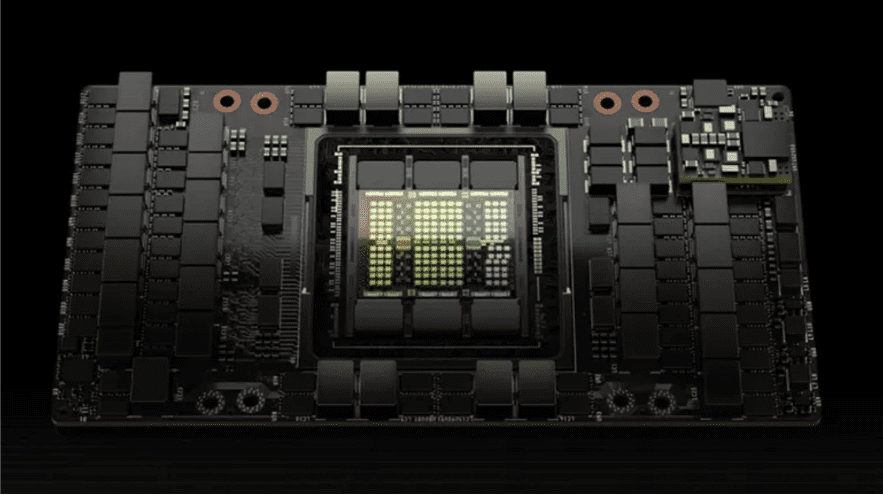
The largest password leak in history exposes nearly 10 billion credentials
The largest collection of stolen passwords ever has been leaked to a notorious crime marketplace, according to cybersecurity researchers at Cybernews. This leak, dubbed RockYou2024 by its original poster “ObamaCare,” holds a file containing nearly 10 billion unique plaintext passwords. Allegedly gathered from a series of data breaches and hacks accumulated over several years, the passwords were posted on July 4th and hailed as the most extensive collection of stolen and leaked credentials ever seen on the forum. “In its essence, the RockYou2024 leak is a compilation of real-world passwords used by individuals all over the world,” the researchers told Cybernews. “Revealing that many passwords for threat actors substantially heightens the risk of credential stuffing attacks.” Credential stuffing attacks are among the most common methods criminals, ransomware affiliates, and state-sponsored hackers use to access services and systems. Threat actors could exploit the RockYou2024 password collection to conduct brute-force attacks against any unprotected system and “gain unauthorized access to various online accounts used by individuals whose passwords are included in the dataset,” the research team said. This could affect online services, cameras and hardware This could affect various targets, from online services to internet-facing cameras and industrial hardware. “Moreover, combined with other leaked databases on hacker forums and marketplaces, which, for example, contain user email addresses and other credentials, RockYou2024 can contribute to a cascade of data breaches, financial frauds, and identity thefts,” the team concluded. However, despite the seriousness of the data leak, it is important to note that RockYou2024 is primarily a compilation of previous password leaks, estimated to contain entries from a total of 4,000 massive databases of stolen credentials, covering at least two decades. This new file notably includes an earlier credentials database known as RockYou2021, which featured 8.4 billion passwords. RockYou2024 added approximately 1.5 billion passwords to the collection, spanning from 2021 through 2024, which, though a massive figure, is only a fraction of the reported 9,948,575,739 passwords in the leak. Thus, users who have changed their passwords since 2021 may not have to panic about a potential breach of their information. That said, the research team at Cybernews stressed the importance of maintaining data security. In response to the leak, they recommend immediately changing the passwords for any accounts associated with the leaked credentials, ensuring each password is strong and unique and not reused across different platforms. Additionally, they advised enabling multi-factor authentication (MFA), which requires an extra form of verification beyond the password, wherever possible, to strengthen cyber security. Lastly, tech users should utilize password manager software, which securely generates and stores complex passwords, mitigating the risk of password reuse across multiple accounts.
Google may bring Google Wallet for Indian users
Google Wallet can help you store your IDs, driving license, loyalty cards, concert tickets and more. You can also store your payment cards and use tap to pay to pay anywhere Google Pay is accepted. Google wallet is available in various countries but Google never launched it in India. Google let indian users stick with the Gpay which facilitates UPI payments. Tap to pay is not part of it. Also we can not store things such as IDs and Passes in indian version of Gpay. This might change and Google may launch Google Wallet in India. With the recent version of Google Wallet and Google Play Services, Google has added some flags and code which indicate that Google is working on something for Indian users regarding wallet. The first change I noticed recently when going through the Google Play Services apk was addition of two new flags Both flags are part of com.google.android.gms.pay package in the Google Play Services. This package contains all the flags for features of Gpay/Wallet. Google does server side flipping of flags to enable/disable features for users. So both these flags doesn't really provide any info about what features enabling these flags is going to bring. But the point here is that Google Wallet is not launched in India so why Google added these flags inside Play Services ? The answer could be that Google may be working on bringing Google Wallet to India. It can enable tap to pay, store payments and various other features for Indian users which we don't have in the current Gpay for India. I found similar flags in the analysis Google Wallet APK - These flags are also disabled by default. But this is again a clear indication of Google working towards something for Indian users. In both cases, enabling the flags doesn't bring anything noticeable UI or feature because there is nothing much added besides flags. Google has dogfood/testing versions internally, so the code will show up slowly in upcoming versions. The last piece of code I found is also from Google Play Services. In case you don't know, Google was working on Digilocker integration in the Google Files app which was supposed to bring your digital document inside the app such as driving license, COVID certificates, aadhar card. But Google has ditched the effort of bringing these features and they removed the "Important" tab (where digilocker was supposed to be integrated) from the Google Files app completely. So things are going to change and here is how. This is the code which I found in the Google Play Services - So the word "PASS" along with PAN, DRIVERS LICENCE, VACC CERTIFICATE & AADHAR CARD, is clear indication of the possibility of Google adding support for these directly through Google Wallet using Digilocker, just like Samsung Pass does it. This code is not old as I have checked older beta versions of Play Services where this code is not present. Here is a string which was added in a previous beta version a few weeks ago but I completely ignored it because it didn't make any sense without flags and the other code - This addition was surprising because there was nothing regarding digilocker before in the Play Services. In the words "pay_valuable", the "pay" to Wallet/Gpay and "valuable" refers to the things like Passes, loyalty cards and transit cards. Since we are talking about digilocker, these "valuable" are driving license, vaccination certificate, PAN card and Aadhar card which can be store in Google Wallet after digilocker integration. That's all about it. We will know more about it in upcoming app updates or maybe Google can itself annouce something about this.
Google Pixel 9 series phones will use Qualcomm ultrasonic fingerprint recognition technology
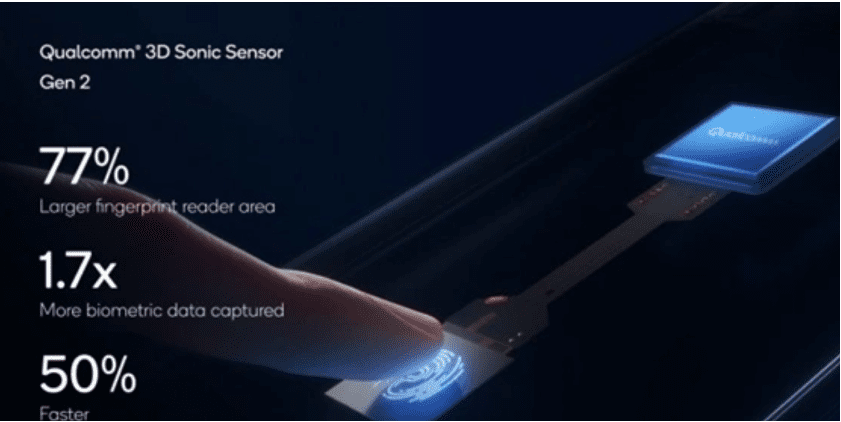
Google's new generation of flagship smartphone Pixel 9 series is expected to be officially released in mid-August, and the new machine is likely to be equipped with ultrasonic fingerprint recognition technology for the first time to replace the original optical fingerprint recognition. According to core intelligence, Google Pixel 9 series will use the same Qualcomm 3D Sonic Gen 2 ultrasonic fingerprint recognition sensor as the Samsung Galaxy S24 Ultra. This ultrasonic technology under the screen fingerprint sensor is Qualcomm released at the CES2021 conference, compared with the previous generation of solutions, the module thickness is further reduced to 0.2mm, while the scanning area is expanded to 8mm×8mm, that is, the recognition area is increased by 77%. This will also allow users to realize fingerprint recognition without having to point their fingertips 100% accurately at the identification area indicated on the screen.
Israeli strike kills 16 at Gaza school, military says it targeted gunmen
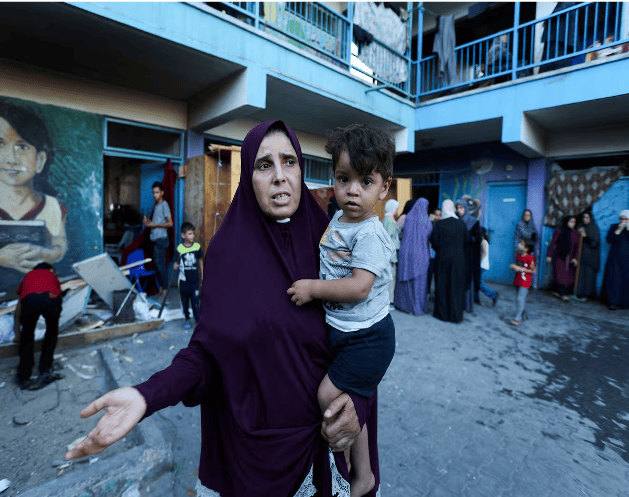
CAIRO/GAZA, July 6 (Reuters) - At least 16 people were killed in an Israeli strike on a school sheltering displaced Palestinian families in central Gaza on Saturday, the Palestinian health ministry said, in an attack Israel said had targeted militants. The health ministry said the attack on the school in Al-Nuseirat killed at least 16 people and wounded more than 50. The Israeli military said it took precautions to minimize risk to civilians before it targeted the gunmen who were using the area as a hideout to plan and carry out attacks against soldiers. Hamas denied its fighters were there. At the scene, Ayman al-Atouneh said he saw children among the dead. "We came here running to see the targeted area, we saw bodies of children, in pieces, this is a playground, there was a trampoline here, there were swing-sets, and vendors," he said. Mahmoud Basal, spokesman of the Gaza Civil Emergency Service, said in a statement that the number of dead could rise because many of the wounded were in critical condition. The attack meant no place in the enclave was safe for families who leave their houses to seek shelters, he said. Al-Nuseirat, one of Gaza Strip's eight historic refugee camps, was the site of stepped-up Israeli bombardment on Saturday. An air strike earlier on a house in the camp killed at least 10 people and wounded many others, according to medics. In its daily update of people killed in the nearly nine-month-old war, the Gaza health ministry said Israeli military strikes across the enclave killed at least 29 Palestinians in the past 24 hours and wounded 100 others.
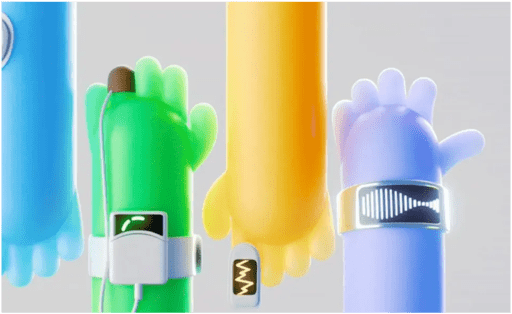
It may be getting harder to leave your smart wearable for the sake of your health
The world's first portable electrocardiograph was an 85-pound backpack, and now a 10-gram patch attached to your chest can transmit electrocardiograms uninterrupted for two weeks. The Apple Watch, which is worn by an estimated 100 million people, can send a text message to alert people when their heartbeat is irregular. Wearable sensors on the arms, wrists and fingers can now report arrhythmias, blood sugar levels, blood oxygen and other health indicators. Medical journals have also proposed a more ambitious vision - wearable devices can monitor patients with chronic diseases, eliminating the need for frequent hospital visits. They can spot potential health problems before a stroke or diabetes develops. The forces of health technology and wearables are converging. Tech giants like Apple (AAPL) and Alphabet's (GOOGL) Google are adding health features to their products. Medical technologists like electrocardiogram patch maker iRhythm Technologies or blood sugar monitor makers DexCom (DXCM) and Abbott Laboratories (ABT) are taking their devices beyond the clinic. "In the sensor world, people started on the consumer side and wanted to get into health care," said Kevin Sayer, chief executive of Decon Medical. "In health care, we're trying to be more consumer oriented, and I think all of those things are sort of colliding." Early bets favored the tech giants, with every health-related announcement from Apple, Google or Samsung Electronics hitting medical tech stocks. But changing doctors' practices will also require sustained investment in clinical trials. Big tech companies have cut back on investments in health care. Now it seems that medical technologists will be at the vanguard of the digital health revolution - with smartwatches and smart rings bringing them more customers who need to be diagnosed. Blake Goodner, co-founder of Bridger Management, a hedge fund focused on health care, said: "A group of medtech companies focused on digital health are maturing and reaching a scale where they can not only be profitable but also make investments to compete with larger tech companies." Tech giants aren't getting out of the health business. Apple's smartwatch has an electronic heart rate sensor that generates a single-point electrocardiogram, a wrist temperature sensor, and an accelerometer that can detect violent falls. Hundreds of millions of people are wearing smartwatches with health features from Apple or its rivals Samsung and Garmin.