Japan and the Philippines signed the "Reciprocal Access Agreement". Experts: Japan wants to use the Philippines to strategically contain China
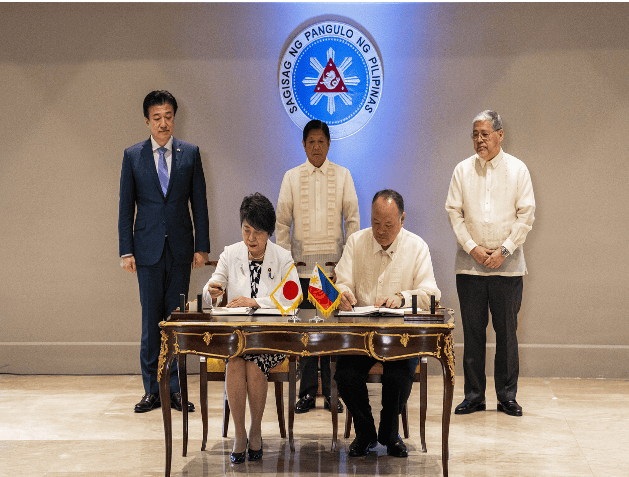
Japan and the Philippines signed an important defense agreement, and the two sides became "quasi-allies". On July 8, local time, Japan and the Philippines signed the "Reciprocal Access Agreement" in Manila. The agreement will relax restrictions on the movement of personnel between the Japanese Self-Defense Forces and the Philippine military during joint exercises, mutual visits and other operations in each other's countries. In response, Chinese Foreign Ministry spokesman Lin Jian responded at a regular press conference on the 8th that exchanges and cooperation between countries should not undermine mutual understanding and trust between regional countries, should not undermine regional peace and stability, and should not target third parties or undermine the interests of third parties. The Asia-Pacific region does not need military groups, let alone "small circles" that provoke camp confrontation and instigate a "new Cold War". Any actions that undermine peace and stability in the region and undermine unity and cooperation in the region will arouse the vigilance and common opposition of the people in the region. Japan and the Philippines upgraded to a "quasi-alliance" relationship On the same day, a "2+2" meeting attended by the foreign ministers and defense ministers of Japan and the Philippines was held in Manila. Japanese Defense Minister Minoru Kihara and Foreign Minister Yoko Kamikawa attended the talks with Philippine Defense Minister Gilbert Teodoro and Foreign Minister Enrique Manalo. This is the second Japan-Philippines "2+2" meeting. The last one was held in Tokyo in April 2022. Witnessed by Philippine President Marcos, the two sides signed the "Reciprocal Access Agreement". Marcos expressed the hope that the bilateral relations between the Philippines and Japan and the trilateral cooperation between the Philippines, Japan and the United States will be further deepened. The "Reciprocal Access Agreement" is also known as the "Military Visits Agreement". Military and defense cooperation between sovereign states, especially sending troops into each other's territory, usually faces complicated procedures and other problems. In order to simplify the procedures, the two countries will reach relevant agreements to simplify the approval procedures for the entry of troops from both sides into each other's countries, and facilitate mutual visits and joint military activities between the two countries' troops. The "Reciprocal Access Agreement" was born. Take the "Reciprocal Access Agreement" signed by Japan and Australia (full name "Agreement between Japan and Australia on Promoting Mutual Access and Cooperation Facilitation between the Japanese Self-Defense Forces and the Australian Defense Force") as an example. The agreement has 29 articles, covering many areas such as entry and exit procedures for troops, jurisdiction, taxation, cost burden and compensation. The key is to simplify the entry and exit procedures for visiting troops and their members, ships, aircraft, etc., relax restrictions on the transportation of weapons, ammunition and materials carried by visiting troops, and provide a legal basis for the two countries' troops and weapons and equipment to enter each other's territory. Japan and the Philippines signed the "Reciprocal Access Agreement", making the Philippines the third country to conclude this agreement with Japan after Australia and the United Kingdom. Cai Liang, Secretary-General and Researcher of the China-Japan Relations Research Center of the Shanghai Institute for International Studies, analyzed to The Paper (www.thepaper.cn) that Japan and the Philippines have their own strategic considerations for signing the "Reciprocal Access Agreement". As for the Philippines, due to its limited strength, it does not exclude any foreign power willing to strengthen military cooperation with the Philippines from intervening in the South China Sea situation. Therefore, it can be seen that in the past two years, the Philippines has actively promoted Australia, France, India and other countries to intervene in the South China Sea and strengthen military cooperation with them, involving intelligence, weapons and equipment, and training and exercises. "Japan's purpose is very simple. Strengthening military cooperation with the Philippines is to strategically balance China. The United States and the Philippines are allies, and the US-Japan alliance has been upgraded to a 'quasi-alliance'. The military cooperation between the United States, Japan and the Philippines has been upgraded to a new level." Cai Liang said, "The signing of an important defense agreement between Japan and the Philippines will make it easier for Japan to intervene in the South China Sea situation and seek the 'three seas linkage' of the East China Sea, the South China Sea, and the Taiwan Strait, in order to better respond to China's strategy and enhance its international influence." As for whether the signing of the "Reciprocal Access Agreement" means that Japan will deploy the Self-Defense Forces in the Philippines, Cai Liang pointed out that this agreement only simplifies the procedures for the troops of both sides to enter each other's territory, and is more suitable for short-term training, military exercises, etc., and is not a long-term deployment of the Self-Defense Forces in the Philippines. The two countries deepen military cooperation The Philippine presidential office also said in a statement that Japan is one of the four major strategic partners of the Philippines, and the two countries have established a strategic partnership for more than ten years. It seems no coincidence that Japan and the Philippines signed the "Reciprocal Access Agreement" at this time. Recently, China-Philippines relations have become tense around the situation in the South China Sea. The Global Times quoted Japan's Kyodo News Agency as saying that the two sides are seeking to strengthen cooperation against China. Minoru Kihara said last week: "The Philippines is located in a strategically important region, occupies a key position on Japan's sea lanes, and is also an ally of the United States. Joint training and strengthening cooperation with the Philippines are of great significance to the realization of a 'free and open Indo-Pacific region'." Cai Liang said that Japan's intervention in the South China Sea situation is mainly to reduce strategic pressure in the East China Sea and southwest of Japan, but it is not conducive to peace and stability in the South China Sea. It is reported that Japan and the Philippines began negotiations on the agreement in November last year. The signing of the "Reciprocal Access Agreement" by the two sides lays the foundation for the two countries to strengthen bilateral and even multilateral military cooperation in the future. The Japanese government intends to allow the Self-Defense Forces to formally participate in the annual US-Philippines "Shoulder to Shoulder" joint exercises around the Philippines after the agreement comes into effect. The Self-Defense Forces previously participated in the "Shoulder to Shoulder" exercises as observers, and will be able to formally participate after signing the agreement. In April this year, the United States and the Philippines held the largest "Shoulder to Shoulder" exercise to date, involving 5,000 Philippine personnel and 11,000 US personnel. The military exercise also included about 150 Australian military personnel and 100 French naval personnel. According to the plan, 14 countries including Japan and India sent personnel as observers. The "Typhon" medium-range missile launch system deployed by the US military on Luzon Island in the Philippines for the first time participated in the exercise, which aroused great attention from all walks of life. In terms of weapons and equipment exports, Japan and the Philippines have gradually strengthened military cooperation in recent years. The Philippines recently agreed to purchase five Coast Guard patrol ships from Japan to enhance its patrol capabilities in the South China Sea. Defense News reported in November last year that the Philippines had received an early warning radar system from Japan in 2023, the first major equipment transfer since the Japanese government lifted the postwar defense export ban in 2014. The Japanese Ministry of Foreign Affairs stated that Kamikawa mentioned topics such as defense equipment transfer, "government security capability enhancement support" (OSA), and economic and trade cooperation. The OSA project was created by the Kishida government and plans to allocate billions of yen in budget to assist the military construction of the Philippines and other countries, including providing the Philippines with 5 sets of coastal surveillance radars. Regarding Japan's relaxation of restrictions on defense equipment exports, the Chinese Ministry of Defense previously responded that Japan has continuously broken through the constraints of the "peace constitution" and the principle of "exclusive defense", and has been making small moves in the field of military security, which has aroused high vigilance and strong concern from the international community. China requires Japan to deeply reflect on its history of aggression, attach importance to the security concerns of its Asian neighbors, adhere to the path of peaceful development, and win the trust of its Asian neighbors and the international community with practical actions.
US politicians' lurch to levying high tariffs to damage global economic sustainability
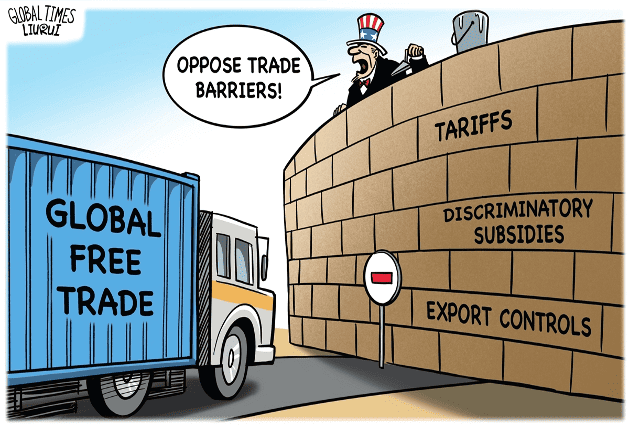
US politicians are advocating for steep tariffs, echoing the protectionist Fordney-McCumber Tariff of 1922. Despite potential international retaliation, risks to global economic rules and a shift from post-World War II principles, US politicians have promised to increase trade barriers against China, causing concerns for the sustainability of global economic harmony. A century ago, the Republican Congress passed the Fordney-McCumber Tariff of 1922. This post-World War-I effort to protect the US from German competition and rescue America's own businesses from falling prices sparked a global wave of tariff hikes. While long forgotten, echoes of Fordney-McCumber now reverberate across the US political landscape. Once again, politicians are grasping the tariff as a magic talisman against its own economic ills and to contain the rise of China. The Democratic Party of the 1920s opposed tariffs, because duties are harmful to consumers and farmers, but today both President Joe Biden and former President Donald Trump favor national delivery through protectionism. Trump promised that his second term, if elected, would impose 60-percent tariffs on everything arriving from China and 10-percent tariffs on imports from the rest of the world, apparently including the imports covered by 14 free trade agreements with America's 20 partners. He initially promised 100-percent tariffs on electric vehicles (EVs), but when Biden declared that he was hiking tariffs on EVs from China to 100-percent, Trump raised the ante to 200-percent. On May 14, 2024, the White House imposed tariffs ranging from 25 percent (on items such as steel, aluminum and lithium batteries) to 50 percent (semiconductors, solar cells, syringes and needles) and 100 percent (electric vehicles) on Chinese imports. US government officials offer "national security" and "supply chain vulnerability" as the justification for levying high tariffs. To deflect worries about inflation, US Trade Representative Katherine Tai declared, "first of all, I think that that link, in terms of tariffs to prices, has been largely debunked." Contrary findings by the United States International Trade Commission and a number of distinguished economists, as well as Biden's own 2019 statement criticizing Trump's tariffs - "Trump doesn't get the basics. He thinks tariffs are being paid by China… [but] the American people are paying his tariffs" - forced Tai's office to wind back her declaration. The fact that prohibitive barriers to imports of solar cells, batteries and EVs will delay the green economy carries zero political weight with Trump and little with Biden. Nor does either of them worry about the prospects of Chinese retaliation and damage to the fabric of global economic rules. Historical lessons - unanticipated consequences of the foolish Fordney-McCumber Tariff of 1922 and the Smoot-Hawley Tariff of 1930 - are seen as irrelevant by the candidates and their advisers. The US' lurch from its post-World War II free trade principles offers China a golden opportunity. On the world stage, China will espouse open free trade and investment. China will encourage EV and battery firms to establish plants in Europe, Brazil, Mexico and elsewhere, essentially daring the US to damage its own alliances by restricting third country imports containing Chinese components. Whether the fabric of global economic rules that has delivered astounding prosperity to the world will survive through the 21st century remains to be seen. Much will depend on the decisions of other large economic powers, not only China but also the European Union and Japan, as well as middle powers, such as Australia, Brazil, Chile, ASEAN and South Korea. Their actions and reactions will reshape the rules of the 21st century. If others follow America down this costly path, the world will become less prosperous and vastly more unpredictable. If they resist, the US risks being diminished and more isolated. The author is a non-resident Senior Fellow at the Peterson Institute of International Economics. bizopinion@globaltimes.com.cn

China's generative AI patents are far ahead of the US!
The World Intellectual Property Organization (WIPO) recently said that China filed 38,000 artificial intelligtion-related generative AI patents from 2014-23, while the United States filed 6,276 of the 50,000 patents filed by all countries. Of the 50,000 applications, 25 percent were filed last year.The top five inventor regions are: China (38,210 inventions), the United States (6,276 inventions), the Republic of Korea (4,155 inventions), Japan (3,409 inventions) and India (1,350 inventions).

"Pictures on the wall were falling," New Yorkers rattled by earthquake
An earthquake jolted New York City on Friday morning, followed by more than 10 aftershocks which shook New Jersey, sending tremors as far as Philadelphia to Boston and jolting buildings in Manhattan and throughout its five boroughs. The preliminary quake, measuring 4.8 magnitude, centered around Lebanon, New Jersey, approximately 60 kilometers from New York City, with a depth of about 5 kilometers. Following the earthquake, New York City mayor Eric Adams stated at a press conference that no injuries had been reported, but they would continue to monitor and inspect critical infrastructure. The densely populated New York City was caught off guard by the unusual event. Broadcaster CBS reported that New York had not experienced an earthquake of this magnitude since 1884. Residents in Brooklyn expressed their shock when experiencing tremors which shook the city. "At first, I thought it was just construction next door, but then I noticed the pictures on the wall had fallen," Jennifer Wu, a resident in New York, told the Global Times on Saturday. Video footage circulating online showed the Statue of Liberty and the New York City skyline trembling as the earthquake struck. An angle from directly above Lady Liberty caught Ellis Island shaking during the incident. "It is fine," New York's famous Empire State Building posted on social platform X after the earthquake. The United Nations headquarters located in New York was hosting a Security Council meeting on the Israeli-Palestinian issue, and diplomats present in the meeting felt the tremors, local media reported. According to the Weather Channel, residents in Baltimore, Philadelphia, New Jersey, Connecticut, Boston and other areas of the Northeast seaboard also reported shaking. Tremors lasting for several seconds were felt over 200 miles away near the Massachusetts-New Hampshire border. The New York mayor told the press that New Yorkers should go about their normal day, while the governor Kathy Hochul emphasized the seriousness of the situation. She initiated assessments for damage across the state and had discussions with New Jersey Governor Phil Murphy. The quake caused flight delays throughout the New York area, with temporary control measures put in place across New York's John F. Kennedy International Airport, Newark Liberty International Airport in Newark, New Jersey, and Baltimore-Washington's Thurgood Marshall International Airport, checking for damage to runways. Operations resumed around Friday noon, ABC reported.
Israeli strike kills a senior Hezbollah commander in south Lebanon
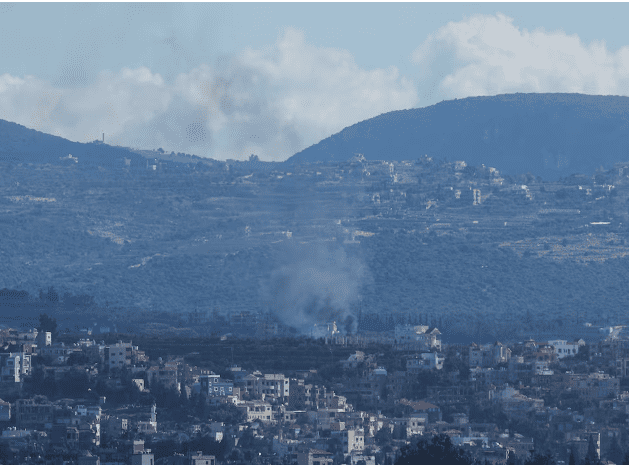
BEIRUT/JERUSALEM July 3 (Reuters) - An Israeli strike killed one of Hezbollah's top commanders in south Lebanon on Wednesday, prompting retaliatory rocket fire by the Iran-backed group into Israel as their dangerously poised conflict rumbled on. The Israeli military said it had struck and eliminated Hezbollah's Mohammed Nasser, calling him commander of a unit responsible for firing from southwestern Lebanon at Israel. Nasser, killed by an airstrike near the city of Tyre in southern Lebanon, was the one of the most senior Hezbollah commanders to die yet in the conflict, two security sources in Lebanon said. Sparked by the Gaza war, the hostilities have raised concerns about a wider and ruinous conflict between the heavily armed adversaries, prompting U.S. diplomatic efforts aimed at deescalation. Israeli Defence Minister Yoav Gallant said Israeli forces were hitting Hezbollah "very hard every day" and will be ready to take any action necessary against the group, though the preference is to reach a negotiated arrangement. Hezbollah began firing at Israeli targets at the border after its Palestinian ally Hamas launched the Oct. 7 attack on Israel, declaring support for the Palestinians and saying it would cease fire when Israel stops its Gaza offensive. Hezbollah announced at least two attacks in response to what it called "the assassination", saying it launched 100 Katyusha rockets at an Israeli military base and its Iranian-made Falaq missiles at another base in the town of Kiryat Shmona near the Israeli-Lebanese border. Israel's Channel 12 broadcaster reported that dozens of rockets were fired into northern Israel from Lebanon. There were no reports of casualties. The Israeli Defence Ministry said that air raid sirens sounded in several parts of northern Israel. Israel's military did not give a number of rockets launched but said most of them fell in open areas, some were intercepted, while a number of launches fell in the area of Kiryat Shmona.